Edmontosaurus
Edmontosaurus regalis
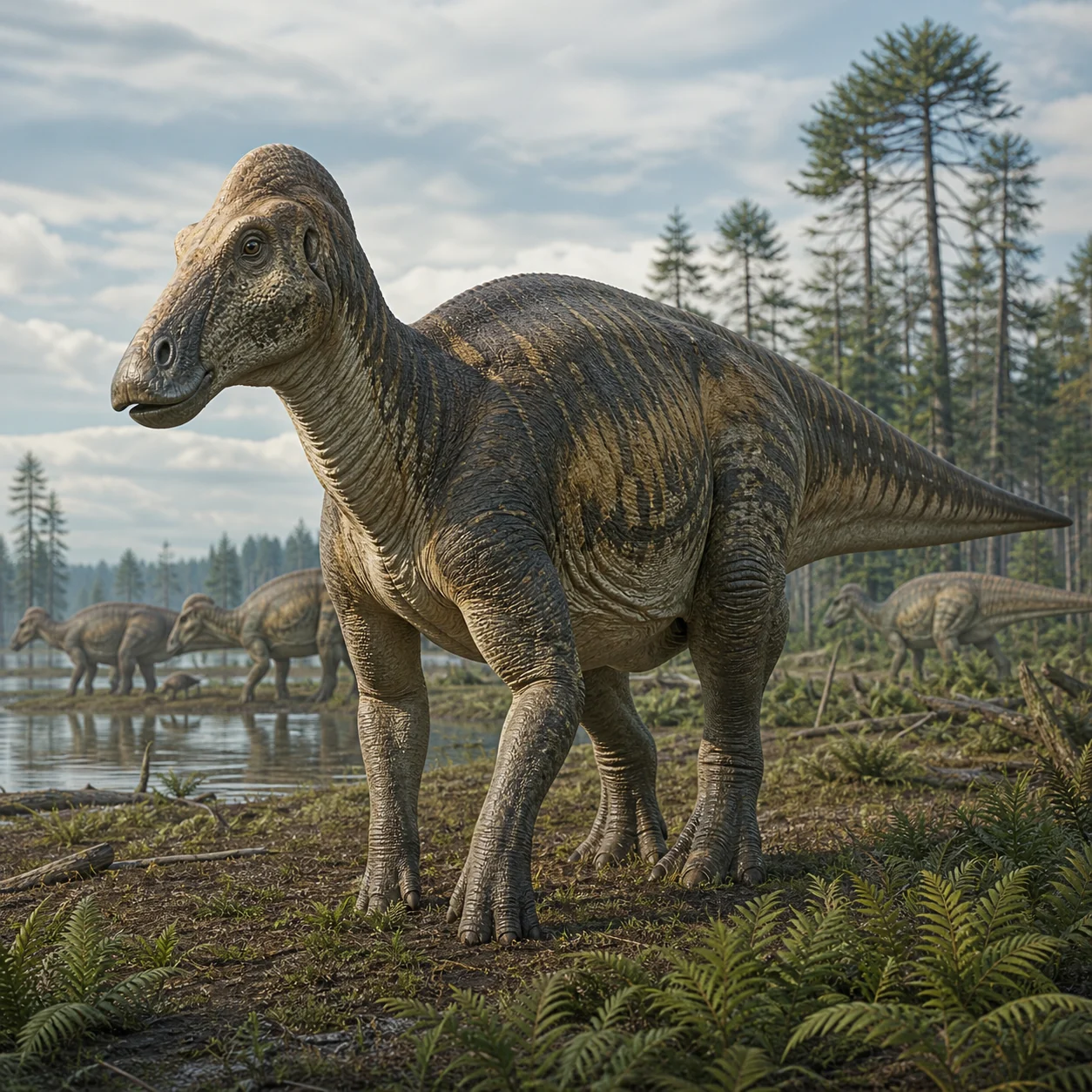
Edmontosaurus regalis foi um dos últimos e maiores hadrossauros, com evidências de tecido mole preservado incluindo pele mumificada.
Edmontosaurus ( ed-MON-tə-SOR-əs) (meaning "lizard from Edmonton"), often colloquially and historically known as Anatosaurus or Anatotitan (meaning "duck lizard" and "giant duck"), is a genus of hadrosaurid (duck-billed) dinosaur. It contains two known species: Edmontosaurus regalis and Edmontosaurus annectens. Fossils of E. regalis have been found in rocks of western North America that date from the late Campanian age of the Cretaceous period 73 million years ago, while those of E. annectens were found in the same geographic region from rocks dated to the end of the Maastrichtian age, 66 million years ago. Edmontosaurus was one of the last non-avian dinosaurs ever to exist, and lived alongside dinosaurs like Triceratops, Tyrannosaurus, Ankylosaurus, and Pachycephalosaurus shortly before the Cretaceous–Paleogene extinction event.
Edmontosaurus included two of the largest hadrosaurid species, with E. annectens measuring up to 12 metres (39 ft) in length and weighing around 5.6 metric tons (6.2 short tons) in average asymptotic body mass. The exceptionally large specimens of E. annectens measured around 15 metres (49 ft) long and weighed around 15.9 metric tons (17.5 short tons). Several well-preserved specimens are known that include numerous bones, as well as extensive skin impressions and possible gut contents. Edmontosaurus is classified as a genus of saurolophine (or hadrosaurine) hadrosaurid, a member of the group of hadrosaurids that lacked large, hollow crests and instead had smaller, solid crests or fleshy combs.
The first fossils named Edmontosaurus were discovered in southern Alberta (named after Edmonton, the capital city), in the Horseshoe Canyon Formation (formerly called the lower Edmonton Formation). The type species, E.…
- Família
- Hadrosauridae
- Ordem
- Ornithischia
- Período
- Cretaceous (73.0-66.0 MYA)
- Dieta
- Herbivore
- Comprimento
- 12.0-13.0 m
- Peso
- 4.0-4.5 tons
Fatos científicos
- Pele mumificada mostra escamas e pele tipo pato
- Crista de tecido mole no topo da cabeça
- Baterias dentárias com até 1000 dentes
- Evidências de predação por T. rex com cura
- Migrava milhares de quilômetros sazonalmente
- Um dos dinossauros mais abundantes do Cretáceo final