Hadrosaurus
Hadrosaurus foulkii
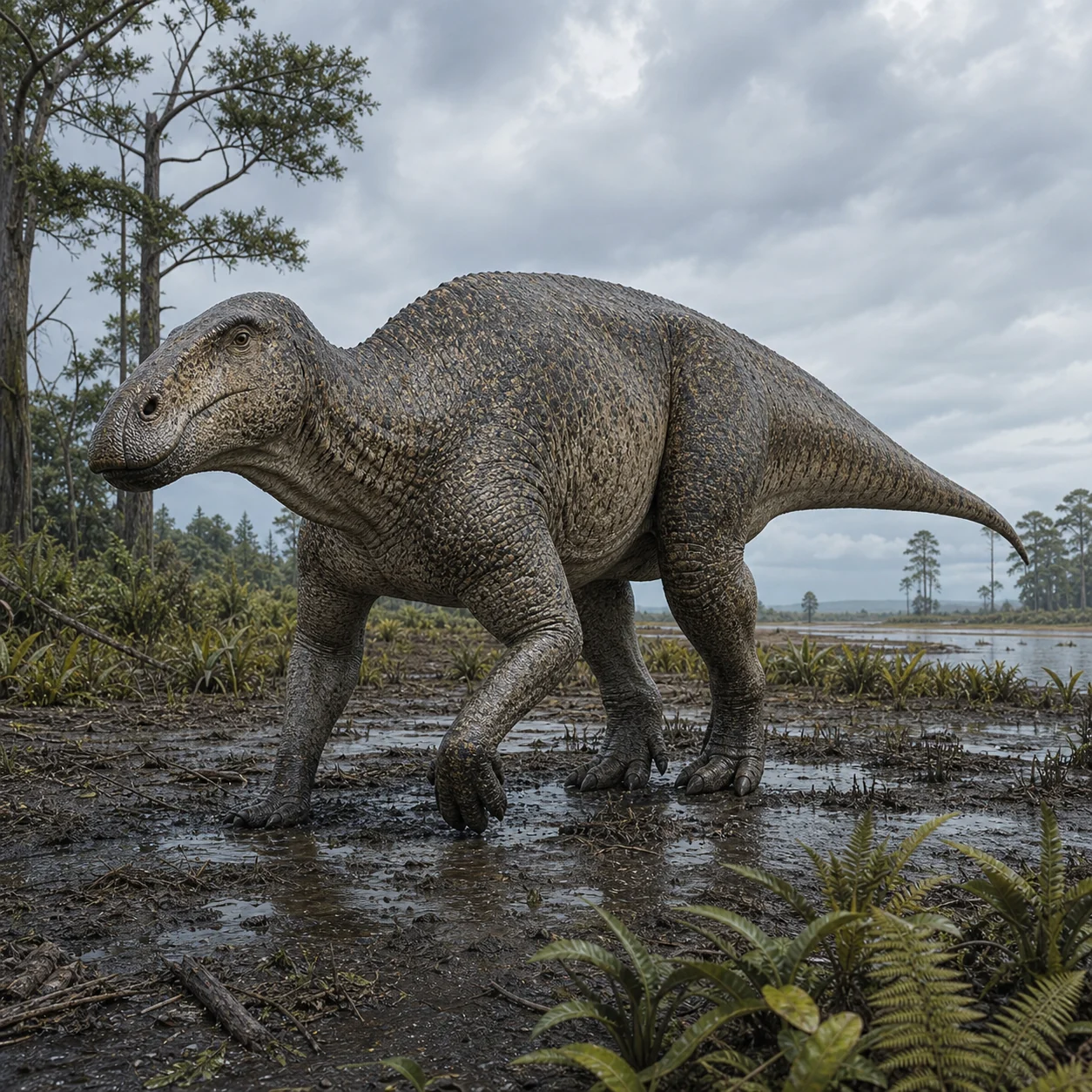
Hadrosaurus foi um hadrosauro herbívoro do Cretáceo, descrito por Joseph Leidy. Viveu há aproximadamente 80.0-75.0 milhões de anos, na região do que hoje é descoberto em múltiplos continentes. Medindo de 7.0-8.0 m, pesando 2.0-4.0 tons, era um representante característico da fauna mesozoica.
Hadrosaurus (; lit. 'bulky lizard') is a genus of hadrosaurid ornithopod dinosaurs that lived in North America during the Late Cretaceous Period in what is now the Woodbury Formation in New Jersey about 83.6 to 77.9 million years ago. The holotype specimen was found in fluvial marine sedimentation, meaning that the corpse of the animal was transported by a river and washed out to sea. Some fossils are found in the Tar Heel/Coachman Formation.
They were large animals ranging from 7 to 8 m (23 to 26 ft) in length and 2 to 4 t (2.2 to 4.4 short tons) in weight. Most of the preserved elements are very robust, unusual traits in hadrosaurs. Hadrosaurus were ponderously built animals equipped with keratinous beaks for cropping foliage and a specialized and complex dentition for food processing. Hadrosaurus foulkii, the only species in this genus, is known from a single specimen consisting of much of the skeleton and parts of the skull. The specimen was collected in 1858 and represents the first dinosaur species known from more than isolated teeth to be identified in North America. Using radiometric dating of bivalve shells from the Woodbury Formation, the sedimentary rocks where the Hadrosaurus fossil was found have been dated at some time during the Campanian stage. In 1868, the only known specimen became the first-ever dinosaur skeleton to be mounted. In 1991, Hadrosaurus became the official state dinosaur of New Jersey.
- Família
- Hadrosauridae
- Ordem
- Ornithischia
- Período
- Cretaceous (80.0-75.0 MYA)
- Dieta
- Herbivore
- Comprimento
- 7.0-8.0 m
- Peso
- 2.0-4.0 tons
Fatos científicos
- Medindo 7.0-8.0 m, tinha porte médio para os padrões mesozoicos
- Possuía baterias dentárias com centenas de dentes em substituição contínua para processar plantas duras
- Seus fósseis foram encontrados na região de descoberto em múltiplos continentes, contribuindo para o entendimento da fauna cretáceo local
- Foi descrito cientificamente por Joseph Leidy, contribuindo para o entendimento da diversidade dinossauriana