Maiasaura
Maiasaura peeblesorum
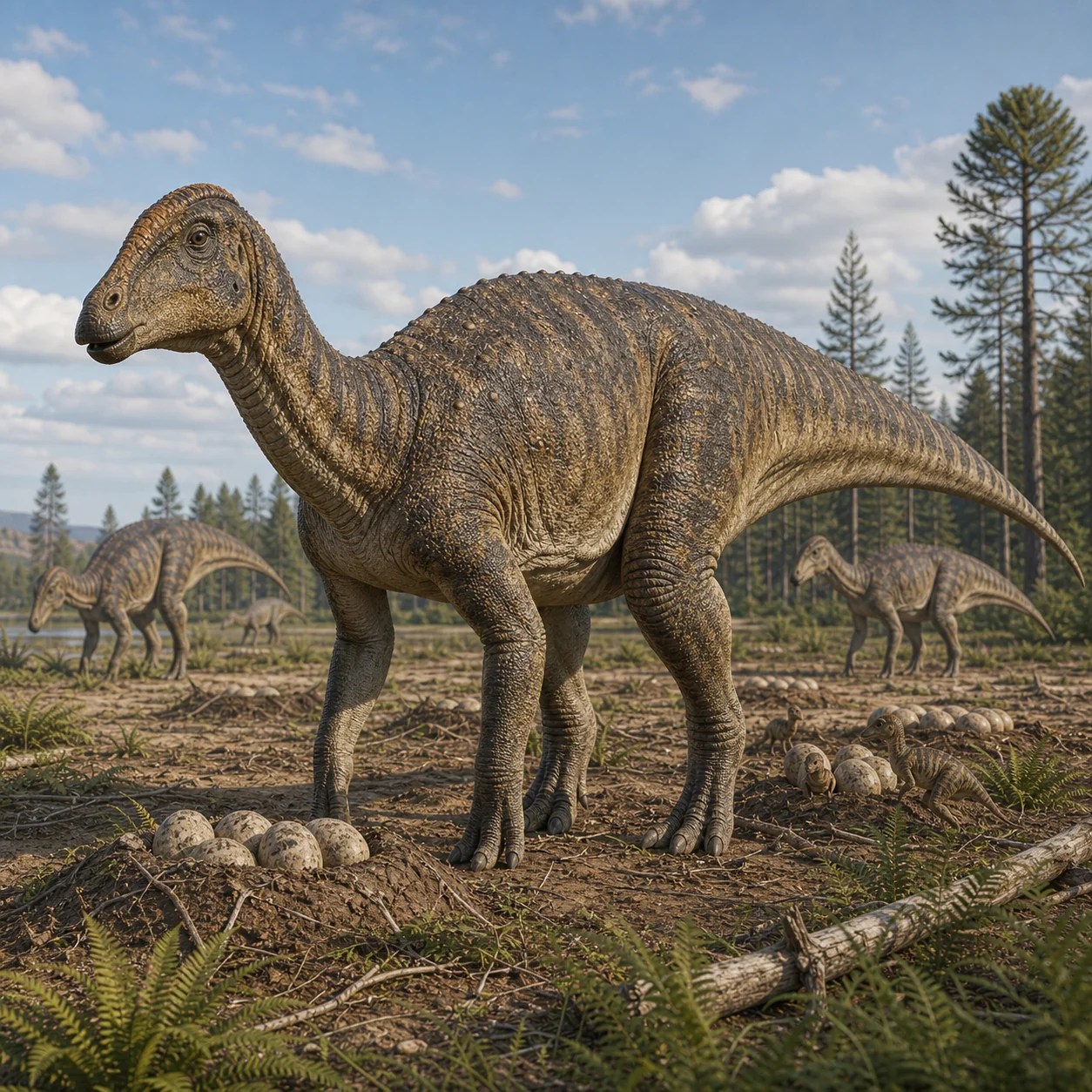
Maiasaura peeblesorum revolucionou o entendimento do cuidado parental em dinossauros, com evidências de ninhos e cuidado prolongado.
Maiasaura (from Greek: μαῖα, lit. 'good mother' and Greek: σαύρα, the feminine form of saurus, lit. 'reptile') is a large herbivorous saurolophine hadrosaurid ("duck-billed") dinosaur genus that lived in the area currently covered by the state of Montana and the Canadian province of Alberta, in the Upper Cretaceous (mid to late Campanian), from 86.3 to 70.6 million years ago.
Discovered in 1978 during the dinosaur renaissance, the species description of Maiasaura first came in 1979 from paleontologists Jack Horner and Bob Makela following the discovery of a site located South of Choteau, Montana. They named the new genus and species Maiasaura peeblesorum, with the genus name Maiasaura, ("good mother lizard") referring to Makela and Horner's conclusion that this species took care of their offspring. Collected data at the site indicated that Maiasaura fed its young while they were in the nest, the first instance of parental and social behavior in dinosaurs. This was in contradiction with the common idea of the 1970s that dinosaurs laid eggs and abandoned them immediately afterwards, providing no parental care. In 1979, one year after the discovery of the nests and juveniles, Maisaura eggs were unearthed, the first discovery of dinosaur eggs both on the American continent and in the Western Hemisphere. Further work in the area led to the discovery of more dinosaur eggs, leading to the area being named "Egg Mountain". Computed tomography scans showed embryos at a very early stage of development inside some of the eggs.
Because of these elements, Maiasaura is considered one of the most significant discoveries in the history of dinosaur research.
Maiasaura, whose bones have been found by hundreds in the state of Montana, has been chosen as Montana's state fossil.
- Família
- Hadrosauridae
- Ordem
- Ornithischia
- Período
- Cretaceous (76.7-75.0 MYA)
- Dieta
- Herbivore
- Comprimento
- 9.0 m
- Peso
- 3.0-4.0 tons
Fatos científicos
- Primeiro dinossauro com evidência clara de cuidado parental
- Ninhos de 2m com 30-40 ovos arranjados em círculo
- Filhotes permaneciam no ninho sendo alimentados
- Migrava em manadas de milhares de indivíduos
- Crescimento rápido, adulto em 8 anos
- Nome significa "lagarto boa mãe"