Ankylosaurus
Ankylosaurus magniventris
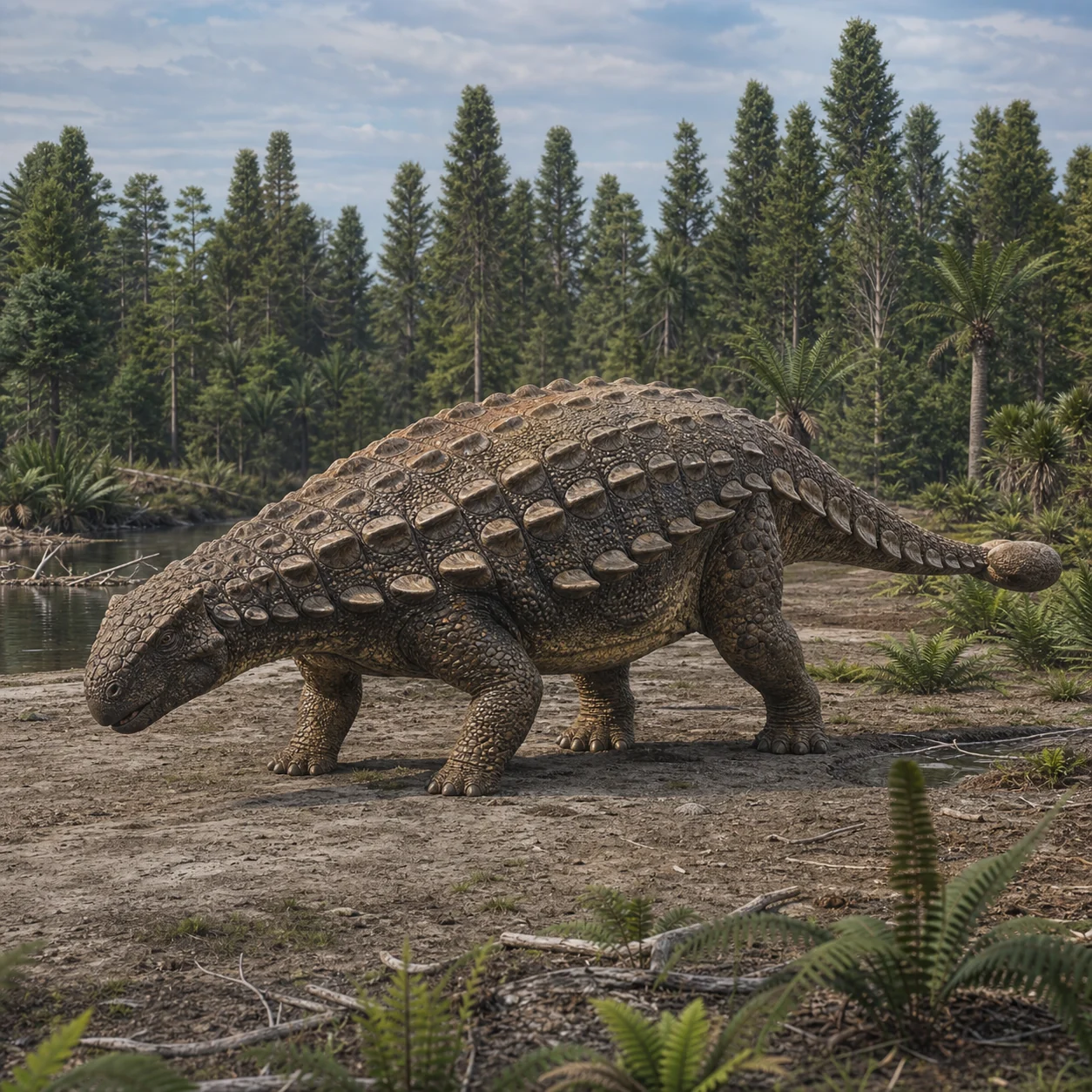
Ankylosaurus magniventris era um tanque vivo com armadura óssea fundida e clava caudal de 50kg capaz de quebrar ossos de terópodes.
Ankylosaurus is a genus of armored dinosaur. Its fossils have been found in geological formations dating to the very end of the Cretaceous Period, about 70-66 million years ago, in western North America, making it among the last of the non-avian dinosaurs. It was named by Barnum Brown in 1908; it is monotypic, containing only A. magniventris. The generic name means "fused" or "bent lizard", and the specific name means "great belly". A handful of specimens have been excavated to date, but a complete skeleton has not been discovered. Though other members of Ankylosauria are represented by more extensive fossil material, Ankylosaurus is often considered the archetypal member of its group, despite having some unusual features.
Possibly the largest known ankylosaurid, Ankylosaurus is estimated to have been between 6 and 8 m (20 and 26 ft) long and to have weighed between 4.8 and 8 t (5.3 and 8.8 short tons). It was quadrupedal, with a broad, robust body. It had a wide, low skull, with two horns pointing backward from the back of the head, and two horns below these that pointed backward and down. Unlike other ankylosaurs, its nostrils faced sideways rather than towards the front. The front part of the jaws was covered in a beak, with rows of small, leaf-shaped teeth farther behind it. It was covered in armor plates, or osteoderms, with bony half-rings covering the neck, and had a large club on the end of its tail. Bones in the skull and other parts of the body were fused, increasing their strength, and this feature is the source of the genus name.
Ankylosaurus is a member of the family Ankylosauridae, and its closest relatives appear to be Anodontosaurus and Euoplocephalus.…
- Família
- Ankylosauridae
- Ordem
- Ornithischia
- Período
- Cretaceous (68.0-66.0 MYA)
- Dieta
- Herbivore
- Comprimento
- 6.25-8.0 m
- Peso
- 4.8-8.0 tons
Fatos científicos
- Armadura composta de osteodermos fundidos ao crânio
- Clava caudal formada por vértebras fundidas
- Sistema digestivo complexo para fermentação de plantas
- Largura corporal dificultava predadores virá-lo
- Dentes pequenos indicam mastigação mínima
- Cavidades nasais complexas possivelmente para vocalização