Euoplocephalus
Euoplocephalus tutus
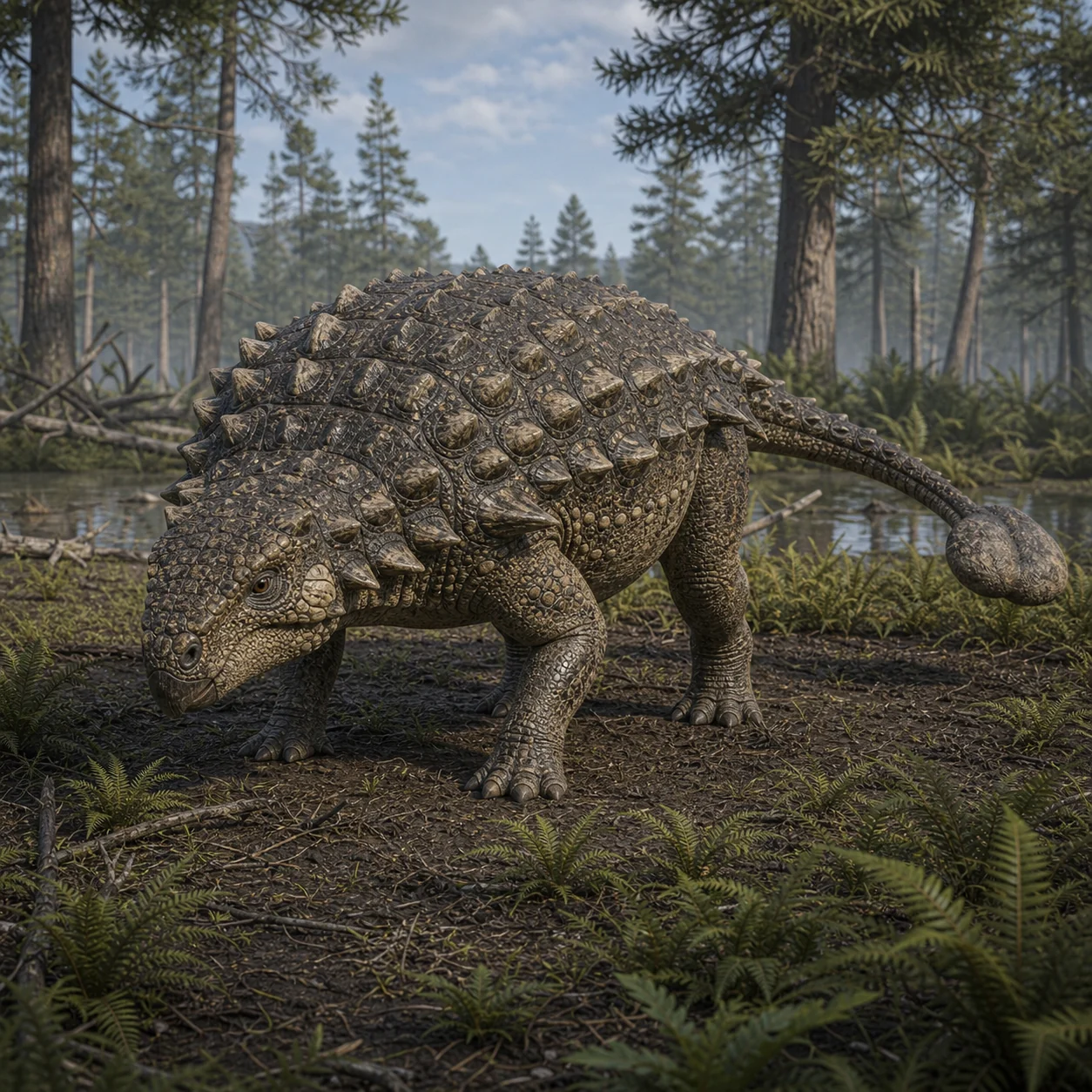
Euoplocephalus foi um anquilossauro herbívoro do Cretáceo, descrito por Lawrence Lambe. Viveu há aproximadamente 76.5-75.5 milhões de anos, na região do que hoje é Canadá. Medindo de 5.5-7.0 m, pesando 2.0-2.5 tons, era um representante característico da fauna mesozoica.
Euoplocephalus ( yoo-OP-loh-SEF-ə-ləs) is a genus of large herbivorous ankylosaurid dinosaurs, living during the Late Cretaceous of Canada. It has only one named species, Euoplocephalus tutus.
The first fossil of Euoplocephalus was found in 1897 in Alberta. In 1902, it was named Stereocephalus, but that name had already been given to an insect, so it was changed in 1910. Later, many more ankylosaurid remains were found from the Campanian of North America and often made separate genera. In 1971, Walter Coombs concluded that they all belonged to Euoplocephalus, which then make it one of the best-known dinosaurs. Recently, however, experts have come to the opposite conclusion, limiting the authentic finds of Euoplocephalus to about a dozen specimens. These include a number of almost complete skeletons, so nevertheless much is known about the build of the animal.
Euoplocephalus reached 5.3 metres (17 ft) in length and 2 metric tons (2.2 short tons) in body mass. Its body was low-slung and very flat and wide, standing on four sturdy legs. Its head had a short drooping snout with a horny beak to bite off plants that were digested in the large gut. Like other ankylosaurids, Euoplocephalus was largely covered by bony armor plates, among them rows of large high-ridged oval scutes. The neck was protected by two bone rings. It could also actively defend itself against predators like Albertosaurus, Daspletosaurus, and Gorgosaurus using a heavy club at the end of its tail.
- Família
- Ankylosauridae
- Ordem
- Ornithischia
- Período
- Cretaceous (76.5-75.5 MYA)
- Dieta
- Herbivore
- Comprimento
- 5.5-7.0 m
- Peso
- 2.0-2.5 tons
Fatos científicos
- Medindo 5.5-7.0 m, tinha porte médio para os padrões mesozoicos
- Herbívoro especializado do Cretáceo, provavelmente pastava em vegetação de Canadá
- Seus fósseis foram encontrados na região de Canadá, contribuindo para o entendimento da fauna cretáceo local
- Foi descrito cientificamente por Lawrence Lambe, contribuindo para o entendimento da diversidade dinossauriana