Saichania
Saichania chulsanensis
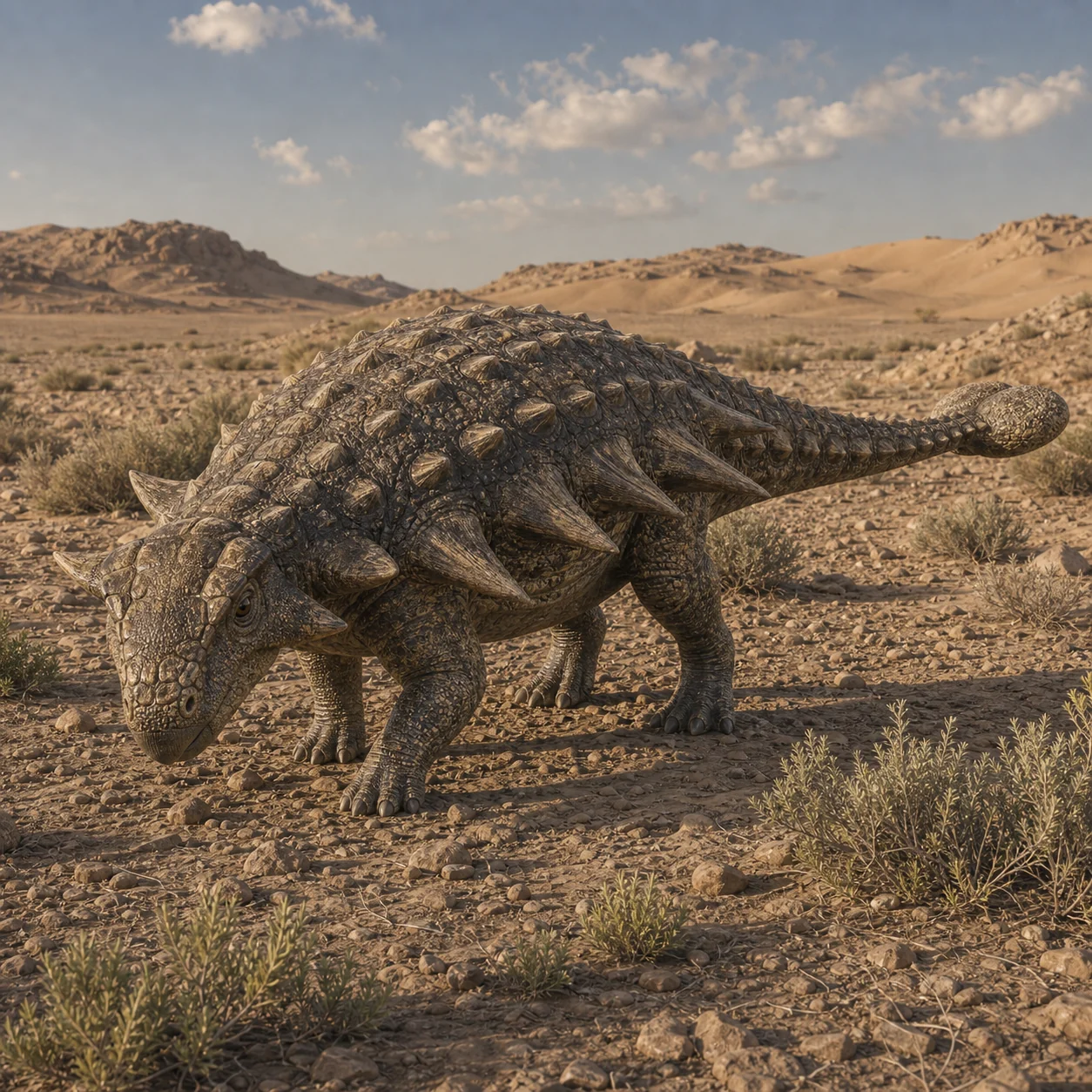
Saichania foi um anquilossauro herbívoro do Cretáceo, descrito por Teresa Maryańska. Viveu há aproximadamente 100.5-83.6 milhões de anos, na região do que hoje é Mongólia. Medindo de 5.0-7.0 m, pesando 2.0-3.0 tons, era um representante característico da fauna mesozoica.
Saichania (Mongolian meaning "beautiful one") is a genus of herbivorous ankylosaurid dinosaur from the Late Cretaceous period of Mongolia and China. The first fossils of Saichania were found in the early 1970s in the Baruungoyot Formation. In 1977, the type species Saichania chulsanensis was named.
Saichania is more robustly built than other members of the Ankylosauridae, measuring 5–7 metres (16–23 ft) in length and 1.4–2.0 metric tons (1.5–2.2 short tons) in body mass. Neck vertebrae, the shoulder girdle, and ribs were fused or firmly connected. Its body is flat and low-slung, standing on four short legs. The forelimbs were very powerful. The head was protected by bulbous armour tiles. It could defend itself against predators like Tarbosaurus with a tail club. On the torso, keeled osteoderms were present. Saichania bit off plants in its desert habitat with a horny beak and processed them in its wide hindgut.
- Família
- Ankylosauridae
- Ordem
- Ornithischia
- Período
- Cretaceous (100.5-83.6 MYA)
- Dieta
- Herbivore
- Comprimento
- 5.0-7.0 m
- Peso
- 2.0-3.0 tons
Fatos científicos
- Medindo 5.0-7.0 m, tinha porte médio para os padrões mesozoicos
- Herbívoro especializado do Cretáceo, provavelmente pastava em vegetação de Mongólia
- Seus fósseis foram encontrados na região de Mongólia, contribuindo para o entendimento da fauna cretáceo local
- Foi descrito cientificamente por Teresa Maryańska, contribuindo para o entendimento da diversidade dinossauriana