Segnosaurus
Segnosaurus galbinensis
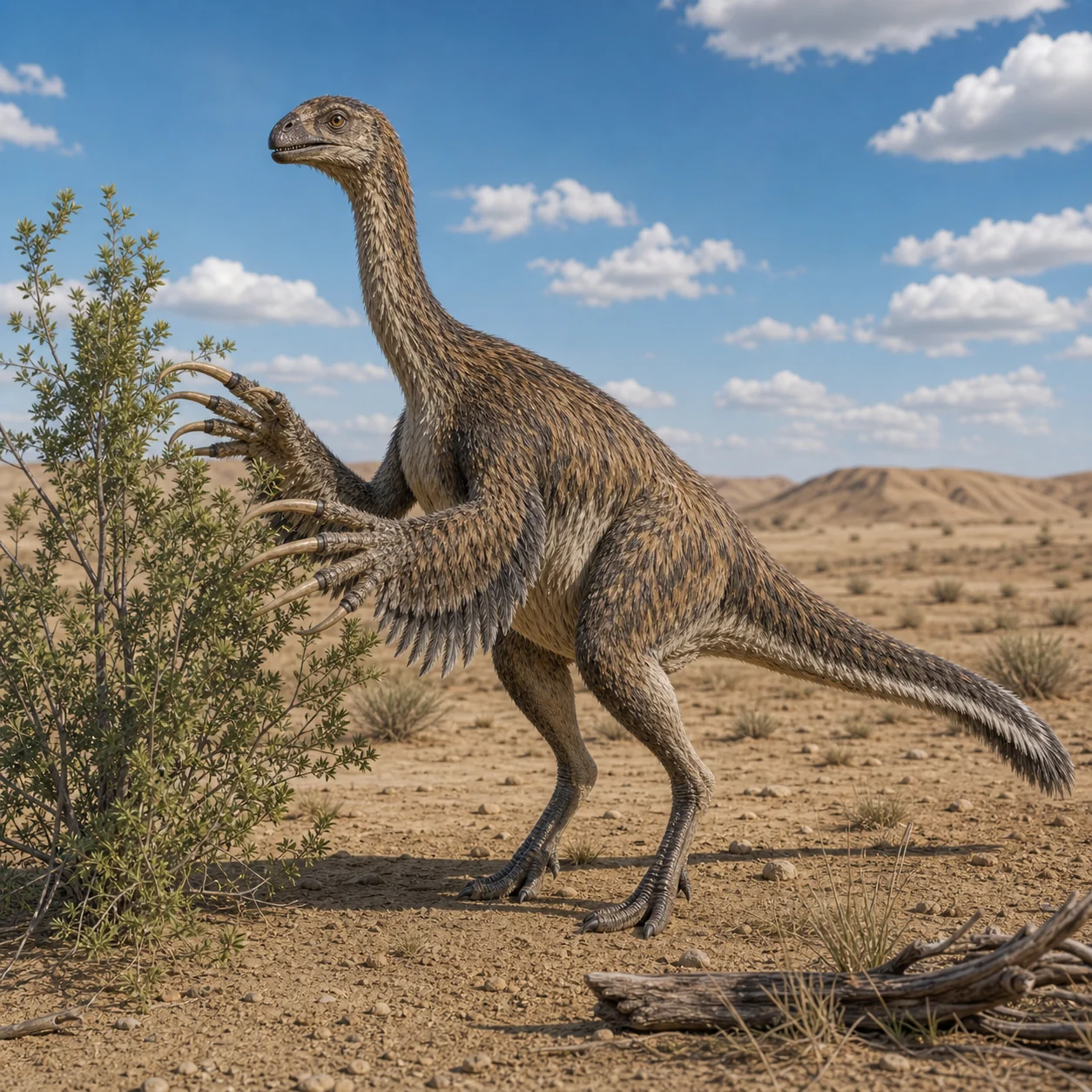
Segnosaurus foi um terópode herbívoro do Cretáceo, descrito por Altangerel Perle. Viveu há aproximadamente 99.0-93.0 milhões de anos, na região do que hoje é Mongólia. Medindo de 4.0-7.0 m, pesando 1.3 tons, era um representante característico da fauna mesozoica.
Segnosaurus is a genus of therizinosaurid dinosaur that lived in what is now southeastern Mongolia during the Late Cretaceous, about 102–86 million years ago. Multiple incomplete but well-preserved specimens were discovered in the Gobi Desert in the 1970s, and in 1979 the genus and species Segnosaurus galbinensis were named. The generic name Segnosaurus means "slow lizard" and the specific name galbinensis refers to the Galbin region. The known material of this dinosaur includes the lower jaw, neck and tail vertebrae, the pelvis, shoulder girdle, and limb bones. Parts of the specimens have gone missing or become damaged since they were collected. Remains from Japan originally assigned to Allosaurus were reassigned to Segnosaurus sp. (of unspecified species) in 2025.
Segnosaurus was a large-bodied therizinosaur that is estimated to have been about 6–7 m (20–23 ft) long and to have weighed about 1.3 t (1.4 short tons). It would have been bipedal, with the trunk of its body tilted upwards. The head was small with a beak at the tip of the jaws, and the neck was long and slender. The lower jaw was down-turned at the front and the teeth were distinct in having additional denticles as well as third cutting edges in some of the hindmost teeth. The forelimbs were robust and had three fingers which bore large claws, and the feet had four toes supporting the foot—apart from therizinosaurs, all theropods had three-toed feet. The front of the pelvis was adapted to support the enlarged belly.…
- Família
- Therizinosauridae
- Ordem
- Saurischia
- Período
- Cretaceous (99.0-93.0 MYA)
- Dieta
- Herbivore
- Comprimento
- 4.0-7.0 m
- Peso
- 1.3 tons
Fatos científicos
- Medindo 4.0-7.0 m, tinha porte médio para os padrões mesozoicos
- Herbívoro especializado do Cretáceo, provavelmente pastava em vegetação de Mongólia
- Seus fósseis foram encontrados na região de Mongólia, contribuindo para o entendimento da fauna cretáceo local
- Foi descrito cientificamente por Altangerel Perle, contribuindo para o entendimento da diversidade dinossauriana