Erlikosaurus
Erlikosaurus andrewsi
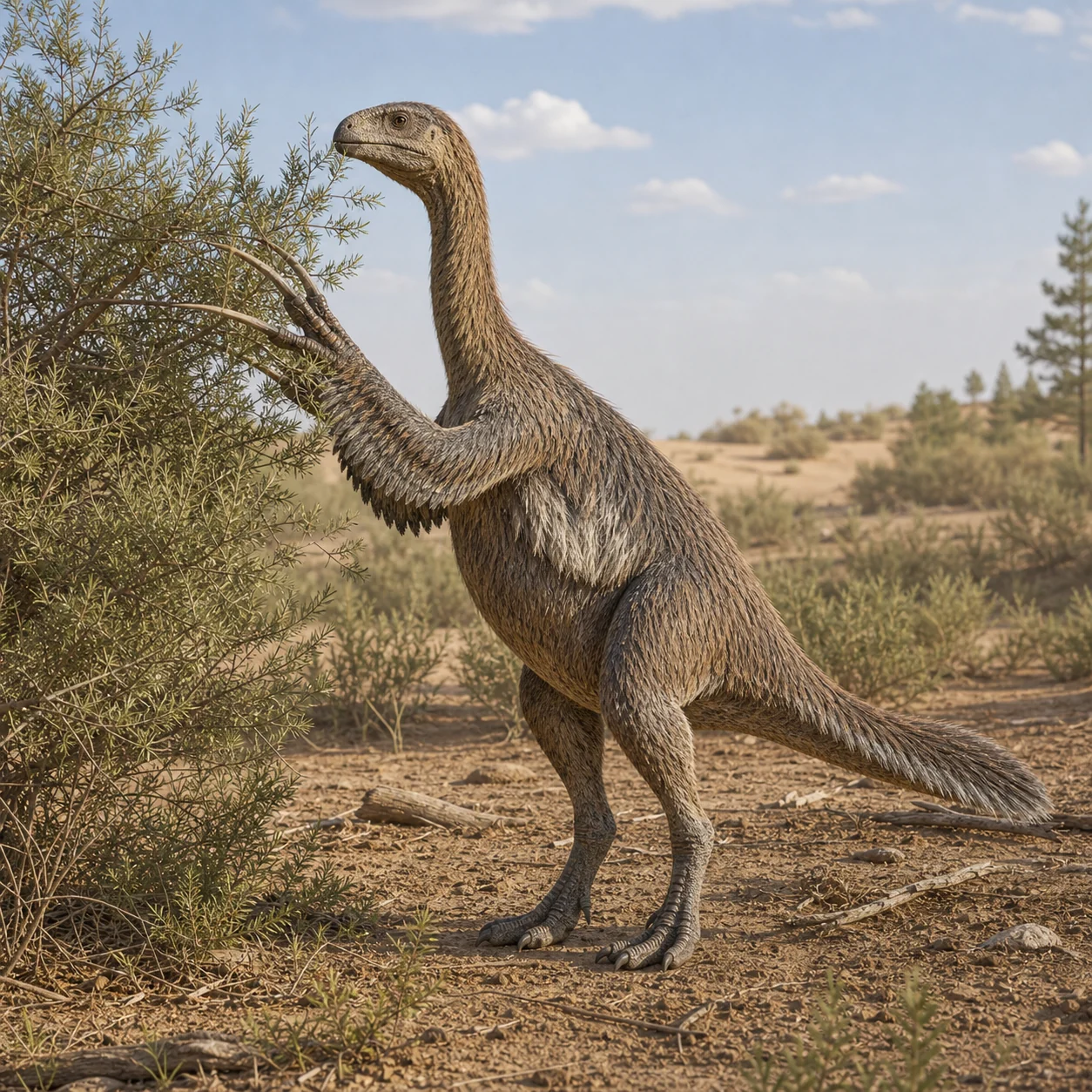
Erlikosaurus foi um terópode herbívoro do Cretáceo, descrito por Barsbold & Perle. Viveu há aproximadamente 93.9-90.0 milhões de anos, na região do que hoje é Mongólia. Medindo de 4.5-6.0 m, pesando 150-200 kg, era um representante característico da fauna mesozoica.
Erlikosaurus (meaning "Erlik's lizard") is a genus of therizinosaurid that lived in Asia during the Late Cretaceous period. The fossils, a skull and some post-cranial fragments, were found in the Bayan Shireh Formation of Mongolia in 1972, dating to around 96 and 89 million years ago. These remains were later described by Altangerel Perle and Rinchen Barsbold in 1980, naming the new genus and species Erlikosaurus andrewsi. It represents the second therizinosaur taxon from this formation (after Segnosaurus), with the most complete skull among members of this peculiar family of dinosaurs.
In contrast to most therizinosaurids, Erlikosaurus was a small member reaching nearly 3.4 m (11 ft) in length and 150 to 250 kg (330 to 550 lb) in mass. It had a well-developed beak at the snout tip and toothed jaws that were used for its herbivorous diet. The feet ended in four toes with the first one articulated to the ankle—in contrast to the vestigial first toe of most theropods. Like other therizinosaurids, Erlikosaurus had a large gut for food processing, strong arms ending in elongated claws, and a backwards directed pelvis.
Erlikosaurus is classified as a therizinosaur within the Therizinosauridae. Therizinosaurs were long-enigmatic dinosaurs with unclear relationships during the early years of research. Subsequent studies proved their true nature as theropod dinosaurs and systematic position among maniraptorans. The beak and jaws of Erlikosaurus indicate a leaf-stripping feeding method characterized by the active use of the beak aided by the neck. Several differences with the sympatric Segnosaurus show that these related genera were niche partitioned.
- Família
- Therizinosauridae
- Ordem
- Saurischia
- Período
- Cretaceous (93.9-90.0 MYA)
- Dieta
- Herbivore
- Comprimento
- 4.5-6.0 m
- Peso
- 150-200 kg
Fatos científicos
- Medindo 4.5-6.0 m, tinha porte médio para os padrões mesozoicos
- Herbívoro especializado do Cretáceo, provavelmente pastava em vegetação de Mongólia
- Seus fósseis foram encontrados na região de Mongólia, contribuindo para o entendimento da fauna cretáceo local
- Foi descrito cientificamente por Barsbold & Perle, contribuindo para o entendimento da diversidade dinossauriana