Irritator
Irritator challengeri
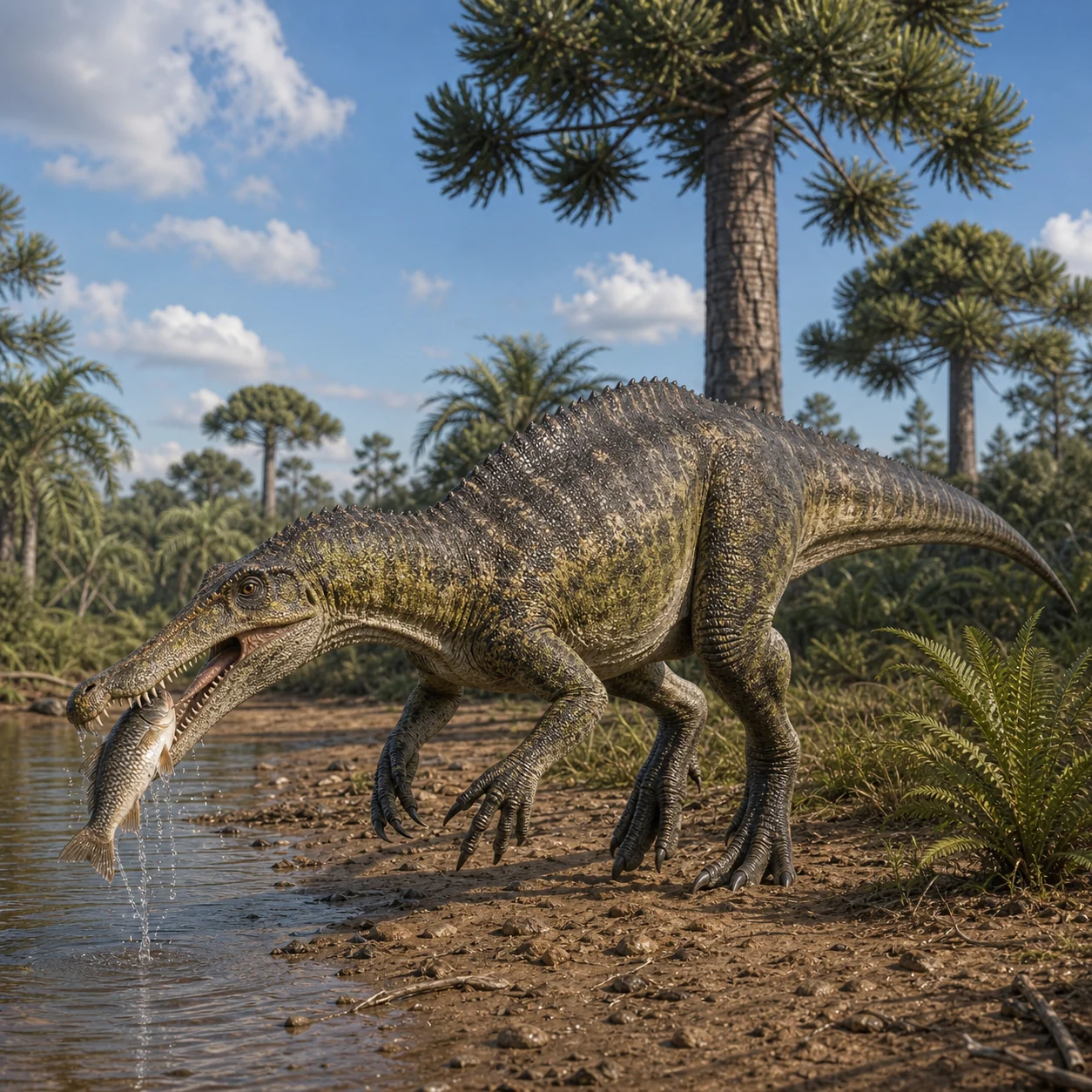
Irritator challengeri foi um spinosaurídeo brasileiro com focinho alongado adaptado para pesca, parente sul-americano do Spinosaurus.
Irritator is a genus of spinosaurid dinosaur that lived in what is now Brazil during the Albian stage of the Early Cretaceous Period, about 113 to 110 million years ago. It is known from a nearly complete skull found in the Romualdo Formation of the Araripe Basin. Fossil dealers had acquired this skull and sold it to the State Museum of Natural History Stuttgart. It was the subject of an ongoing international restitution dispute between Germany and Brazil, until its return to Brazil in 2026. In 1996, the specimen became the holotype of the type species Irritator challengeri. The genus name comes from the word "irritation", reflecting the feelings of paleontologists who found the skull had been heavily damaged and altered by the collectors. The species name is a homage to the fictional character Professor Challenger from Arthur Conan Doyle's novels.
Some paleontologists regard Angaturama limai—known from a snout tip that was described a few weeks later also in 1996—as a potential junior synonym of Irritator. Both animals hail from the same stratigraphic units of the Araripe Basin. It was also previously proposed that Irritator and Angaturama's skull parts belonged to the same specimen. Although this has been cast into doubt, more overlapping fossil material is needed to confirm whether they are the same animal or not. Other spinosaurid skeletal material, some of which could belong to Irritator or Angaturama, was retrieved from the Romualdo Formation, allowing for a replica skeleton to be made and mounted for display at the National Museum of Rio de Janeiro in 2009.
Estimated at between 6 and 8 meters (20 and 26 ft) in length, Irritator weighed around 1 tonne (1.1 short tons), making it one of the smallest spinosaurids known.…
- Família
- Spinosauridae
- Ordem
- Saurischia
- Período
- Cretaceous (113.0-100.5 MYA)
- Dieta
- Carnivore
- Comprimento
- 6.0-8.0 m
- Peso
- 1.0-1.5 tons
Fatos científicos
- Nome reflete irritação dos cientistas com preparação amadora
- Crânio foi ilegalmente "melhorado" com gesso
- Evidências de pesca: restos de pterossauro no estômago
- Narinas posicionadas atrás para mergulho
- Único spinosaurídeo brasileiro bem preservado
- Contemporâneo de peixes e pterossauros gigantes