Oxalaia
Oxalaia quilombensis
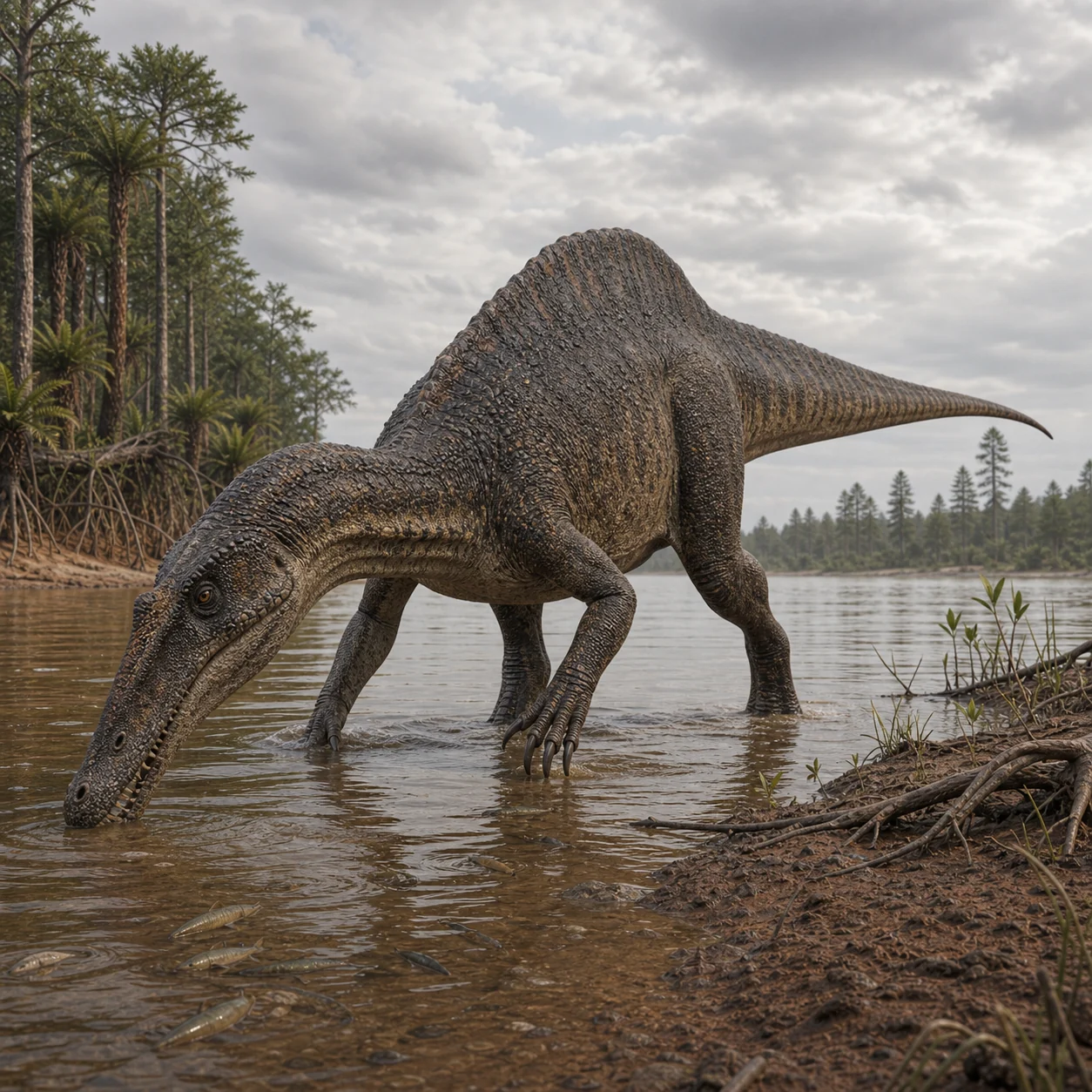
Oxalaia foi um espinossaurídeo carnívoro do Cretáceo, descrito por Kellner et al.. Viveu há aproximadamente 100.5-93.9 milhões de anos, na região do que hoje é Brasil. Medindo de 12.0-14.0 m, pesando 4.0-7.0 tons, era um representante característico da fauna mesozoica.
Oxalaia (in reference to the African deity Oxalá) is a genus of spinosaurid dinosaur that lived in what is now the Northeast Region of Brazil during the Cenomanian stage of the Late Cretaceous period, sometime between 100.5 and 93.9 million years ago. Its fossils were found in 1999 on Cajual Island in the rocks of the Alcântara Formation, which is known for its abundance of fragmentary, isolated fossil specimens as well as the Itapecuru Formation. The remains of Oxalaia were described in 2011 by Brazilian palaeontologist Alexander Kellner and colleagues, who assigned the specimens to a new genus containing one species, Oxalaia quilombensis. The species name refers to the Brazilian quilombo settlements. Oxalaia quilombensis is the eighth officially named theropod species from Brazil and the largest carnivorous dinosaur discovered there. One study suggested that this taxon is a junior synonym of the closely related African genus Spinosaurus, but some subsequent studies consider the genus to be diagnostic.
Although Oxalaia is known only from two partial skull bones, Kellner and colleagues found that its teeth and cranium had a few distinct features not seen in other spinosaurids or theropods, including two replacement teeth in each socket and a very sculptured secondary palate. Oxalaia's habitat was tropical, heavily forested, and surrounded by an arid landscape. This environment had a large variety of lifeforms also present in Middle-Cretaceous North Africa, due to the connection of South America and Africa as parts of the supercontinent Gondwana. As a spinosaurid, the traits of Oxalaia's skull and dentition indicate a partly piscivorous (fish-eating) lifestyle similar to that of modern crocodilians.…
- Família
- Spinosauridae
- Ordem
- Saurischia
- Período
- Cretaceous (100.5-93.9 MYA)
- Dieta
- Carnivore
- Comprimento
- 12.0-14.0 m
- Peso
- 4.0-7.0 tons
Fatos científicos
- Seu comprimento de 12.0-14.0 m o tornava um dos maiores predadores/herbívoros da sua região
- Dentes cônicos e focinho longo sugerem alimentação piscívora, similar a crocodilos modernos
- Seus fósseis foram encontrados na região de Brasil, contribuindo para o entendimento da fauna cretáceo local
- Foi descrito cientificamente por Kellner et al., contribuindo para o entendimento da diversidade dinossauriana