Baryonyx
Baryonyx walkeri
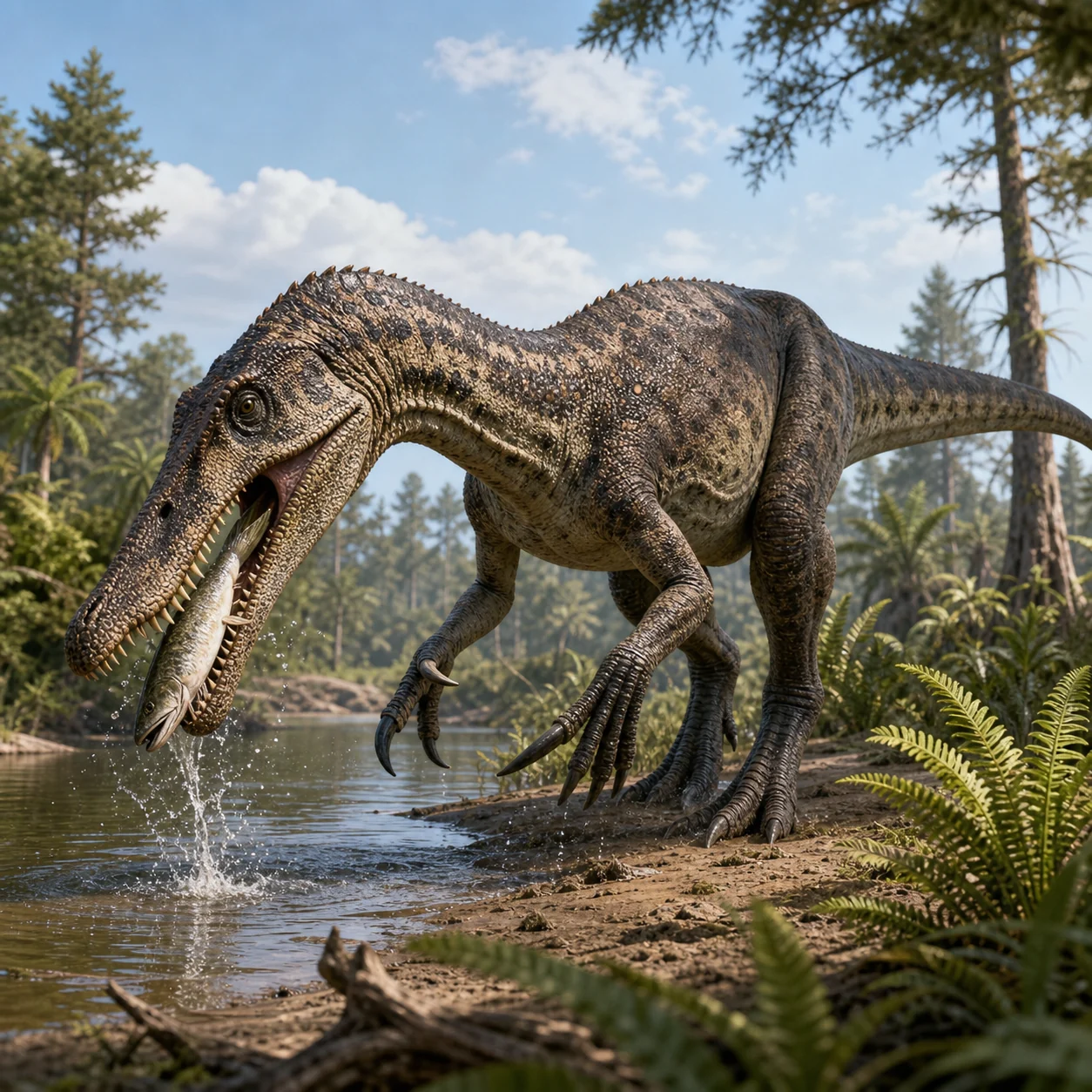
Baryonyx walkeri revolucionou o entendimento dos terópodes com adaptações para pesca, incluindo focinho estreito e garra gigante.
Baryonyx () is a genus of theropod dinosaur which lived in the Barremian stage of the Early Cretaceous period, about 130–125 million years ago. The first skeleton was discovered in 1983 in the Smokejack Clay Pit, of Surrey, England, in sediments of the Weald Clay Formation, and became the holotype specimen of Baryonyx walkeri, named by palaeontologists Alan J. Charig and Angela C. Milner in 1986. The genus name Baryonyx comes from Ancient Greek βαρύς (barús), meaning "heavy" or "strong", and ὄνυξ (ónux), meaning "claw", alluding to the animal's very large claw on the first finger; the specific name, walkeri, refers to its discoverer, amateur fossil collector William J. Walker. The holotype specimen is one of the most complete theropod skeletons from the UK (and remains the most complete spinosaurid), and its discovery attracted media attention. Specimens later discovered in other parts of the United Kingdom and Iberia have also been assigned to the genus, though many have since been moved to new genera.
The holotype specimen, which may not have been fully grown, was estimated to have been between 7.5 and 10 metres (25 and 33 feet) long and to have weighed between 1.2 and 2 metric tons (1.3 and 2.2 short tons; 1.2 and 2.0 long tons). Baryonyx had a long, low, and narrow snout, which has been compared to that of a gharial. The tip of the snout expanded to the sides in the shape of a rosette. Behind this, the upper jaw had a notch which fitted into the lower jaw (which curved upwards in the same area). It had a triangular crest on the top of its nasal bones. Baryonyx had a large number of finely serrated, conical teeth, with the largest teeth in front. The neck formed an S-shape, and the neural spines of its dorsal vertebrae increased in height from front to back.…
- Família
- Spinosauridae
- Ordem
- Saurischia
- Período
- Cretaceous (130.0-125.0 MYA)
- Dieta
- Carnivore
- Comprimento
- 7.5-10.0 m
- Peso
- 1.2-1.9 tons
Fatos científicos
- Nome significa "garra pesada" pela garra de 31cm
- Primeiro terópode confirmado como piscívoro
- Focinho com roseta de dentes como crocodilos
- 96 dentes serrilhados na mandíbula
- Evidências de dieta mista (peixes e dinossauros)
- Descoberto por colecionador amador