Deinonychus
Deinonychus antirrhopus
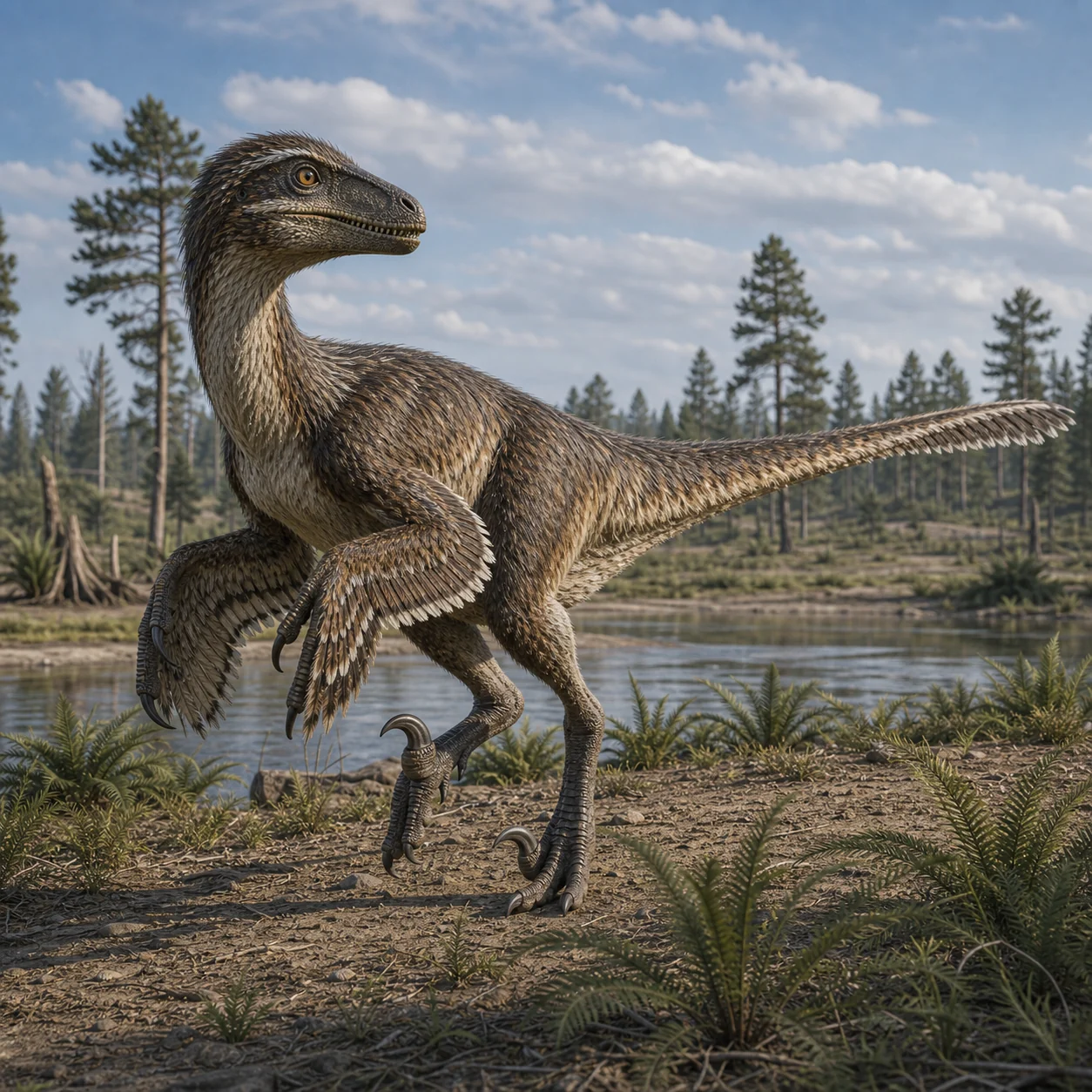
Deinonychus antirrhopus revolucionou a paleontologia, provando que dinossauros eram ágeis e ativos, inspirando o conceito de "raptor".
Deinonychus ( dy-NON-ih-kəs; from Ancient Greek δεινός (deinós) 'terrible' and ὄνυξ (ónux), genitive ὄνυχος (ónukhos) 'claw') is a genus of dromaeosaurid theropod dinosaur with one described species, Deinonychus antirrhopus. This species, which could grow up to 3.4 meters (11 ft) long, lived during the Early and Late Cretaceous Period, about 115–93.9 million years ago (from the mid-Aptian to Cenomanian stages). Fossils have been recovered from the U.S. states of Montana, Utah, Wyoming, and Oklahoma, in rocks of the Cloverly Formation and Antlers Formation, though teeth that may belong to Deinonychus have been found much farther east in Maryland.
Paleontologist John Ostrom's study of Deinonychus in the late 1960s revolutionized the way scientists thought about dinosaurs, leading to the "dinosaur renaissance" and igniting the debate on whether dinosaurs were warm-blooded or cold-blooded. Before this, the popular conception of dinosaurs had been one of plodding, reptilian giants. Ostrom noted the small body, sleek, horizontal posture, ratite-like spine, and especially the enlarged raptorial claws on the feet, which suggested an active, agile predator.
"Terrible claw" refers to the unusually large, sickle-shaped talon on the second toe of each hind foot. The fossil YPM 5205 preserves a large, strongly curved ungual. In life, archosaurs have a horny sheath over this bone, which extends the length. Ostrom looked at crocodile and bird claws and reconstructed the claw for YPM 5205 as over 120 millimetres (4.7 in) long. The species name antirrhopus means "counter balance", which refers to Ostrom's idea about the function of the tail. As in other dromaeosaurids, the tail vertebrae have a series of ossified tendons and super-elongated bone processes.…
- Família
- Dromaeosauridae
- Ordem
- Saurischia
- Período
- Cretaceous (143.1-100.5 MYA)
- Dieta
- Carnivore
- Comprimento
- 3.4 m
- Peso
- 70-100 kg
Fatos científicos
- Nome significa "garra terrível" pela garra de 12cm
- Inspirou a teoria de dinossauros de sangue quente
- Base científica para os "raptors" de Jurassic Park
- Evidências de caça em grupo coordenada
- Cauda rígida funcionava como balança dinâmica
- Provável cobertura de penas para termorregulação