Pinacosaurus
Pinacosaurus grangeri
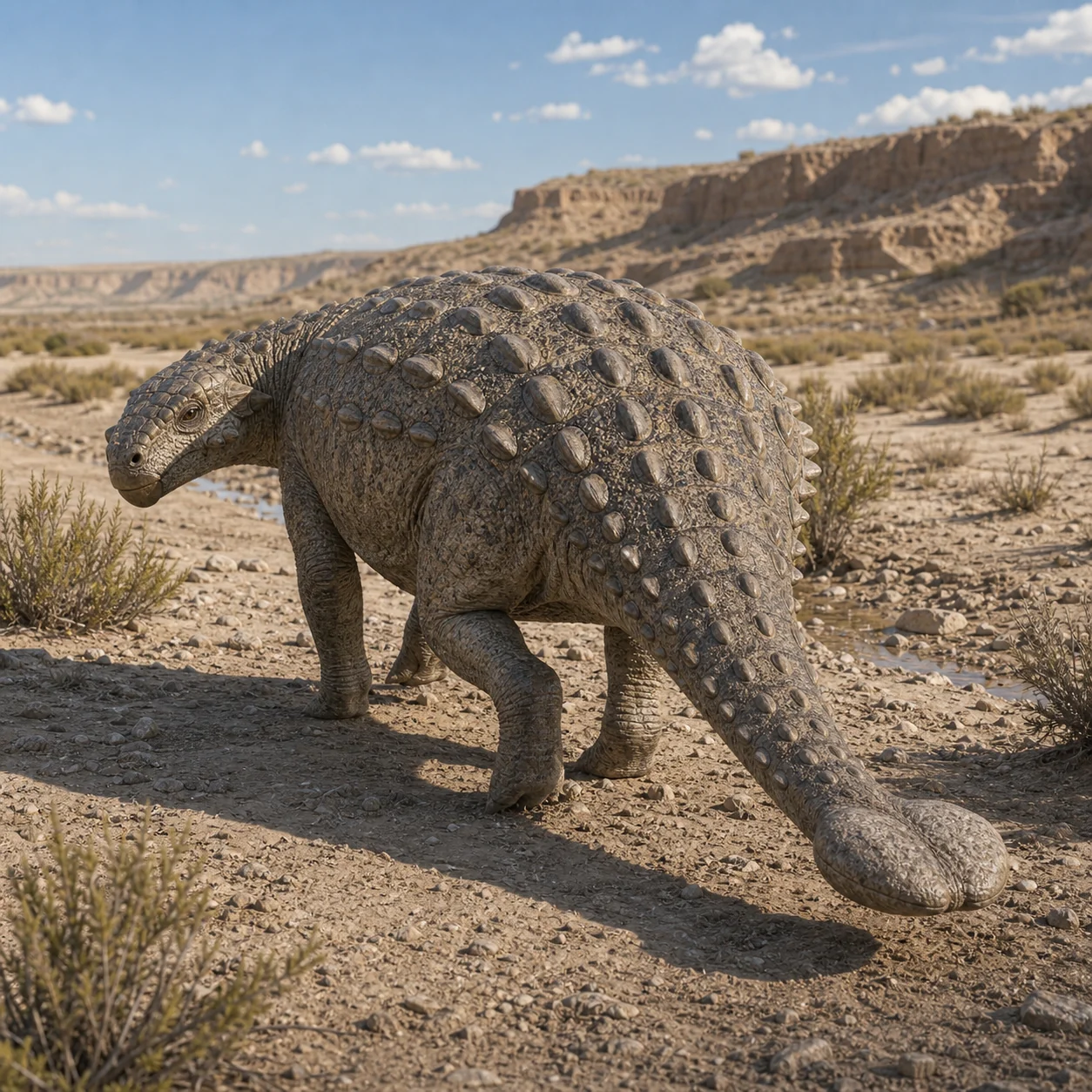
Pinacosaurus (meaning "plank lizard") is an extinct genus of ankylosaurid dinosaur that lived in what is now Mongolia during the Late Cretaceous (Campanian, roughly 75 to 71 million years ago). The genus contains two species; the type species, Pinacosaurus grangeri, was named in 1933 based on fossils found in 1923. A second species, Pinacosaurus hilwitnorum, was named in 2026. An additional species, originally placed in this genus, P. mephistocephalus, was later transferred to its own genus, Eopinacosaurus.
At least 24 Pinacosaurus skeletons have been found, possibly more than of any other ankylosaur. These predominantly consist of juveniles. Adult fossils have not been found in groups.
Pinacosaurus was a medium-sized ankylosaurine, about 5 metres (16 ft) long and weighed up to 1.9 metric tons (2.1 short tons). Its body was flat and low-slung but not as heavily built as in some other members of the Ankylosaurinae. The head was protected by bone tiles, hence its name. Each nostril was formed as a large depression pierced by between three and five smaller holes, the purpose of which is uncertain. A smooth beak bit off low-growing plants that were sliced by rows of small teeth and then swallowed to be processed by the enormous hind gut. Neck, back and tail were protected by an armour of keeled osteoderms. The animal could also actively defend itself by means of a tail club.
- Family
- Ankylosauridae
- Order
- Ornithischia
- Period
- Cretaceous (80.0–75.0 Ma)
- Diet
- Herbivore
- Length
- 4.5–5.0 m
- Weight
- 1.0–2.0 t
- Type locality
- Djadochta Formation, Mongolia
- Holotype
- AMNH 6523
- PBDB
- txn:38833