Quetzalcoatlus
Quetzalcoatlus northropi
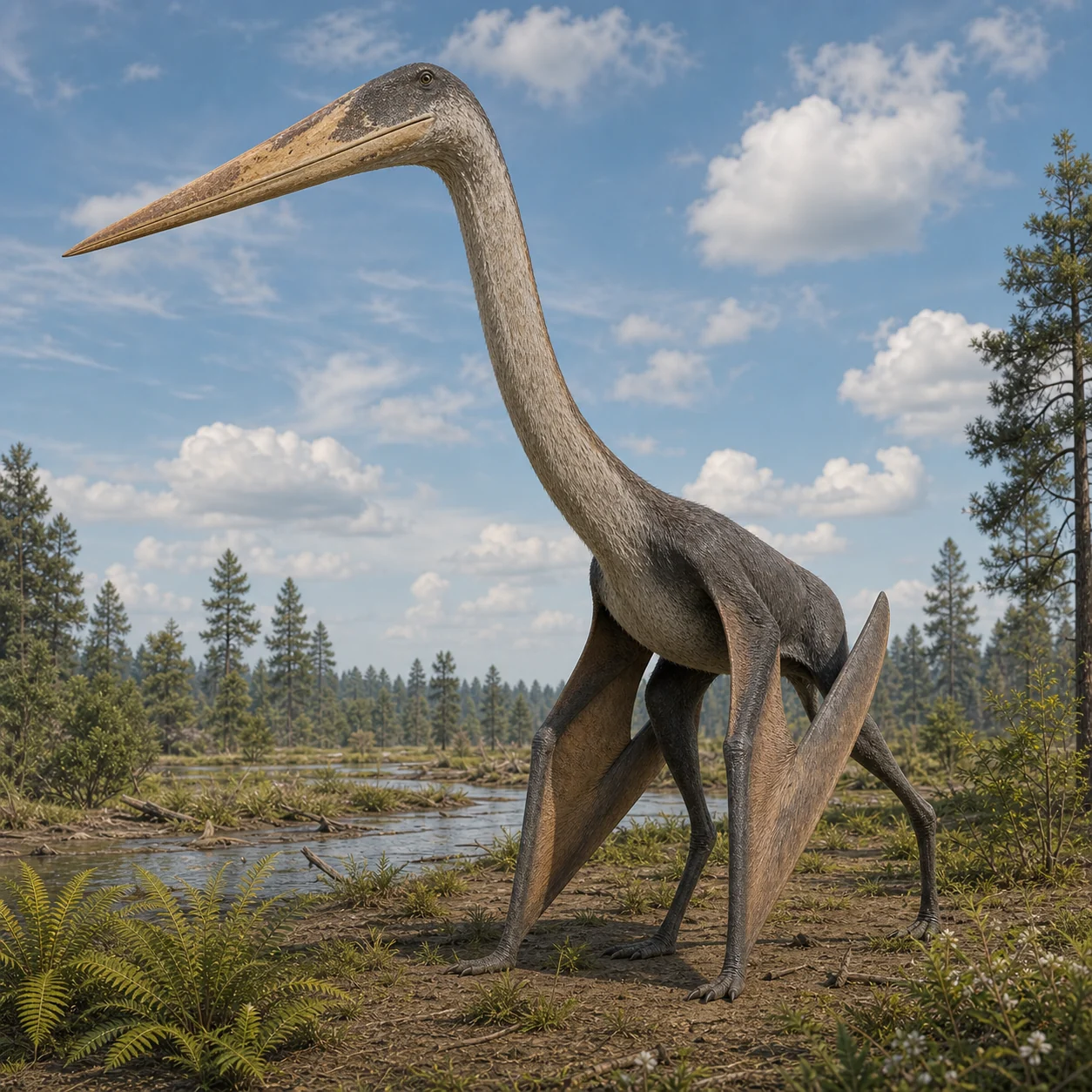
Quetzalcoatlus northropi foi o maior animal voador conhecido, com altura de girafa e envergadura de pequeno avião.
Quetzalcoatlus ( ) is a genus of azhdarchid pterosaur that lived during the Maastrichtian age of the Late Cretaceous in North America. The type specimen, recovered in 1971 from the Javelina Formation of Texas, United States, consists of several wing fragments and was described as Quetzalcoatlus northropi in 1975 by Douglas Lawson. The generic name refers to the Aztec serpent god of the sky, Quetzalcōātl, while the specific name honors Jack Northrop, designer of a tailless fixed-wing aircraft. The remains of a second species were found between 1972 and 1974, also by Lawson, around 40 km (25 mi) from the Q. northropi locality. In 2021, these remains were assigned to the name Quetzalcoatlus lawsoni by Brian Andres and (posthumously) Wann Langston Jr., as part of a series of publications on the genus.
Quetzalcoatlus northropi has gained fame as a candidate for the largest flying animal ever discovered, though estimating its size has been difficult due to the fragmentary nature of the only known specimen. While wingspan estimates over the years have ranged from 5.2–25.8 m (17–85 ft), more recent estimates hover around 10–11 m (33–36 ft). Previously, smaller azhdarchid specimens were referred to the species Q. lawsoni, though other researchers have questioned the placement of this species within the genus.
Historical interpretations of the diet of Quetzalcoatlus have ranged from scavenging to skim-feeding like the modern skimmer bird. However, more recent research has found that it most likely hunted small prey on the ground, in a similar way to storks and ground hornbills. This has been dubbed the terrestrial stalking hypothesis and is thought to be a common feeding behavior among large azhdarchids. On the other hand, the disputed second species, Q.…
- Família
- Azhdarchidae
- Ordem
- Pterosauria
- Período
- Cretaceous (72.1-66.0 MYA)
- Dieta
- Carnivore
- Comprimento
- 10.0-11.0 m wingspan
- Peso
- 200-250 kg
Fatos científicos
- Maior animal voador de todos os tempos
- Altura de 5-6m quando em pé
- Pescoço ultrarrígido de 3m
- Decolava com salto quadrúpede poderoso
- Bico longo para capturar presas terrestres
- Podia cruzar continentes em voos migratórios