Mapusaurus
Mapusaurus roseae
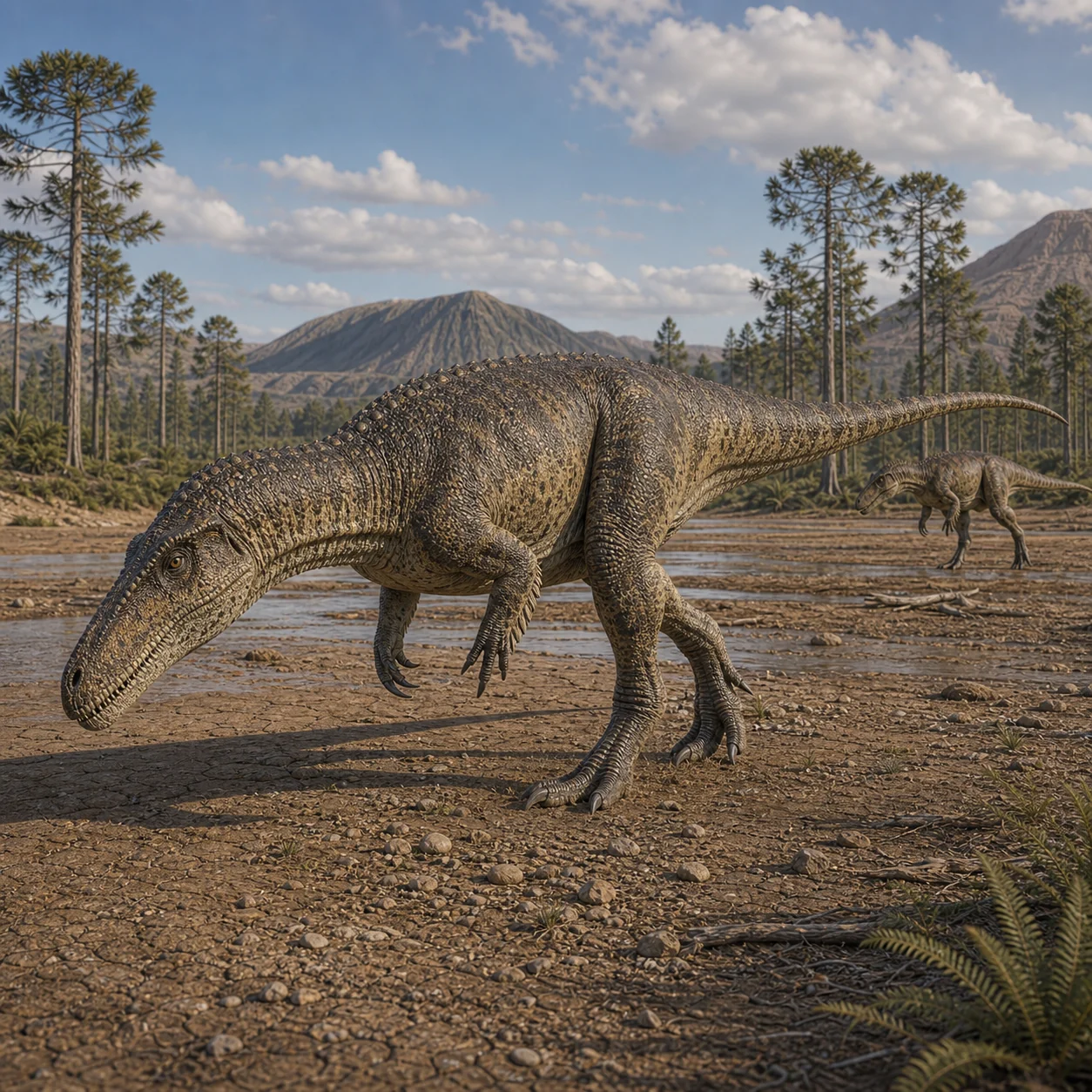
Mapusaurus foi um terópode carnívoro do Cretáceo, descrito por Coria & Currie. Viveu há aproximadamente 100.0-93.0 milhões de anos, na região do que hoje é Argentina (Patagônia). Medindo de 10.0-12.5 m, pesando 3.0-5.0 tons, era um representante característico da fauna mesozoica.
Mapusaurus (lit. 'earth lizard') is a genus of giant carcharodontosaurid carnosaurian dinosaur that lived in Argentina during the Cenomanian–Turonian ages of the Late Cretaceous. It is known from a bonebed of between seven and nine specimens, excavated from the strata of the Huincul Formation between 1997 and 2001 as part of the Argentinian-Canadian Dinosaur Project. In 2006, Rodolfo Coria and Philip J. Currie scientifically described Mapusaurus. Only one species of Mapusaurus, M. roseae, has been described, named after the rose-colored rocks in which it was discovered and sponsor Rose Letwin.
Mapusaurus was one of the largest carcharodontosaurids. Based on the biggest specimen known from the bonebed, represented by a left femur, it was originally estimated to have reached a maximum body length of 10.2 metres (33 ft) and a mass of 3 tonnes (6,600 lb). Subsequent works have given maximum size estimates of 10.2–12.6 m (33–41 ft) and 6–8 t (13,000–18,000 lb), respectively. Mapusaurus generally resembled Giganotosaurus, though had a deeper skull, a more rugose maxilla, a rougher surface to its lacrimal bone, differently proportioned neck vertebrae, and various other minor differences. The arms of Mapusaurus were very small, similar in terms of proportional size to those of tyrannosaurids and abelisaurids.
- Família
- Carcharodontosauridae
- Ordem
- Saurischia
- Período
- Cretaceous (100.0-93.0 MYA)
- Dieta
- Carnivore
- Comprimento
- 10.0-12.5 m
- Peso
- 3.0-5.0 tons
Fatos científicos
- Medindo 10.0-12.5 m, tinha porte médio para os padrões mesozoicos
- Como carnívoro do Cretáceo, ocupava papel de predador ativo em seu ecossistema
- Seus fósseis foram encontrados na região de Argentina (Patagônia), contribuindo para o entendimento da fauna cretáceo local
- Foi descrito cientificamente por Coria & Currie, contribuindo para o entendimento da diversidade dinossauriana