Therizinosaurus
Therizinosaurus cheloniformis
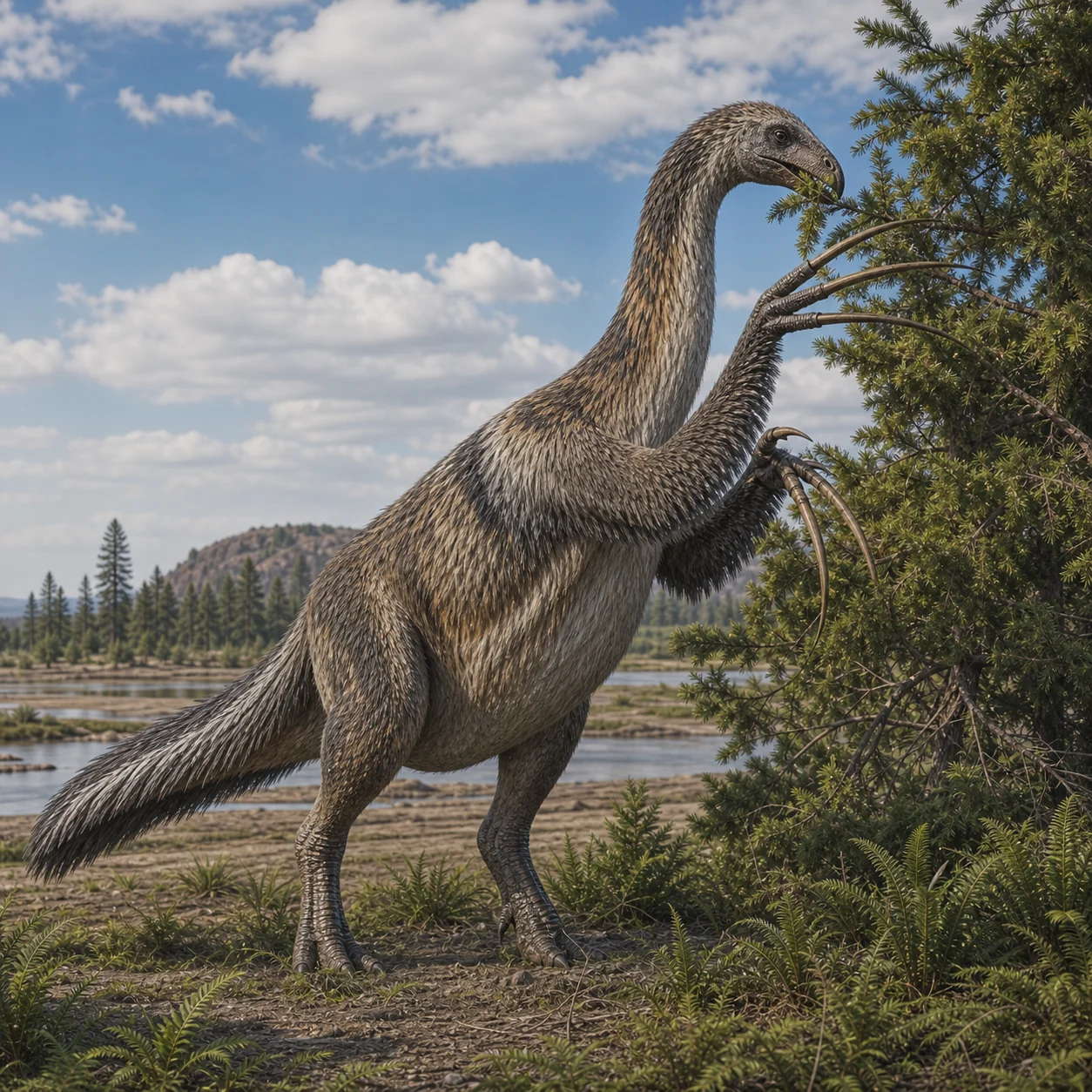
Therizinosaurus ( ; meaning 'scythe lizard') is a genus of very large therizinosaurid dinosaurs that lived during the Late Cretaceous period in what is now Asia. It contains a single species, Therizinosaurus cheloniformis, known from the fossiliferous Nemegt Formation. The first remains of Therizinosaurus were found in 1948 by a Mongolian field expedition in the Gobi Desert and later described by Evgeny Maleev in 1954. The genus is only known from a few bones, including gigantic manual unguals (claw bones), from which it gets its name, and additional findings comprising fore and hindlimb elements that were discovered from the 1960s through the 1980s.
Therizinosaurus was a colossal therizinosaurid that could grow up to 9–10 m (30–33 ft) long and 4–5 m (13–16 ft) tall, and weigh possibly over 5 t (5.5 short tons). Like other therizinosaurids, it would have been a slow-moving, long-necked, high browser equipped with a rhamphotheca (horny beak) and a wide torso for food processing. Its forelimbs were particularly robust and had three fingers that bore unguals which, unlike other relatives, were very stiffened, elongated, and only had significant curvatures at the tips. Therizinosaurus had the longest known manual unguals of any land animal, reaching above 50 cm (20 in) in length. Its hindlimbs ended in four functionally weight-bearing toes differing from other theropod groups in which the first toe was reduced to a dewclaw and also resembling the very distantly related sauropodomorphs.
It was one of the last and the largest representative of its unique group, the Therizinosauria (formerly known as Segnosauria; the segnosaurs).…
- Family
- Therizinosauridae
- Order
- Saurischia
- Period
- Cretaceous (70.6–66.0 Ma)
- Diet
- Herbivore
- Length
- 12.0–16.0 m
- Weight
- 3.0–5.0 t
- Type locality
- Nemegt Formation, Mongolia
- Holotype
- PIN 551-483
- PBDB
- txn:38553