Euhelopus
Euhelopus zdanskyi
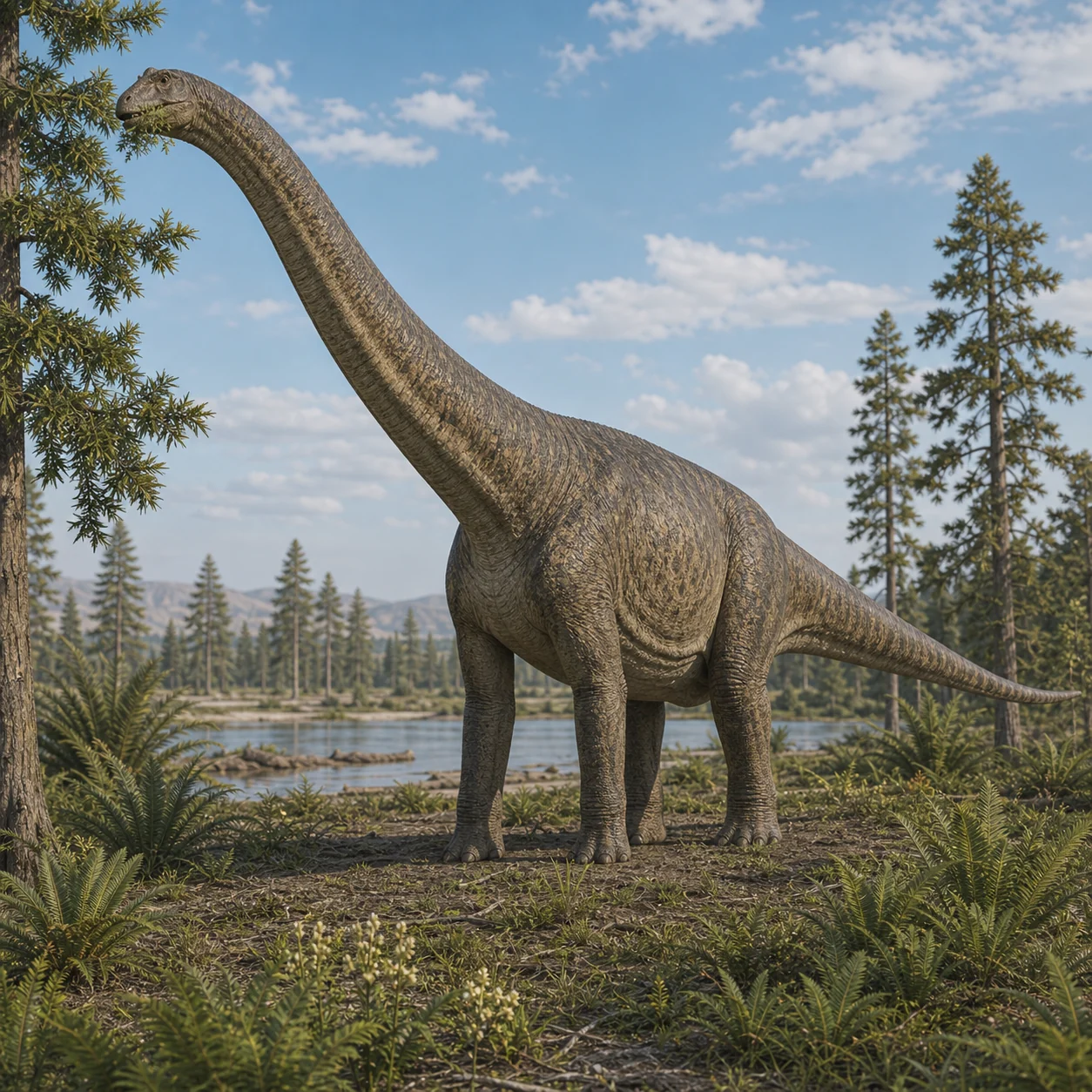
Euhelopus is a genus of sauropod dinosaur that lived between 143 and 133 million years ago during the Berriasian and Valanginian ages of the Early Cretaceous in what is now Shandong Province in China. It was a large quadrupedal herbivore. Like sauropods such as brachiosaurids and titanosaurs, Euhelopus had longer forelimbs than hindlimbs. This discovery was paleontologically significant because it represented the first dinosaur scientifically investigated from China: seen in 1913, rediscovered in 1922, excavated in 1923, and studied by T'an during the same year. Unlike most sauropod specimens, it has a relatively complete skull. Euhelopus was a long-necked sauropod similar to Mamenchisaurus, but its affinities are controversial. Most studies favor a close relationship between Euhelopus and titanosaurs, rather than mamenchisaurids.
- Family
- Camarasauridae
- Order
- Saurischia
- Period
- Cretaceous (130.0–113.0 Ma)
- Diet
- Herbivore
- Length
- 12.0–15.0 m
- Weight
- 3.0–5.0 t
- Type locality
- Mengyin Formation, Shandong, China
- Holotype
- PMU R233
- PBDB
- txn:38701