Unaysaurus
Unaysaurus tolentinoi
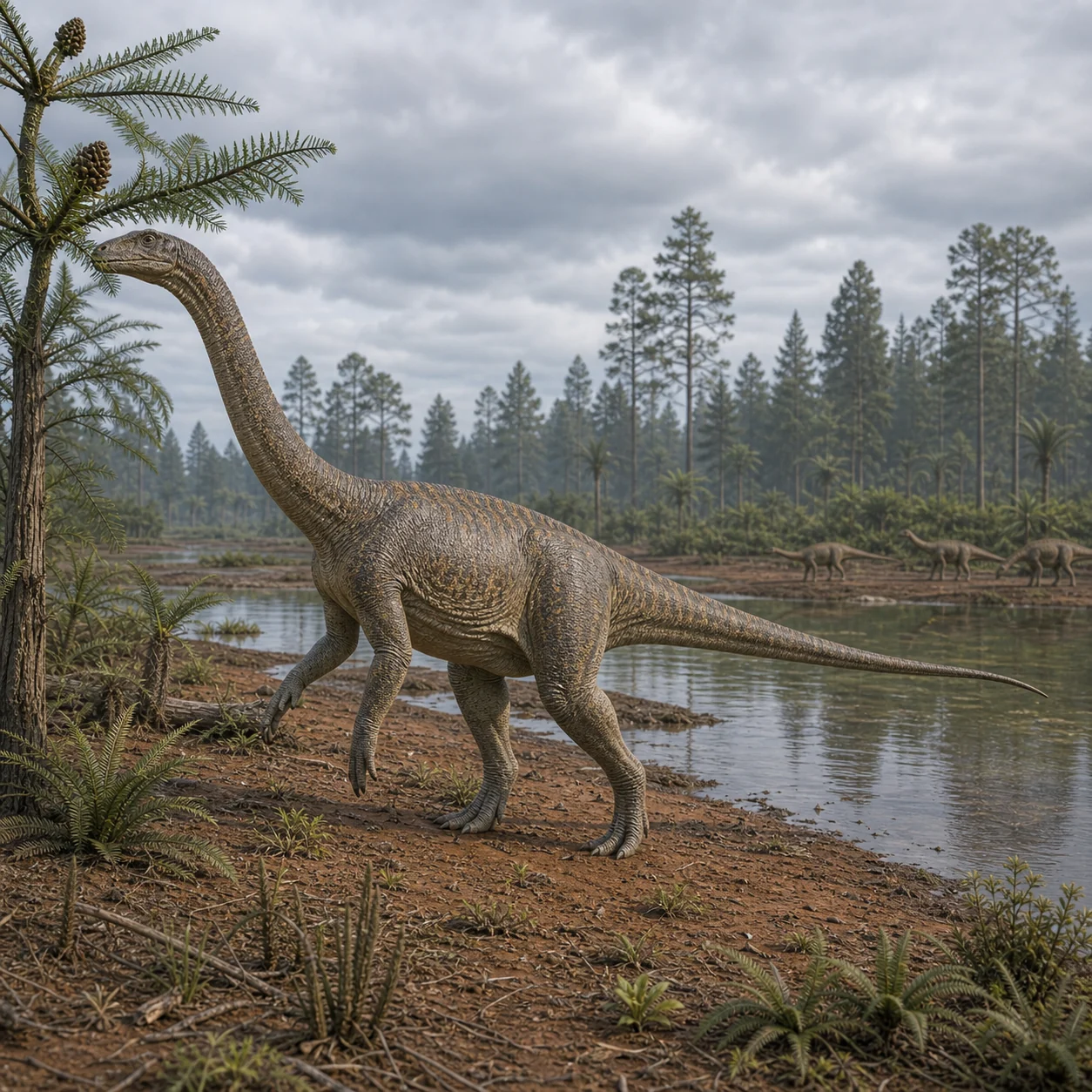
Unaysaurus foi um terópode herbívoro do Triássico, descrito por Leal et al.. Viveu há aproximadamente 228.0-220.0 milhões de anos, na região do que hoje é Brasil. Medindo de 2.5 m, pesando 70 kg, era um representante característico da fauna mesozoica.
Unaysaurus is a genus of herbivorous unaysaurid sauropodomorph dinosaur. Discovered in southern Brazil, in the geopark of Paleorrota, in 1998, and announced in a press conference on Thursday, December 3, 2004, it is one of the oldest dinosaurs known. It is closely related to plateosaurid dinosaurs found in Germany, which indicates that it was relatively easy for species to spread across the giant landmass of the time, the supercontinent of Pangaea. The fossils of Unaysaurus are well-preserved. They consist of an almost complete skull, including a lower jaw, and partial skeleton with many of the bones still connected to each other in their natural positions. It is one of the most complete dinosaur skeletons (including complete skull) ever recovered in Brazil.
- Família
- Plateosauridae
- Ordem
- Saurischia
- Período
- Triassic (228.0-220.0 MYA)
- Dieta
- Herbivore
- Comprimento
- 2.5 m
- Peso
- 70 kg
Fatos científicos
- Medindo 2.5 m, tinha porte médio para os padrões mesozoicos
- Herbívoro especializado do Triássico, provavelmente pastava em vegetação de Brasil
- Seus fósseis foram encontrados na região de Brasil, contribuindo para o entendimento da fauna triássico local
- Vivendo há 228.0-220.0Ma, é um dos dinossauros mais antigos catalogados
- Foi descrito cientificamente por Leal et al., contribuindo para o entendimento da diversidade dinossauriana