Thescelosaurus
Thescelosaurus neglectus
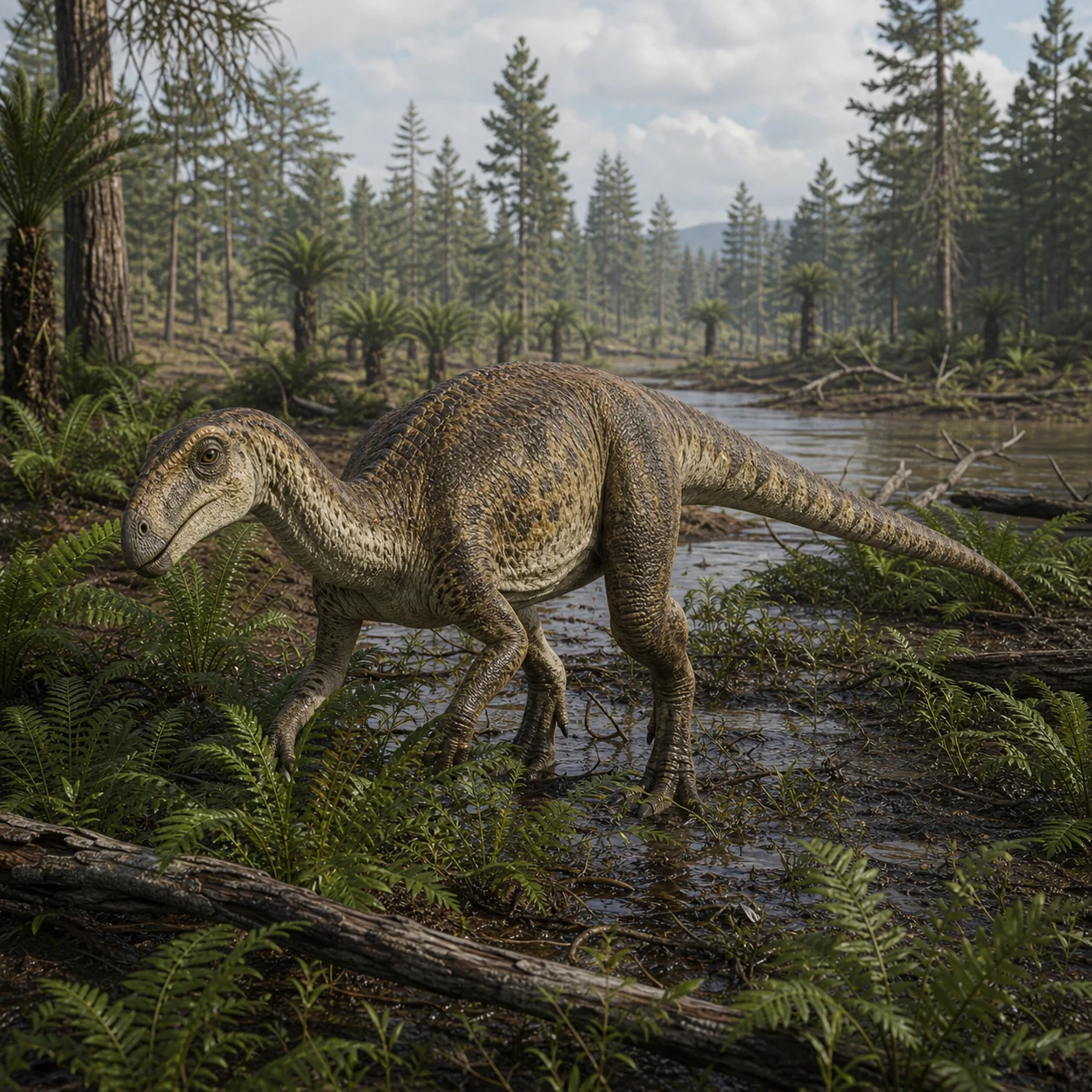
Thescelosaurus foi um ornitísquio herbívoro do Cretáceo, descrito por Charles Sternberg. Viveu há aproximadamente 93.9-72.2 milhões de anos, na região do que hoje é América do Norte (EUA). Medindo de 3.5-4.0 m, pesando 200-300 kg, era um representante característico da fauna mesozoica.
Thescelosaurus ( THESS-el-oh-sore-us) is a genus of ornithischian dinosaur that lived during the Late Cretaceous period in western North America. It was named and described in 1913 by the paleontologist Charles W. Gilmore; the type species is T. neglectus. Two other species, T. garbanii and T. assiniboiensis, were named in 1976 and 2011, respectively. Additional species have been suggested but are currently not accepted. Thescelosaurus is the eponymous member of its family, the Thescelosauridae. Thescelosaurids are either considered to be basal ("primitive") ornithopods, or are placed outside of this group within the broader group Neornithischia.
Adult Thescelosaurus would have measured roughly 3–4 m (10–13 ft) long and probably weighed 200 to 300 kg (440 to 660 lb). It moved on two legs, and its body was counter-balanced by its long tail, which made up half of the body length and was stiffened by rod-like ossified tendons. The animal had a long, low snout that ended in a toothless beak. It had more teeth than related genera, and the teeth were of different types. The hand bore five fingers, and the foot four toes. Thin plates are found next to the ribs' sides, the function of which is unclear. Scale impressions are known from the leg of one specimen. An herbivore, Thescelosaurus was likely a selective feeder, as indicated by its teeth and narrow snout. Its limbs were robust, and its femur (thigh bone) was longer than its tibia (shin bone), suggesting that it was not adapted to running. Its brain was comparatively small, possibly indicating small group sizes of two to three individuals. The senses of smell and balance were acute, but hearing was poor. It might have been burrowing, as acute smell and poor hearing are typical for modern burrowing animals.…
- Família
- Thescelosauridae
- Ordem
- Ornithischia
- Período
- Cretaceous (93.9-72.2 MYA)
- Dieta
- Herbivore
- Comprimento
- 3.5-4.0 m
- Peso
- 200-300 kg
Fatos científicos
- Medindo 3.5-4.0 m, tinha porte médio para os padrões mesozoicos
- Herbívoro especializado do Cretáceo, provavelmente pastava em vegetação de América do Norte (EUA)
- Seus fósseis foram encontrados na região de América do Norte (EUA), contribuindo para o entendimento da fauna cretáceo local
- Foi descrito cientificamente por Charles Sternberg, contribuindo para o entendimento da diversidade dinossauriana