Stegosaurus
Stegosaurus stenops
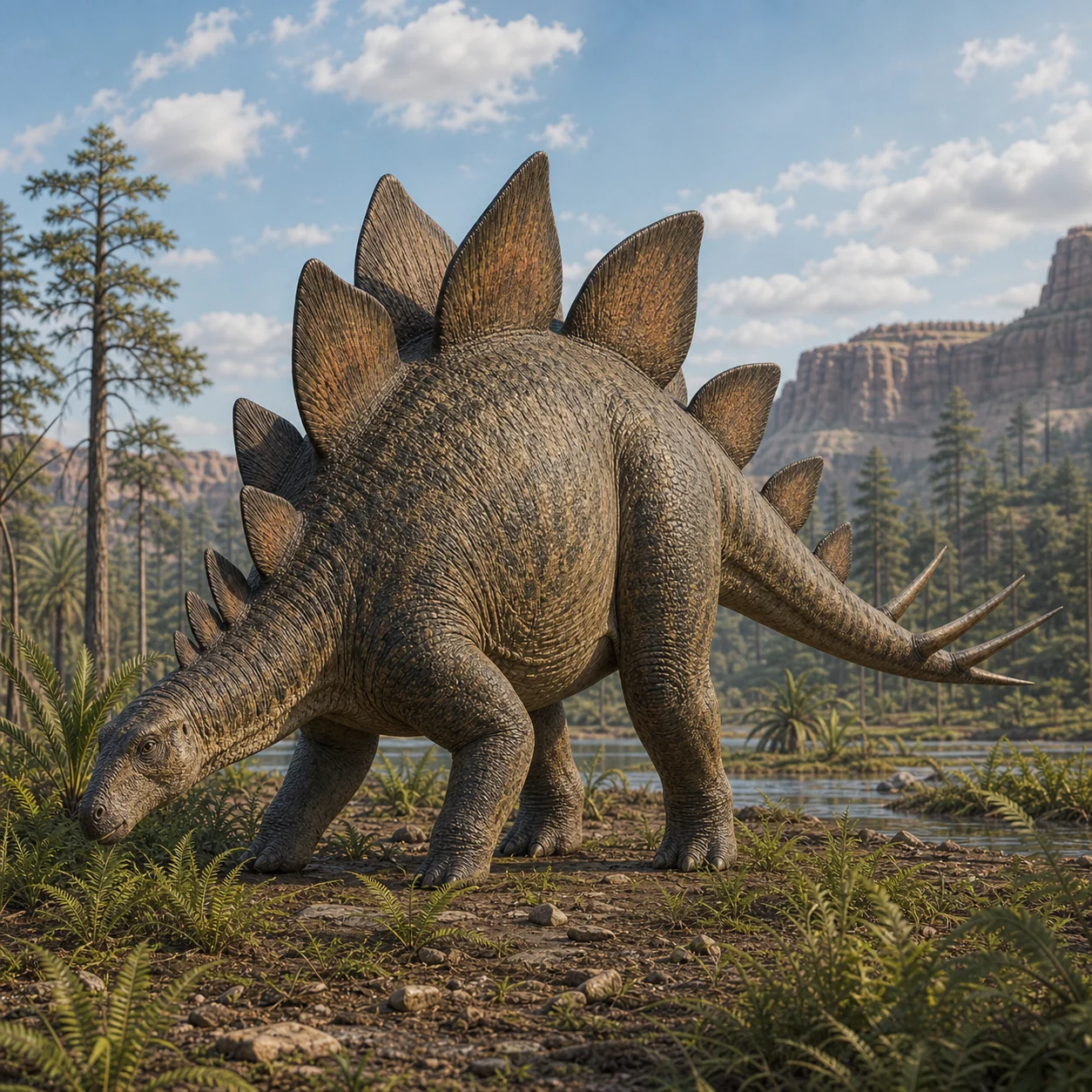
Stegosaurus stenops possuía duas fileiras de placas ósseas e espinhos caudais (thagomizer), com cérebro do tamanho de uma noz apesar do corpo de 9m.
Stegosaurus (; lit. 'roof-lizard') is a genus of extinct herbivorous four-legged armored dinosaurs from the Late Jurassic, characterized by the distinctive kite-shaped upright plates along their backs and spikes on their tails. Fossils of the genus have been found in the western United States and in Portugal, where they are found in Kimmeridgian- to Tithonian-aged strata, dating to between 155 and 145 million years ago. Of the species that have been classified in the upper Morrison Formation of the western US, only three are universally recognized: S. stenops, S. ungulatus and S. sulcatus. The remains of over 80 individual animals of this genus have been found. Stegosaurus would have lived alongside dinosaurs such as Apatosaurus, Diplodocus, Camarasaurus and Allosaurus, the latter of which may have preyed on it.
They were large, heavily built, herbivorous quadrupeds with rounded backs, short fore limbs, long hind limbs, and tails held high in the air. Due to their distinctive combination of broad, upright plates and tail tipped with spikes, Stegosaurus is one of the most recognizable kinds of dinosaurs. The function of this array of plates and spikes has been the subject of much speculation among scientists. Today, it is generally agreed that their spiked tails were most likely used for defense against predators, while their plates may have been used primarily for display, and secondarily for thermoregulatory functions. Stegosaurus had a relatively low brain-to-body mass ratio. It had a short neck and a small head, meaning it most likely ate low-lying bushes and shrubs.…
- Família
- Stegosauridae
- Ordem
- Ornithischia
- Período
- Jurassic (156.3-145.0 MYA)
- Dieta
- Herbivore
- Comprimento
- 7.0-9.0 m
- Peso
- 2.3-5.3 tons
Fatos científicos
- Placas dorsais vascularizadas para termorregulação e display
- Cérebro pesava apenas 80g em animal de 2 toneladas
- Dentes pequenos indicam dieta de plantas macias
- Centro de gravidade sobre os quadris permitia erguer-se nas patas traseiras
- Thagomizer (espinhos caudais) com até 60cm de comprimento
- Placas maiores tinham até 60cm de altura e 60cm de largura