Sauroposeidon
Sauroposeidon proteles
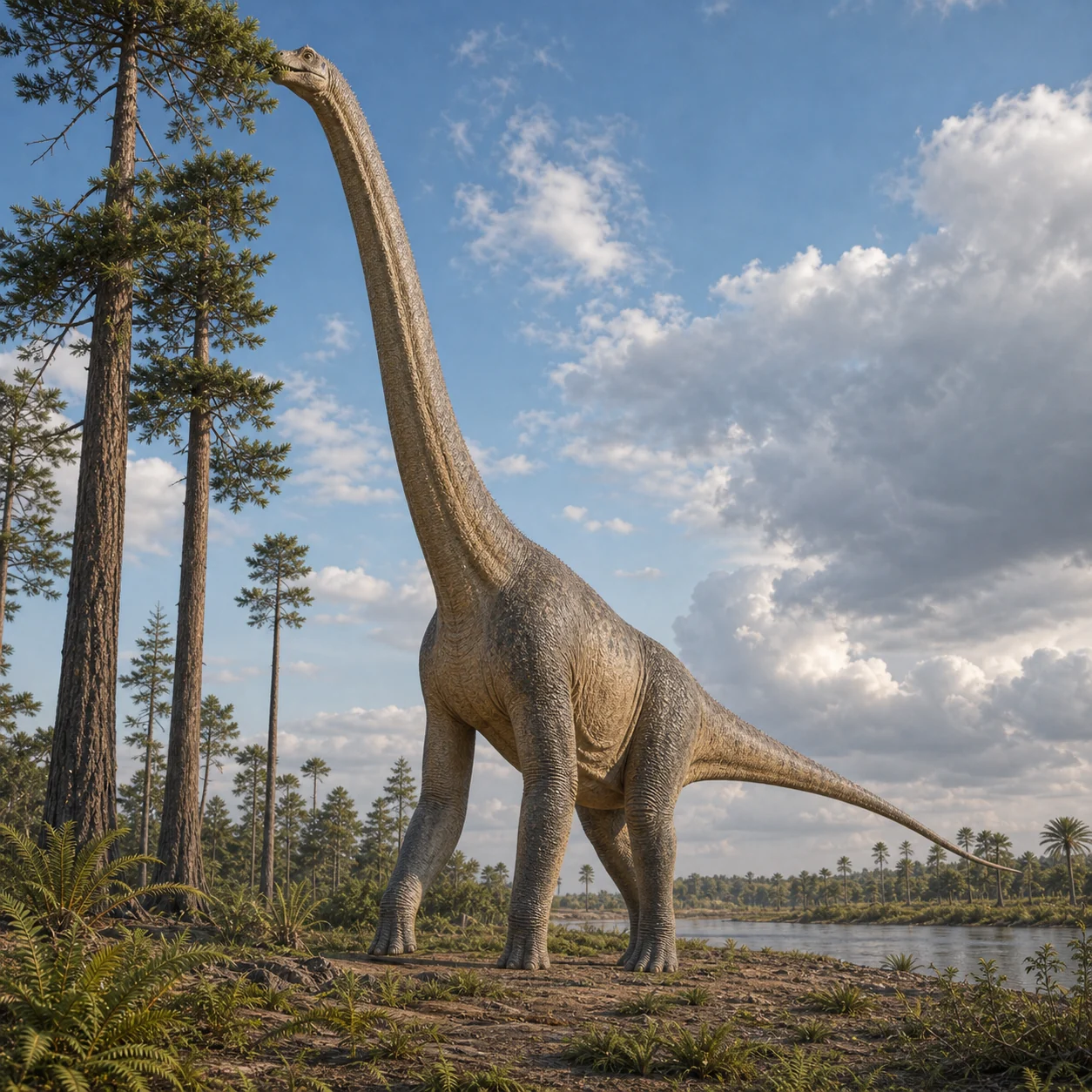
Sauroposeidon foi um terópode herbívoro do Cretáceo, descrito por Wedel et al.. Viveu há aproximadamente 112.0-110.0 milhões de anos, na região do que hoje é América do Norte (EUA). Medindo de 27.0-34.0 m, pesando 40.0-60.0 tons, era um representante característico da fauna mesozoica.
Sauroposeidon ( SOR-o-po-SY-dən; meaning "lizard earthquake god", after the Greek god Poseidon) is a genus of sauropod dinosaur known from several incomplete specimens including a bone bed and fossilized trackways that have been found in the U.S. states of Oklahoma, Wyoming, and Texas.
The fossils were found in rocks dating from near the end of the Early Cretaceous (Aptian–early Albian), from about 113 to 110 million years ago, a time when sauropod diversity in North America had greatly diminished. Alongside Abydosaurus and Sonorasaurus, it was one of the last known North American sauropod prior to an absence of the group on the continent of roughly 40 million years that ended with the appearance of Alamosaurus during the Maastrichtian.
While the holotype remains were initially discovered in 1994, due to their unexpected age and unusual size they were initially misclassified as pieces of petrified wood. A more detailed analysis in 1999 revealed their true nature which resulted in a minor media frenzy, and formal publication of the find the following year.
Paleoecological analysis indicates that Sauroposeidon lived on the shores of the Gulf of Mexico, in a river delta. Extrapolations based on the more completely known Brachiosaurus indicate that the head of Sauroposeidon could reach 16.5–18 m (54–59 ft) in height with its neck extended, which would make it one of the tallest known dinosaurs. With an estimated length of 27–34 m (89–112 ft) and a mass of 40–60 t (44–66 short tons), it also ranks among the longest and heaviest.…
- Família
- Brachiosauridae
- Ordem
- Saurischia
- Período
- Cretaceous (112.0-110.0 MYA)
- Dieta
- Herbivore
- Comprimento
- 27.0-34.0 m
- Peso
- 40.0-60.0 tons
Fatos científicos
- Com 27.0-34.0 m, estava entre os maiores animais terrestres já descobertos
- Herbívoro especializado do Cretáceo, provavelmente pastava em vegetação de América do Norte (EUA)
- Seus fósseis foram encontrados na região de América do Norte (EUA), contribuindo para o entendimento da fauna cretáceo local
- Foi descrito cientificamente por Wedel et al., contribuindo para o entendimento da diversidade dinossauriana