Megalosaurus
Megalosaurus bucklandii
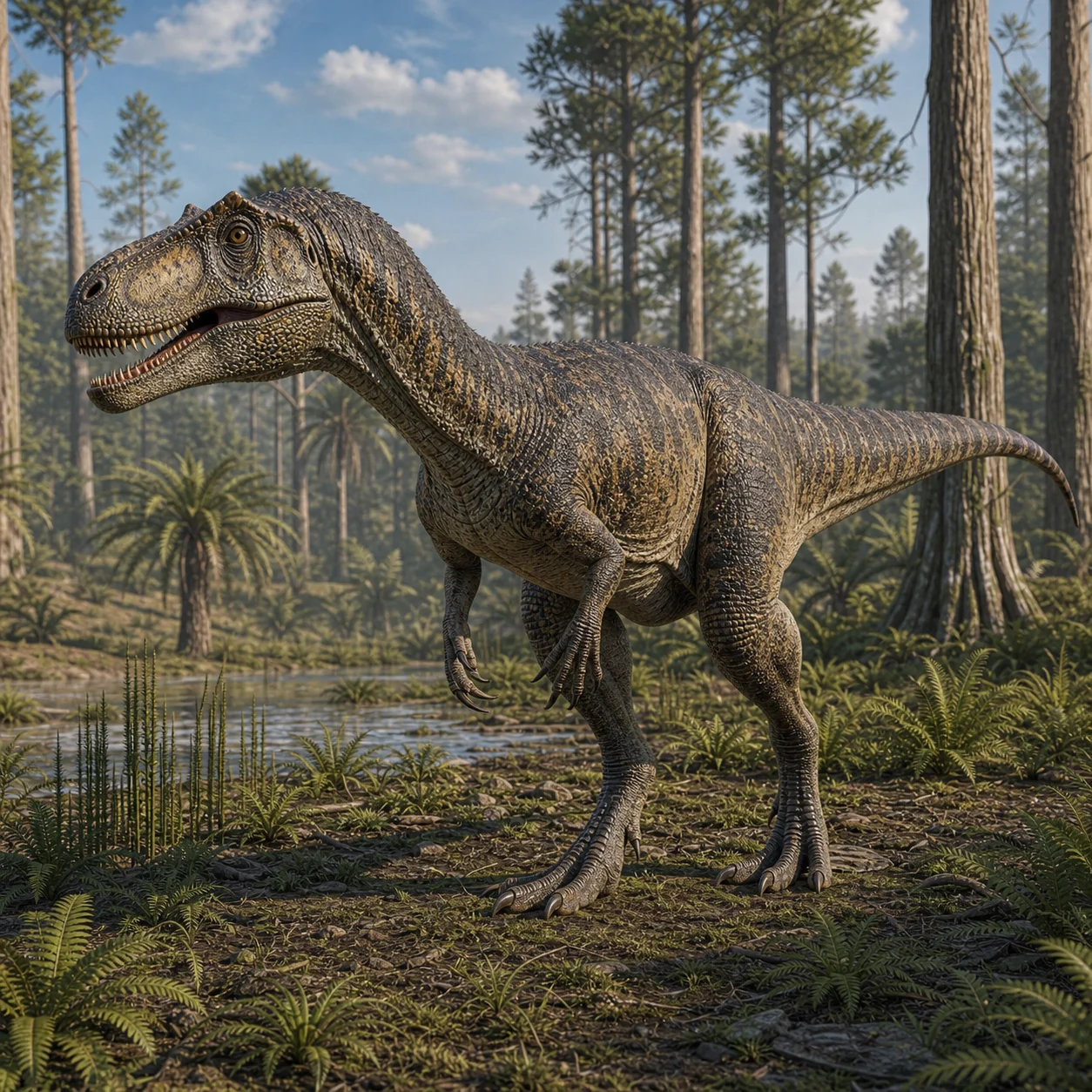
Megalosaurus foi um terópode carnívoro do Jurássico, descrito por William Buckland. Viveu há aproximadamente 205.7-72.2 milhões de anos, na região do que hoje é Europa. Medindo de 6.0-9.0 m, pesando 700 kg-1.4 tons, era um representante característico da fauna mesozoica.
Megalosaurus (meaning "great lizard", from Greek μέγας, megas, meaning 'big', 'tall' or 'great' and σαῦρος, sauros, meaning 'lizard') is an extinct genus of large carnivorous theropod dinosaurs of the Middle Jurassic Epoch (Bathonian stage, 166 million years ago) of southern England. Although fossils from other areas have been assigned to the genus, the only certain remains of Megalosaurus come from Oxfordshire and date to the late Middle Jurassic.
The earliest remains of Megalosaurus were described in the 17th century, and were initially interpreted as the remains of elephants or giants. Megalosaurus was named in 1824 by William Buckland, becoming the first genus of dinosaur to be validly named (other than birds, not then recognized as dinosaurs). The type species is M. bucklandii, named in 1827 by Gideon Mantell, after Buckland. In 1842, Megalosaurus was one of three genera on which Richard Owen based his Dinosauria, along with Iguanodon and Hylaeosaurus. On Owen's directions a model was made as one of the Crystal Palace Dinosaurs, which greatly increased the public interest for prehistoric reptiles. Over 50 other species would eventually be classified under the genus; at first, this was because so few types of dinosaur had been identified, but the practice continued even into the 20th century after many other dinosaurs had been discovered. Today it is understood that none of these additional species was directly related to M. bucklandii, which is the only true Megalosaurus species. Because a complete skeleton of it has never been found, much is still unclear about its build.
The first naturalists who investigated Megalosaurus mistook it for a gigantic quadrupedal lizard 20 metres (66 ft) in length. In 1842, Owen concluded that it was no longer than 9 metres (30 ft).…
- Família
- Megalosauridae
- Ordem
- Saurischia
- Período
- Jurassic (205.7-72.2 MYA)
- Dieta
- Carnivore
- Comprimento
- 6.0-9.0 m
- Peso
- 700 kg-1.4 tons
Fatos científicos
- Medindo 6.0-9.0 m, tinha porte médio para os padrões mesozoicos
- Como carnívoro do Jurássico, ocupava papel de predador ativo em seu ecossistema
- Seus fósseis foram encontrados na região de Europa, contribuindo para o entendimento da fauna jurássico local
- Vivendo há 205.7-72.2Ma, é um dos dinossauros mais antigos catalogados
- Foi descrito cientificamente por William Buckland, contribuindo para o entendimento da diversidade dinossauriana