Iguanodon
Iguanodon bernissartensis
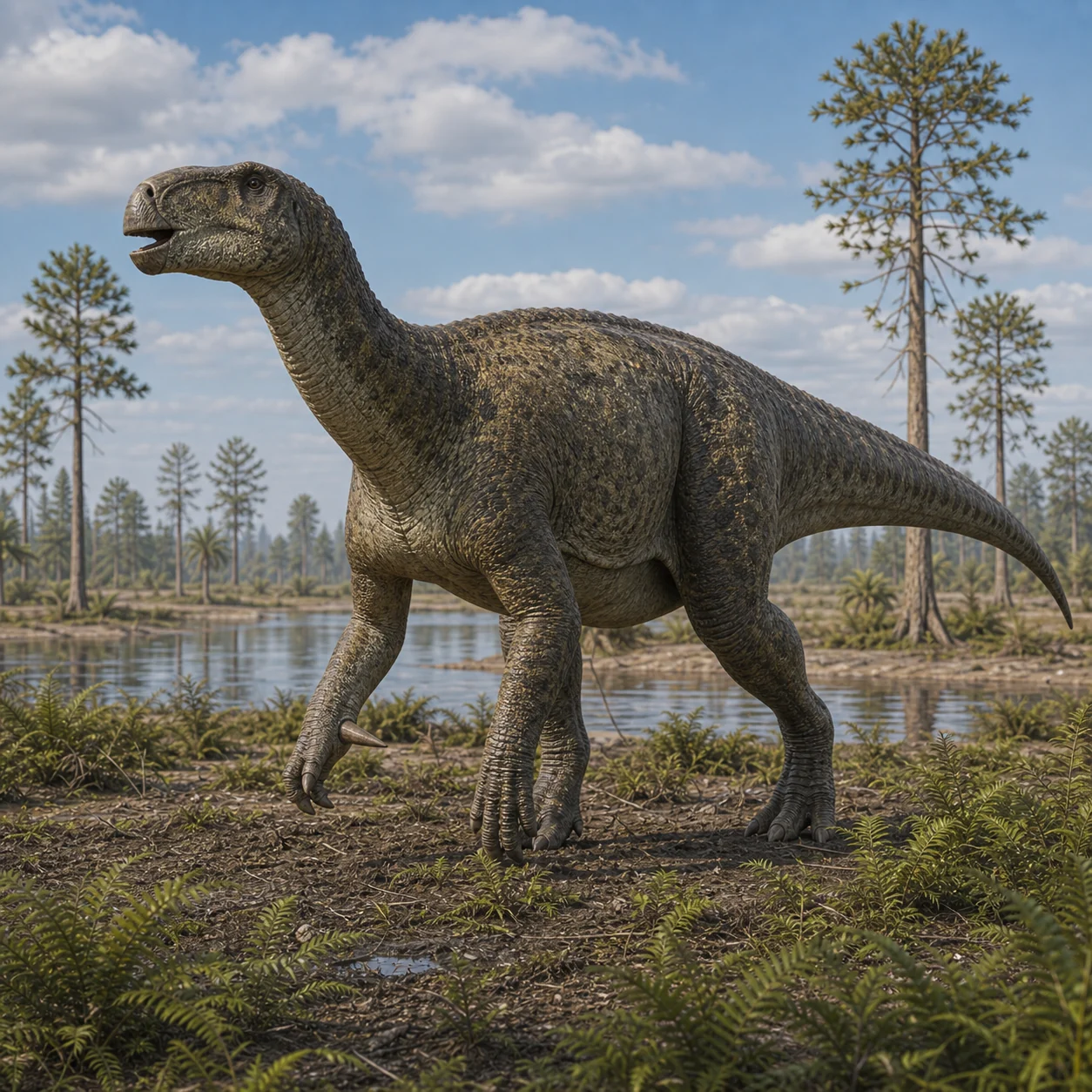
Iguanodon bernissartensis foi o segundo dinossauro nomeado cientificamente, com polegar modificado em espinho defensivo.
Iguanodon ( i-GWAH-nə-don; meaning 'iguana-tooth'), named in 1825, is a genus of iguanodontian dinosaur. While many species found worldwide have been classified in the genus Iguanodon, dating from the Late Jurassic to Early Cretaceous, taxonomic revision in the early 21st century has defined Iguanodon to be based on at least one well-substantiated species: Iguanodon bernissartensis, which lived during the Barremian to early Aptian ages of the Early Cretaceous in Belgium, Germany, England, and Spain, between about 126 and 122 million years ago. Iguanodon was a large, bulky herbivore, measuring up to 9–11 metres (30–36 ft) in length and 4.5 metric tons (5.0 short tons) in body mass. Distinctive features include large thumb spikes, which were possibly used for defense against predators, combined with long prehensile fifth fingers able to forage for food.
The genus was named in 1825 by English geologist Gideon Mantell, based on fossil specimens found in England, and was given the species name I. anglicus. Iguanodon was the second type of dinosaur formally named based on fossil specimens, after Megalosaurus. Together with Megalosaurus and Hylaeosaurus, it was one of the three genera originally used to define Dinosauria. The genus Iguanodon belongs to the larger group Iguanodontia, along with the duck-billed hadrosaurs. The taxonomy of this genus continues to be a topic of study as new species are named or long-standing ones reassigned to other genera.
In 1878, new, far more complete remains of Iguanodon were discovered in Belgium and studied by Louis Dollo. These were given the new species I. bernissartensis. In the early 21st century it became understood that the remains referred to as Iguanodon in England belonged to four different species (including I.…
- Família
- Iguanodontidae
- Ordem
- Ornithischia
- Período
- Cretaceous (154.8-83.6 MYA)
- Dieta
- Herbivore
- Comprimento
- 9.0-11.0 m
- Peso
- 3.0-5.0 tons
Fatos científicos
- Segundo dinossauro a receber nome científico (1825)
- Polegar em espinho para defesa ou forragear
- Inicialmente reconstruído como rinoceronte reptiliano
- Primeiras pegadas de dinossauro reconhecidas
- Mãos com 5 dedos incluindo mindinho flexível
- Distribuição global em 3 continentes