Dreadnoughtus
Dreadnoughtus schrani
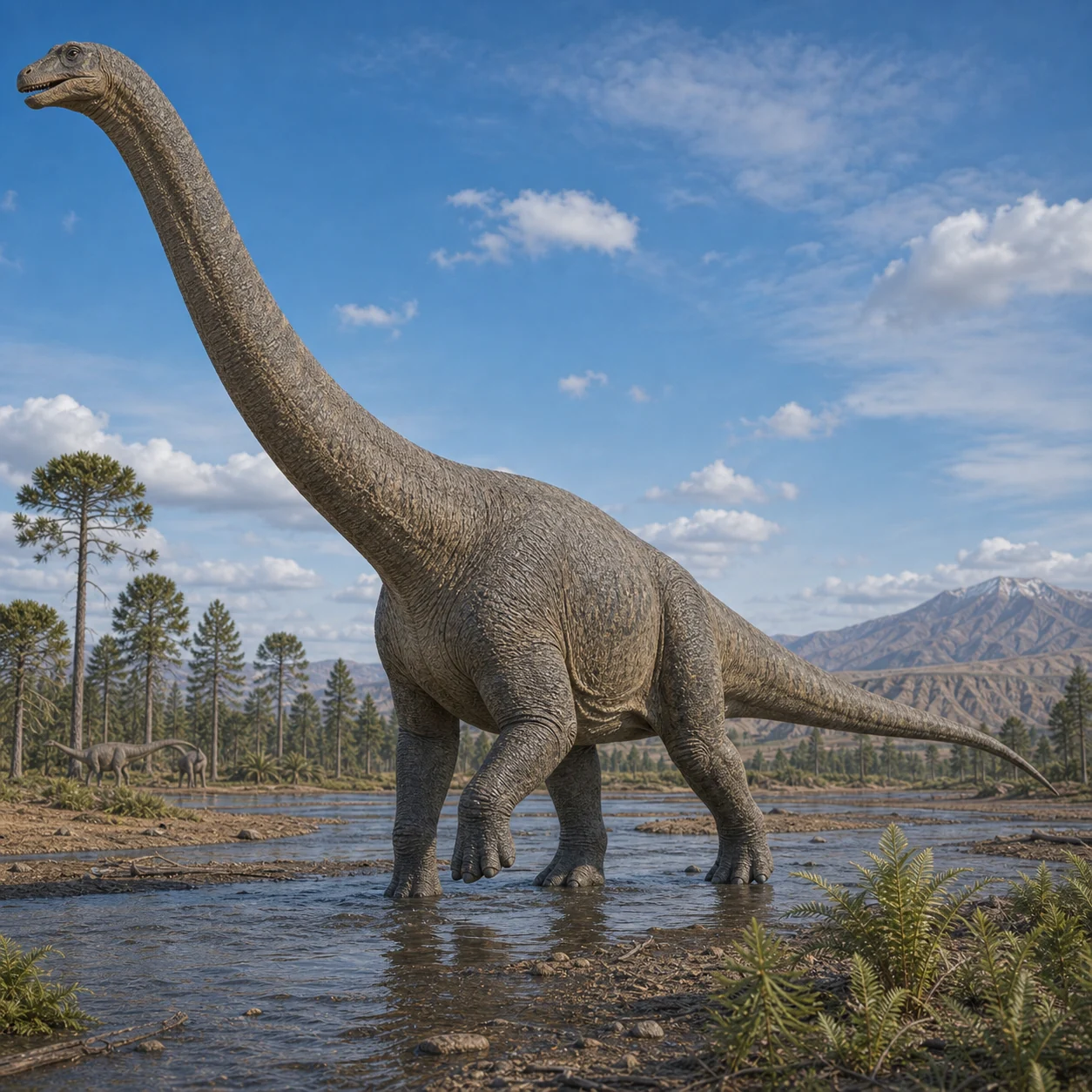
Dreadnoughtus foi um terópode herbívoro do Cretáceo, descrito por Kenneth Lacovara. Viveu há aproximadamente 77 milhões de anos, na região do que hoje é Argentina (Patagônia). Medindo de 26.0 m, pesando 65 tons, era um representante característico da fauna mesozoica.
Dreadnoughtus is a genus of titanosaurian sauropod dinosaur containing a single species, Dreadnoughtus schrani. It is known from two partial skeletons discovered in Upper Cretaceous (Campanian to Maastrichtian, approximately 76–70 million years ago) rocks of the Cerro Fortaleza Formation in Santa Cruz Province, Argentina. It is one of the largest terrestrial vertebrates known from reasonably complete remains, with the immature type specimen measuring 26 metres (85 ft) in total body length and weighing up to 48–49 metric tons (53–54 short tons).
Dreadnoughtus is known from more complete skeletons than any other gigantic titanosaurian. Drexel University paleontologist Kenneth Lacovara, who discovered the genus, chose the name Dreadnoughtus, which means "fears nothing", stating "I think it's time the herbivores get their due for being the toughest creatures in an environment." Specifically, the name was inspired by the dreadnought, an extremely influential early 20th-century battleship type, known for revolutionarily outclassing (and thus supposedly never needing to fear) the smaller, weaker battleships that came before.
- Família
- Titanosauridae
- Ordem
- Saurischia
- Período
- Cretaceous (77 Ma)
- Dieta
- Herbivore
- Comprimento
- 26.0 m
- Peso
- 65 tons
Fatos científicos
- Com 26.0 m, estava entre os maiores animais terrestres já descobertos
- Herbívoro especializado do Cretáceo, provavelmente pastava em vegetação de Argentina (Patagônia)
- Seus fósseis foram encontrados na região de Argentina (Patagônia), contribuindo para o entendimento da fauna cretáceo local
- Foi descrito cientificamente por Kenneth Lacovara, contribuindo para o entendimento da diversidade dinossauriana