Diplodocus
Diplodocus longus
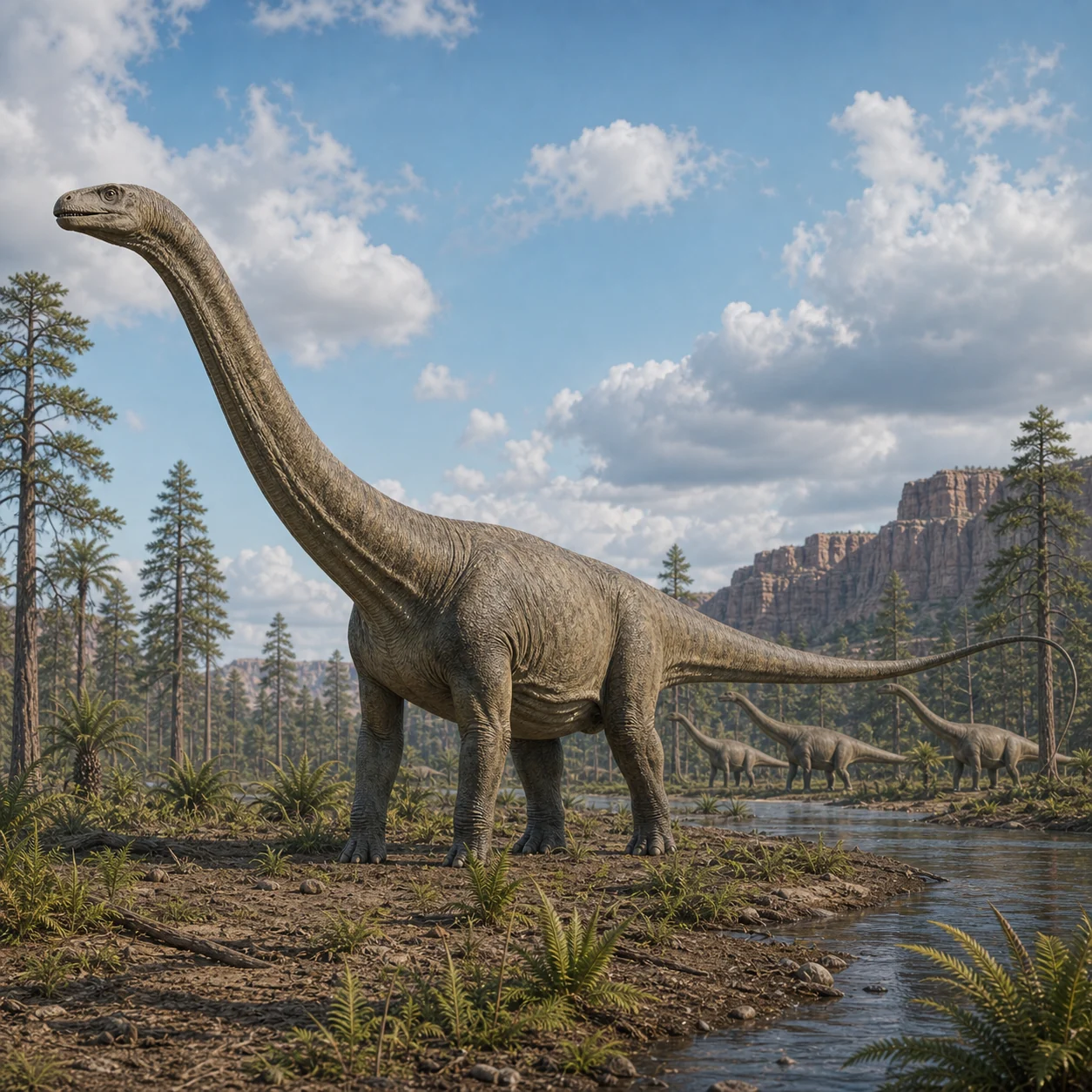
Diplodocus longus tinha o pescoço mais longo proporcionalmente ao corpo, com cauda chicote capaz de criar estalos sônicos.
Diplodocus (, , or ) is an extinct genus of diplodocid sauropod dinosaurs known from the Late Jurassic of North America. The first fossils of Diplodocus were discovered in 1877 by S. W. Williston. The generic name, coined by Othniel Charles Marsh in 1878, is a Neo-Latin term derived from Greek διπλός (diplos) "double" and δοκός (dokos) "beam", in reference to the double-beamed chevron bones located in the underside of the tail, which were then considered unique.
The genus lived in what is now mid-western North America, at the end of the Jurassic period. It is one of the more common dinosaur fossils found in the middle to upper Morrison Formation, with most specimens being found in rocks dated between about 151.88 and 149.1 million years ago, during the latest Kimmeridgian Age, although it may have made it into the Tithonian, with at least one specimen (AMNH FR 223) being potentially from among the youngest deposits of the formation. The Morrison Formation records an environment and time dominated by gigantic sauropod dinosaurs, such as Apatosaurus, Barosaurus, Brachiosaurus, Brontosaurus, and Camarasaurus. Its great size may have been a deterrent to the predators Allosaurus and Ceratosaurus: their remains have been found in the same strata, which suggests that they coexisted with Diplodocus.
- Família
- Diplodocidae
- Ordem
- Saurischia
- Período
- Jurassic (156.3-145.0 MYA)
- Dieta
- Herbivore
- Comprimento
- 24.0-26.0 m
- Peso
- 10.0-16.0 tons
Fatos científicos
- Cauda com 80 vértebras podia criar estalos supersônicos
- Dentes apenas na frente da boca para arrancar vegetação
- Pescoço mantido horizontalmente, não verticalmente
- Pedras gastrólitos no estômago ajudavam digestão
- Narinas no topo da cabeça, função ainda debatida
- Expectativa de vida estimada em 70-80 anos