Archaeopteryx
Archaeopteryx lithographica
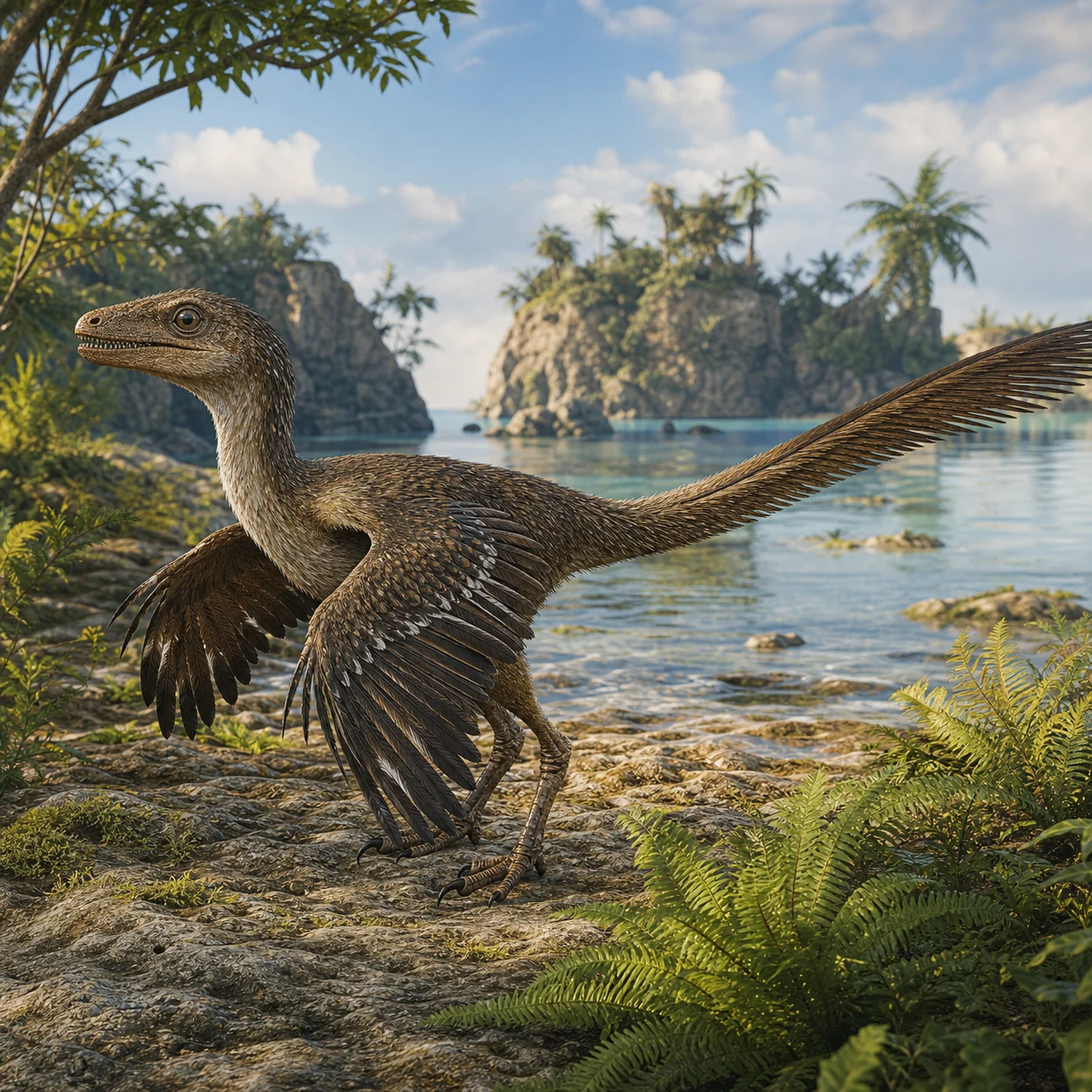
Archaeopteryx lithographica é o elo evolutivo entre dinossauros e aves, com características de ambos incluindo penas assimétricas de voo.
Archaeopteryx ( ; lit. 'ancient wing'), sometimes referred to by its German name, "Urvogel " (lit. 'Primeval Bird') is an extinct genus of bird-like dinosaurs. The genus name derives from the Ancient Greek ἀρχαῖος (archaîos), meaning 'ancient', and πτέρυξ (ptérux), meaning 'feather, wing'. Between the late 19th century and the early 21st century, Archaeopteryx was generally accepted by palaeontologists and popular reference books as the oldest known bird (member of the group Avialae). Older potential avialans have since been identified, including Anchiornis, Xiaotingia, Aurornis, and Baminornis.
Archaeopteryx lived in the Late Jurassic around 150 million years ago, in what is now southern Germany, during a time when Europe was an archipelago of islands in a shallow warm tropical sea, much closer to the equator than it is now. Similar in size to a Eurasian magpie, with the largest individuals possibly attaining the size of a raven, the largest species of Archaeopteryx could grow to about 50 cm (20 in) in length. Despite their small size, broad wings, and inferred ability to fly or glide, Archaeopteryx had more in common with other small Mesozoic dinosaurs than with modern birds. In particular, they shared the following features with the dromaeosaurids and troodontids: jaws with sharp teeth, three fingers with claws, a long bony tail, hyperextensible second toes ("killing claw"), feathers (which also suggest warm-bloodedness), and various features of the skeleton.
These features make Archaeopteryx a clear candidate for a transitional fossil between non-avian dinosaurs and avian dinosaurs (birds). Thus, Archaeopteryx plays an important role, not only in the study of the origin of birds, but in the study of dinosaurs.…
- Família
- Archaeopterygidae
- Ordem
- Saurischia
- Período
- Jurassic (150.8-148.5 MYA)
- Dieta
- Carnivore
- Comprimento
- 0.5 m
- Peso
- 0.5-1.0 kg
Fatos científicos
- Primeiro fóssil encontrado 2 anos após publicação da Origem das Espécies
- Penas assimétricas indicam capacidade de voo ou planeio
- Garras nas asas para escalar árvores
- Ausência de bico, tinha focinho com dentes
- Cauda longa óssea diferente das aves modernas
- Cérebro com regiões associadas ao voo desenvolvidas