Suchosaurus
Suchosaurus cultridens
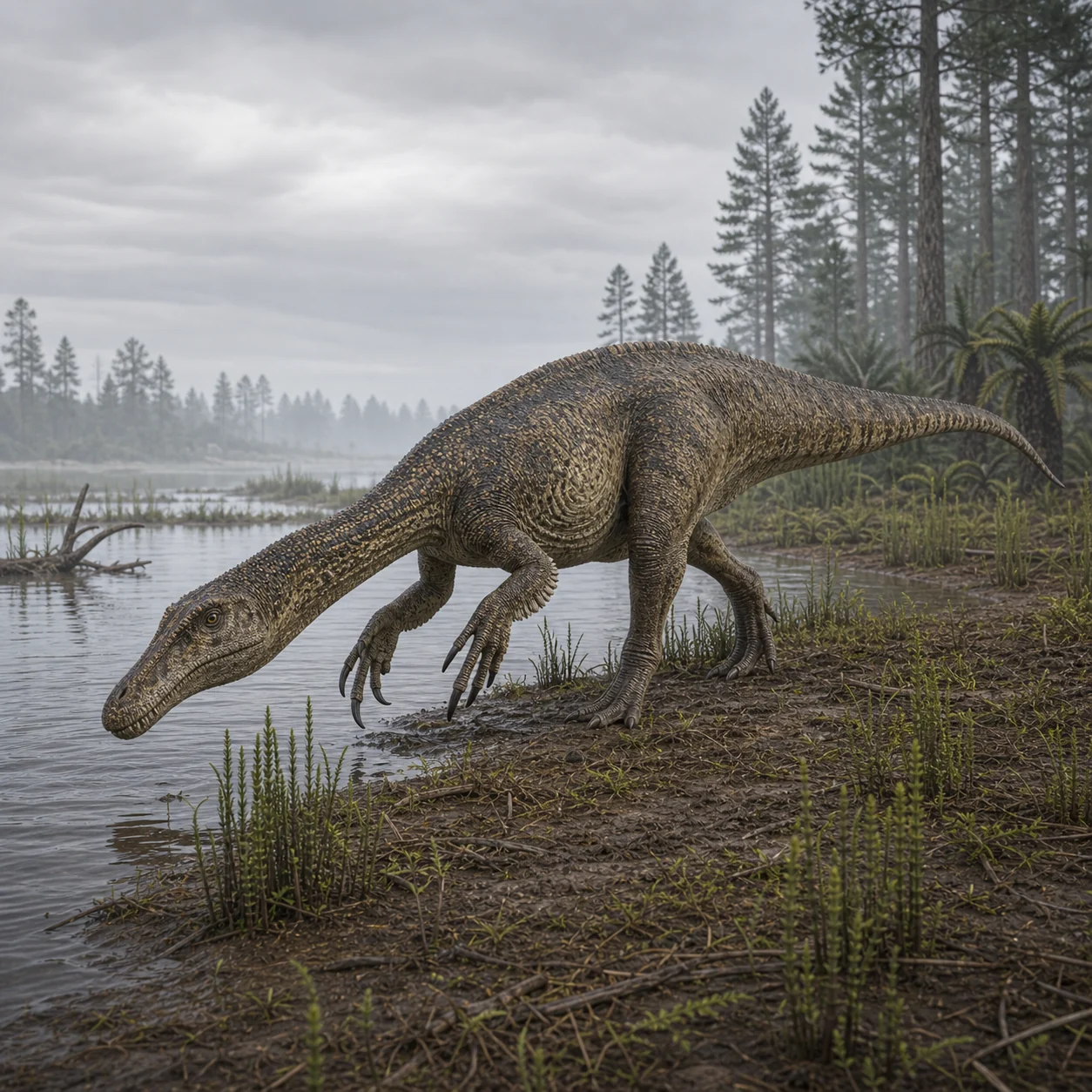
Suchosaurus (meaning "crocodile lizard") is a dubious genus of large theropod dinosaur that lived during the Early Cretaceous in what is now Europe. The type species, S. cultridens, was originally described in 1841 by Richard Owen based on a chimeric assemblage of fossil teeth and vertebrae discovered in the Tilgate Forest, of Sussex, England, in sediments of the Wealden Supergroup. The second species, S. girardi, was established in 1897 by Henri Émile Sauvage from a tooth and fragmentary jaw material recovered from the Papo Seco Formation in Portugal. Initially and generally interpreted as a crocodilian for nearly two centuries (as reflected by its generic name), Suchosaurus was not formally reidentified as a spinosaurid until a 2003 publication by Angela Milner, who also considered it as a possible senior synonym of Baryonyx. This proposal was followed by several authors until 2011, when Octávio Mateus and colleagues regarded the genus as dubious due to the non-diagnostic nature of the assigned fossil material. Named only one year before Owen introduced the term Dinosauria in 1842, Suchosaurus is therefore among the first dinosaurs ever described in the history of paleontology and also represents the very first named spinosaurid, although it was not recognized as such at the time of its original descriptions.
Although known from very limited fossil material, Suchosaurus is estimated to have reached a length of between 8.6–10 metres (28–33 ft), with a minimum body mass of around one tonne. Like other spinosaurids, Suchosaurus was probably a large bipedal carnivore with well-built forelimbs and elongated, crocodile-like skulls.…
- Family
- Spinosauridae
- Order
- Saurischia
- Period
- Cretaceous (130.0–125.0 Ma)
- Diet
- Carnivore
- Length
- 9.5 m
- Weight
- 2.0–3.0 t
- Type locality
- Hastings Beds, East Sussex, UK
- Holotype
- BMNH 28646
- PBDB
- txn:36610