Ouranosaurus
Ouranosaurus nigeriensis
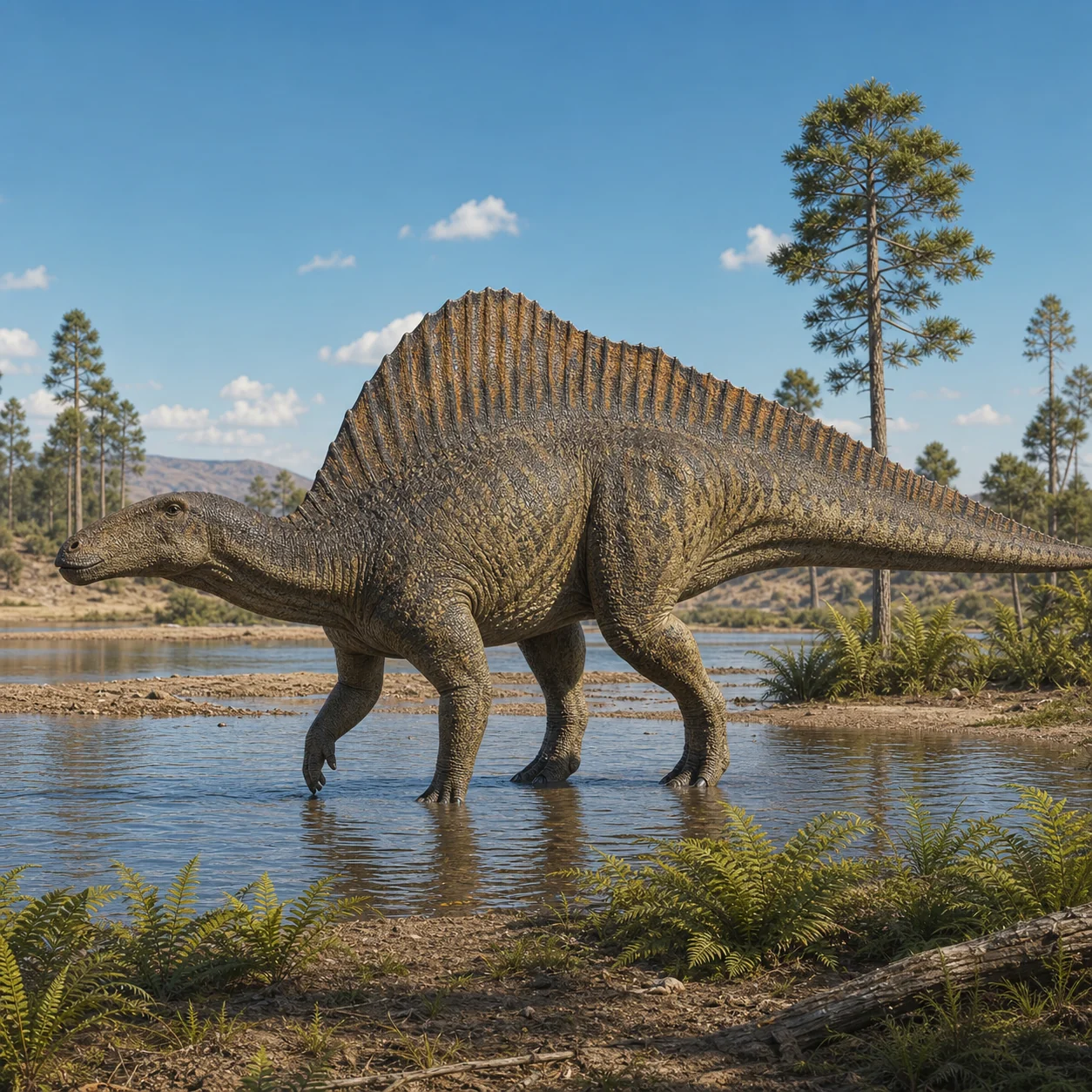
Ouranosaurus is a genus of herbivorous basal hadrosauriform dinosaur that lived during the Aptian stage of the Early Cretaceous of modern-day Niger and Cameroon. Ouranosaurus measured about 7–8.3 metres (23–27 ft) long and weighed 2.2 metric tons (2.4 short tons). Two rather complete fossils were found in the Elrhaz Formation, Gadoufaoua deposits, Agadez, Niger, in 1965 and 1970, with a third indeterminate specimen known from the Koum Formation of Cameroon. The animal was named in 1976 by French paleontologist Philippe Taquet, the type species being Ouranosaurus nigeriensis. The generic name is a combination of ourane, a word with multiple meanings, and sauros, the Greek word for lizard. The specific epithet nigeriensis alludes to Niger, its country of discovery (in Latin, the adjectival suffix -iensis means "originating from"). As such, Ouranosaurus nigeriensis could be interpreted as "brave lizard originating from Niger".
- Family
- Hadrosauriformes
- Order
- Ornithischia
- Period
- Cretaceous (110.0–105.0 Ma)
- Diet
- Herbivore
- Length
- 7.0–8.5 m
- Weight
- 2.0–4.0 t
- Type locality
- Elrhaz Formation, Niger
- Holotype
- MNHN GDF300
- PBDB
- txn:38751