Citipati
Citipati osmolskae
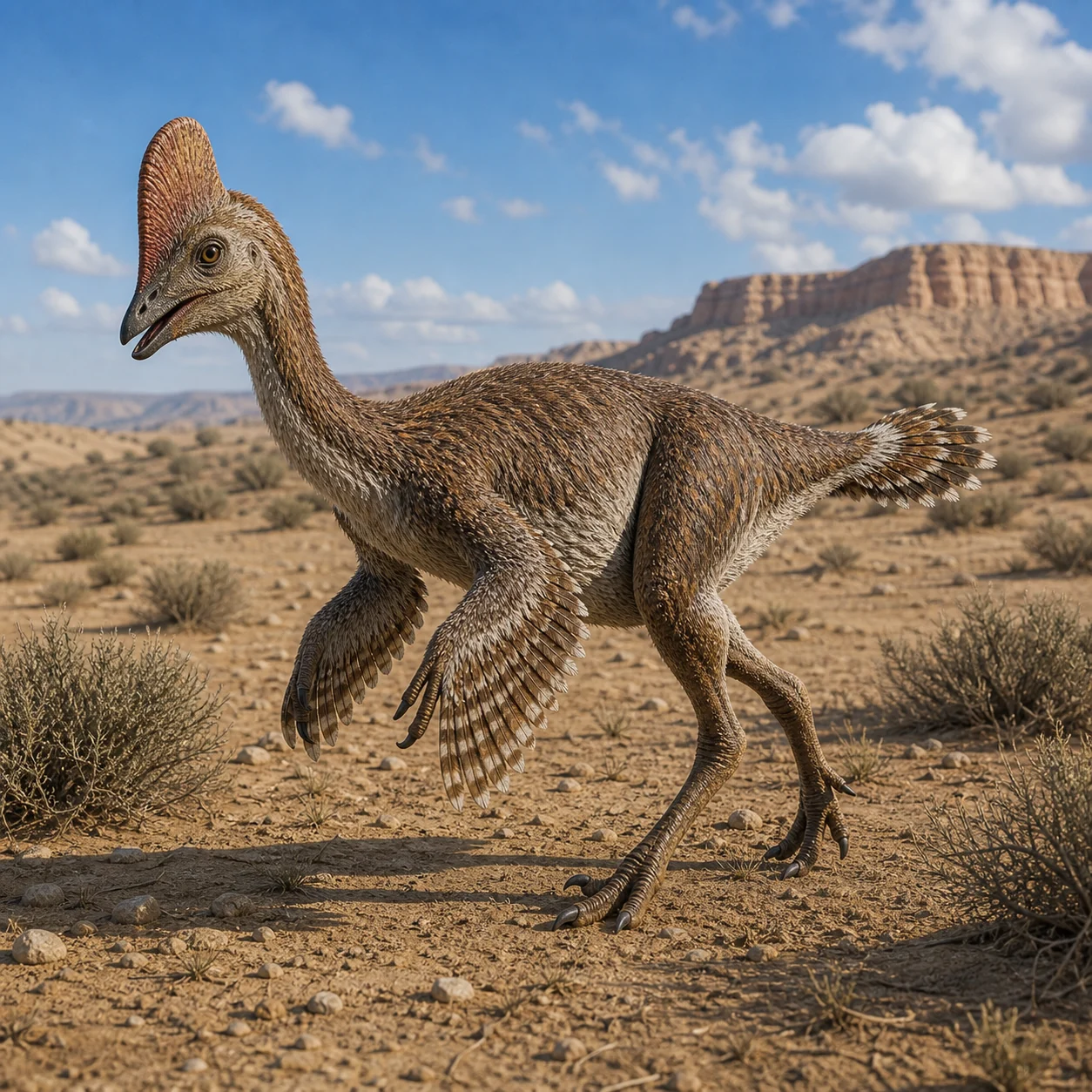
Citipati ([t͡ɕit̪ipɜt̪i]; meaning "funeral pyre lord") is a genus of oviraptorid dinosaur that lived in Asia during the Late Cretaceous period, about 75 million to 71 million years ago. It is mainly known from the Ukhaa Tolgod locality at the Djadochta Formation, where the first remains were collected during the 1990s. The genus and type species Citipati osmolskae were named and described in 2001. A second species from the adjacent Zamyn Khondt locality may also exist. Citipati is one of the best-known oviraptorids thanks to a number of well-preserved specimens, including individuals found in brooding positions atop nests of eggs, though most of them were initially referred to the related Oviraptor. These nesting specimens have helped to solidify the link between non-avian dinosaurs and birds.
Citipati was among the largest oviraptorids; it is estimated to have been around 2.5–2.9 m (8.2–9.5 ft) in length and to have weighed 75–110 kg (165–243 lb). Its skull was highly pneumatized, short, and had a characteristic crest formed by the premaxilla and nasal bones. Both upper and lower jaws were toothless and developed a horny beak. The tail ended in a pygostyle (the fusion of the last caudal vertebrae), which is known to support large rectrices.
The taxon is classified as an oviraptorid, a group of very bird-like feathered dinosaurs that had robust, parrot-like jaws. It is among the oviraptorid species that preserve nesting specimens. Citipati laid elongatoolithid eggs in a circular mound-shaped nest, where the parents brooded the eggs by sitting on the nest with their arms covering the nest perimeter. Both arms and tail were covered in long feathers, which likely protected both juveniles and eggs from weather.…
- Family
- Oviraptoridae
- Order
- Saurischia
- Period
- Cretaceous (80.0–75.0 Ma)
- Diet
- Omnivore
- Length
- 2.0–3.0 m
- Weight
- 75–83 kg
- Type locality
- Djadochta Formation, Mongolia
- Holotype
- IGM 100/978
- PBDB
- txn:57023