Allosaurus
Allosaurus fragilis
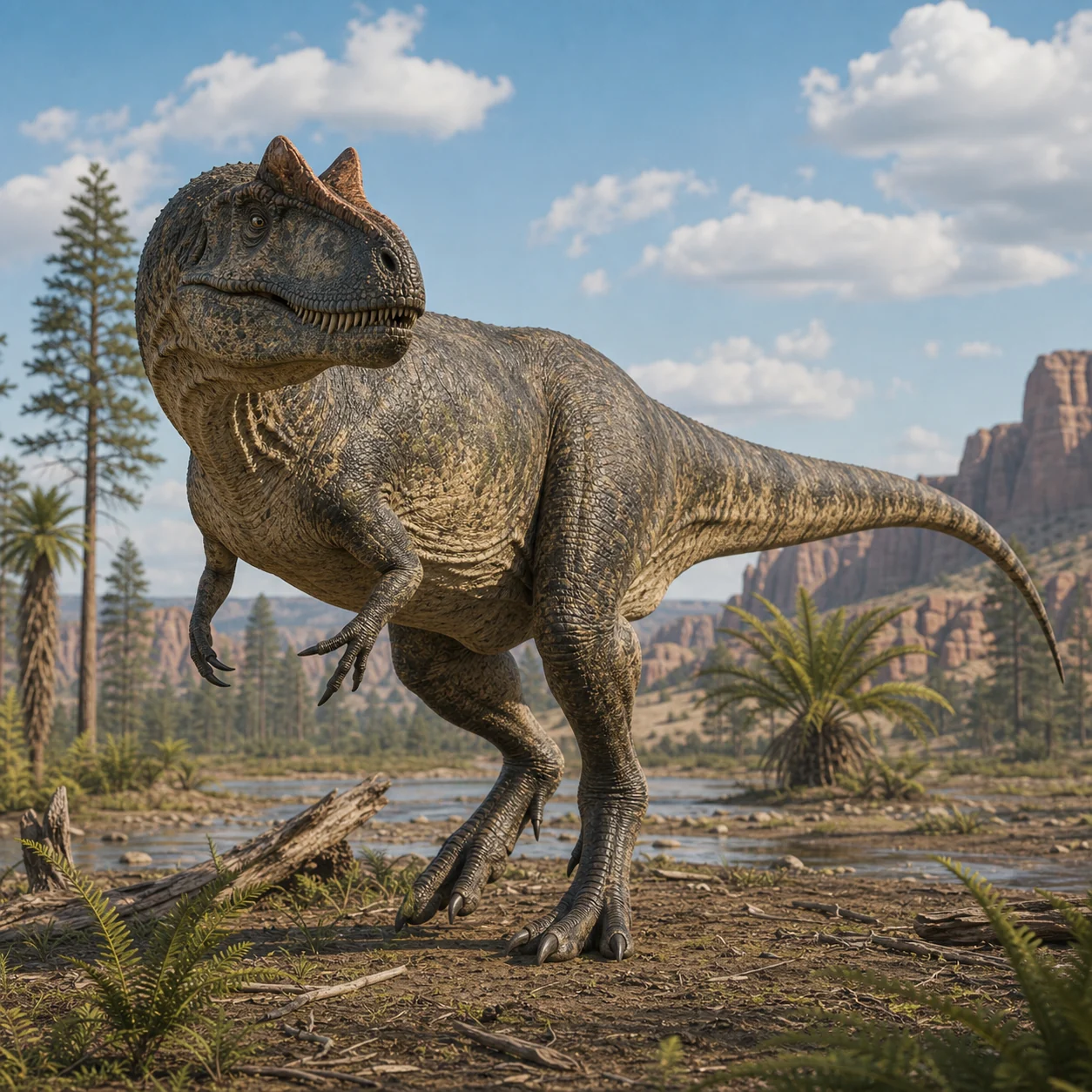
Allosaurus ( AL-o-SAWR-us) is a genus of theropod dinosaur that lived 155 to 143 million years ago during the late Jurassic period (latest Oxfordian to latest Tithonian ages). The first fossil remains that could definitively be ascribed to this genus were described in 1877 by Othniel C. Marsh. The name "Allosaurus" means "different lizard", alluding to its lightweight vertebrae, which Marsh believed were unique. The genus has a very complicated taxonomy and includes at least three valid species, the best known of which is A. fragilis. The bulk of Allosaurus remains come from North America's Morrison Formation, with material also known from the Alcobaça, Bombarral, and Lourinhã formations in Portugal. It was known for over half of the 20th century as Antrodemus, but a study of the abundant remains from the Cleveland-Lloyd Dinosaur Quarry returned the name "Allosaurus" to prominence. As one of the first well-known theropod dinosaurs, it has long attracted attention outside of paleontological circles.
Allosaurus was a large bipedal predator for its time. Its skull was light, robust, and equipped with dozens of sharp, serrated teeth. It averaged 8.5 meters (28 ft) in length for A. fragilis, with the largest specimens estimated as being 9.7 meters (32 ft) long. Relative to the large and powerful legs, its three-fingered hands were small and the body was balanced by a long, muscular tail. It is classified in the family Allosauridae. As the most abundant large predator of the Morrison Formation, Allosaurus was an apex predator of the food chain and probably preyed on large herbivorous dinosaurs such as ornithopods, stegosaurids, and sauropods.…
- Family
- Allosauridae
- Order
- Saurischia
- Period
- Jurassic (156.3–145.0 Ma)
- Diet
- Carnivore
- Length
- 8.5–12.0 m
- Weight
- 1.5–2.3 t
- Type locality
- Morrison Formation, Colorado, USA
- Holotype
- YPM 1930
- PBDB
- txn:38590