Alamosaurus
Alamosaurus sanjuanensis
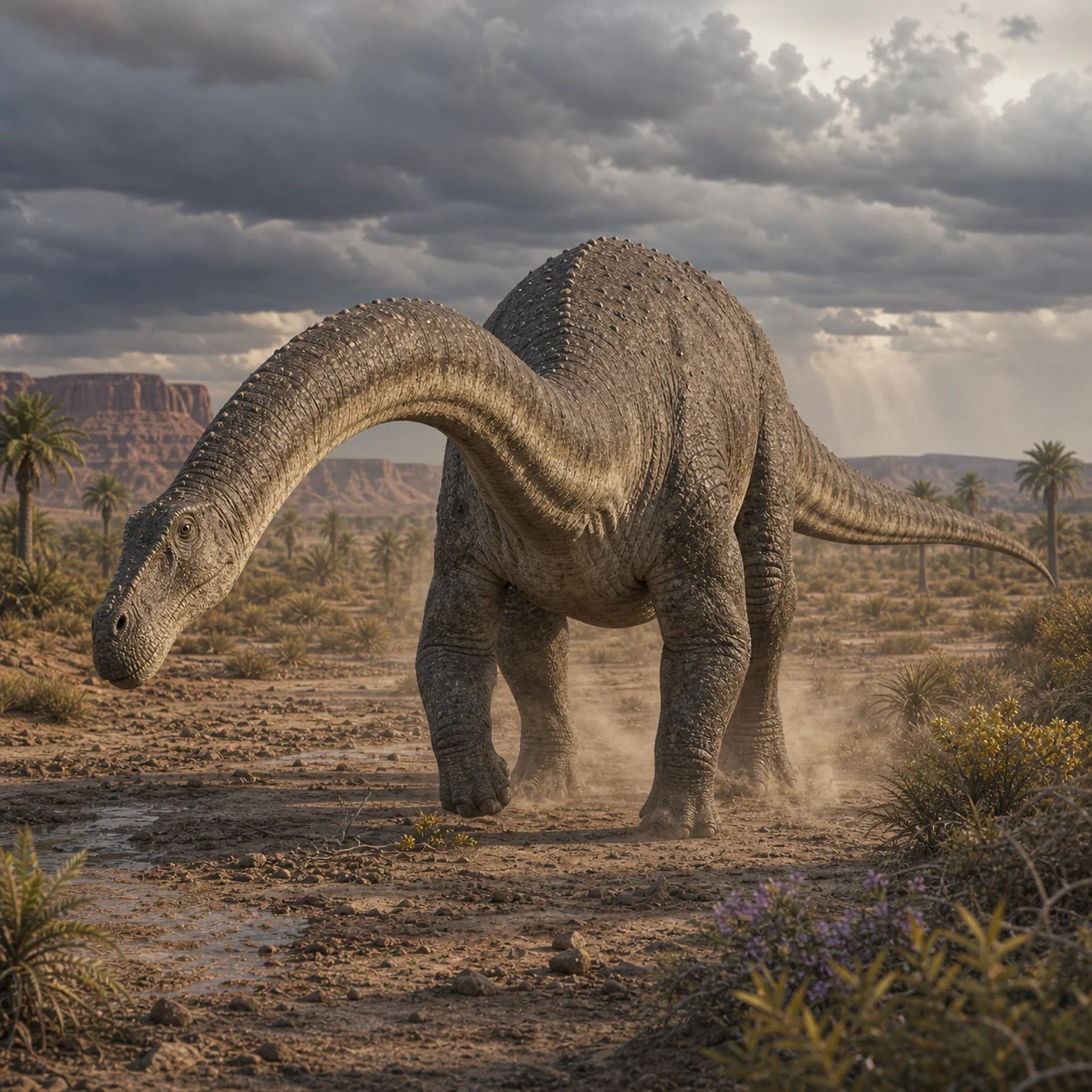
Alamosaurus (; meaning "Ojo Alamo lizard") is a genus of titanosaurian sauropod dinosaurs containing a single known species, Alamosaurus sanjuanensis, from the Maastrichtian age of the Late Cretaceous period in what is now southwestern North America. It is one of the only known sauropods to have inhabited North America after the nearly 30-million-year absence of sauropods from the continent's fossil record ("sauropod hiatus") and probably represents an immigrant from South America or Asia.
Adults would have measured around 26 metres (85 ft) long, 5 metres (16 ft) tall at the shoulder and weighed up to 30–35 tonnes (33–39 short tons), though some specimens indicate a larger body size. Isolated vertebrae and limb bones suggest that it could have reached sizes comparable to Argentinosaurus and Puertasaurus, which would make it the absolute largest dinosaur known from North America. Its fossils have been recovered from a variety of rock formations in the southwestern United States that were dated to the latest Maastrichtian age.
- Family
- Titanosauridae
- Order
- Saurischia
- Period
- Cretaceous (69–66 Ma)
- Diet
- Herbivore
- Length
- 30.0 m
- Weight
- 30 t
- Type locality
- New Mexico, USA
- Holotype
- USNM 10486
- PBDB
- txn:38683