Tropeognathus
Tropeognathus mesembrinus
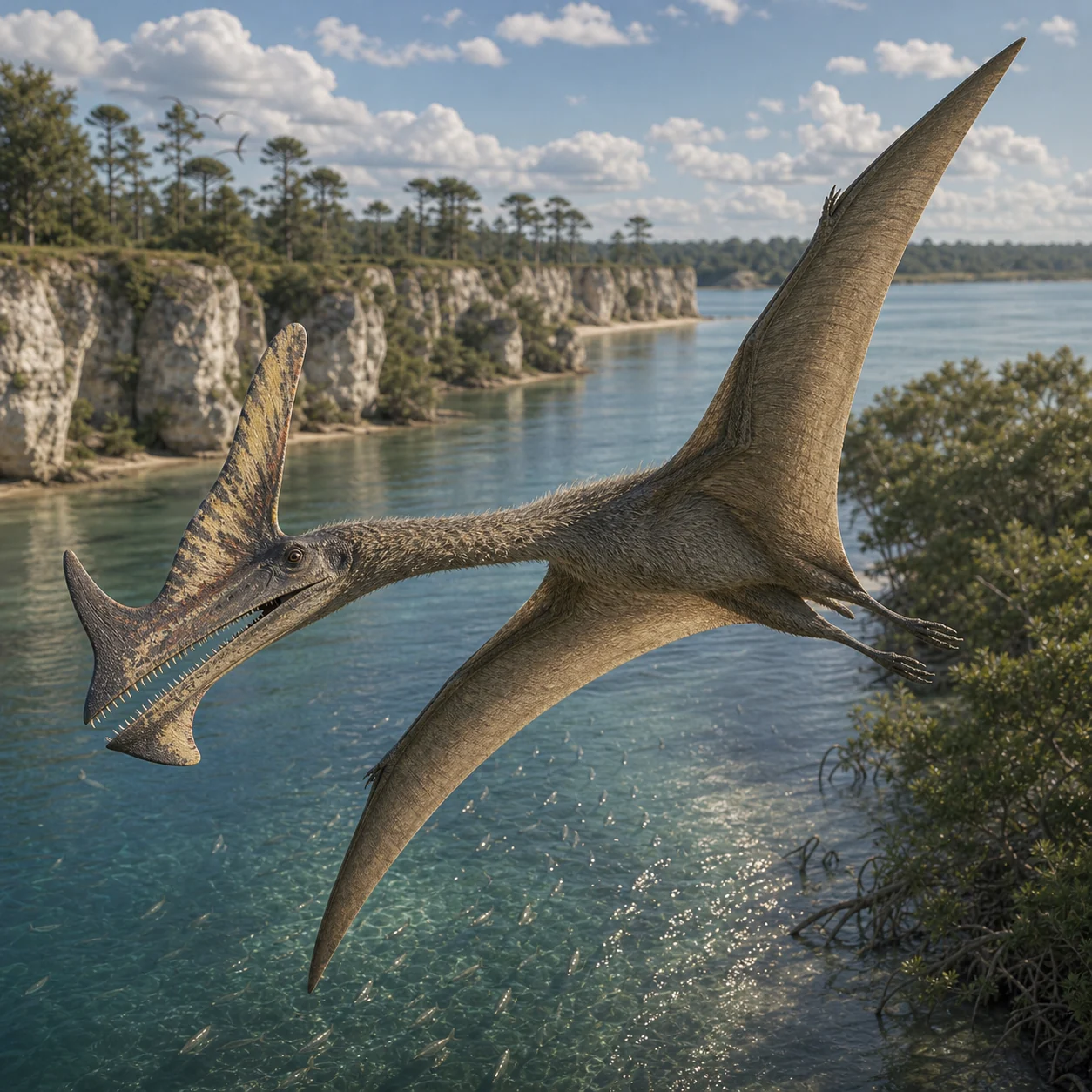
Tropeognathus foi um dinossauro carnívoro do Cretáceo, descrito por Peter Wellnhofer. Viveu há aproximadamente 112 milhões de anos, na região do que hoje é Brasil. Medindo de 0.5 m, pesando 13 kg, era um representante característico da fauna mesozoica.
Tropeognathus (meaning "keel jaw") is a genus of large pterosaurs from the late Early Cretaceous of South America. This genus is considered to be a member of the family Anhangueridae, but several studies have also recovered it within another family called Ornithocheiridae. Both of these families are diverse groups of pterosaurs known for their keel-tipped snouts and large size. With an estimated wingspan around 8.5 m (28 ft), Tropeognathus is regarded as the largest pterosaur found in the Southern Hemisphere, only rivaled by the huge azhdarchids. The type and only species is Tropeognathus mesembrinus. Fossil remains of Tropeognathus have been recovered from the Romualdo Formation, which is a Lagerstätte located in the Santana Group of the Araripe Basin in northeastern Brazil.
- Família
- Anhangueridae
- Ordem
- Pterosauria
- Período
- Cretaceous (112 Ma)
- Dieta
- Carnivore
- Comprimento
- 0.5 m
- Peso
- 13 kg
Fatos científicos
- Com apenas 0.5 m, era considerado um dinossauro de pequeno porte
- Como carnívoro do Cretáceo, ocupava papel de predador ativo em seu ecossistema
- Seus fósseis foram encontrados na região de Brasil, contribuindo para o entendimento da fauna cretáceo local
- Foi descrito cientificamente por Peter Wellnhofer, contribuindo para o entendimento da diversidade dinossauriana