Sinornithosaurus
Sinornithosaurus millenii
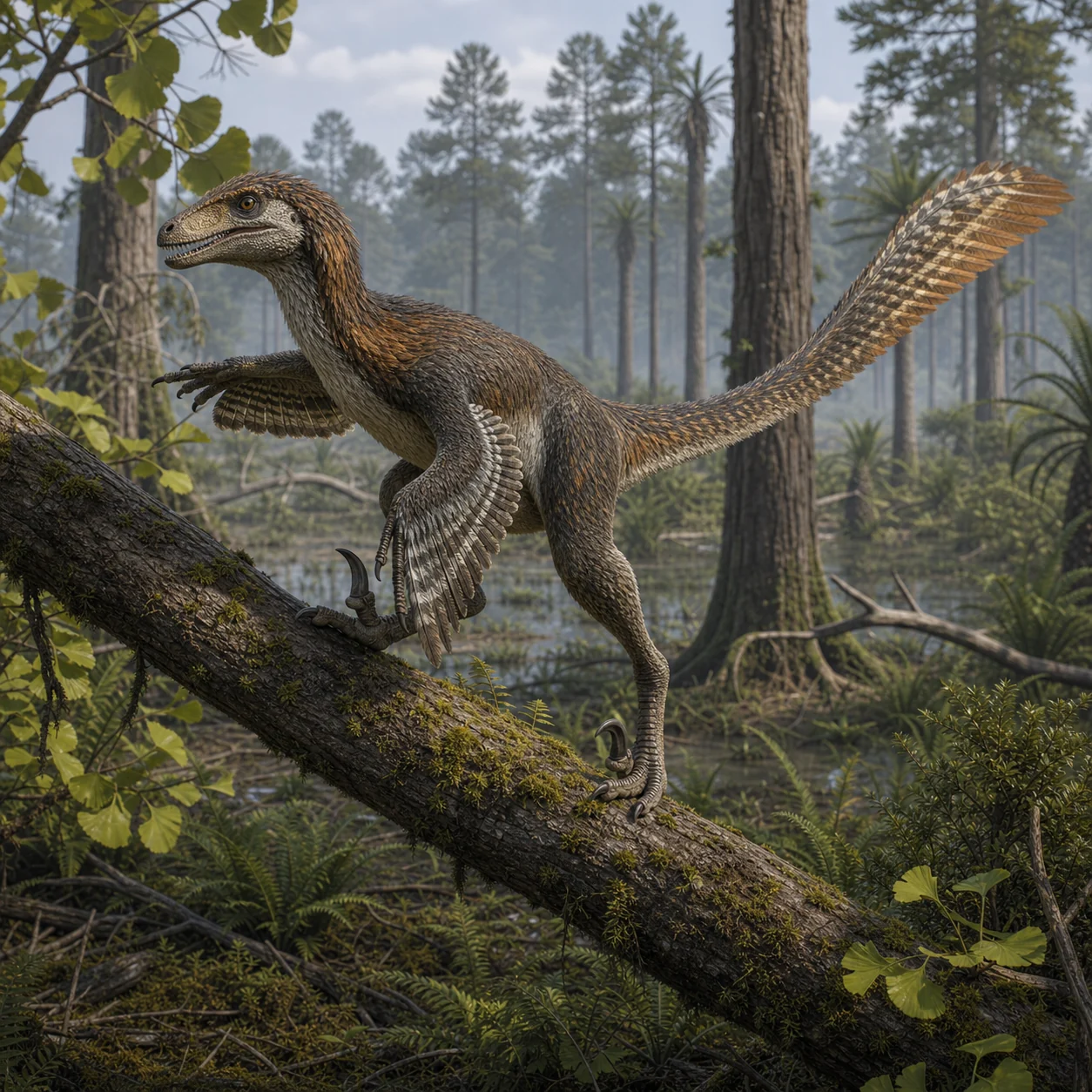
Sinornithosaurus foi um terópode carnívoro do Cretáceo, descrito por Xu Xing et al.. Viveu há aproximadamente 125.0-122.0 milhões de anos, na região do que hoje é China. Medindo de 0.9-1.2 m, pesando 1.5-3.0 kg, era um representante característico da fauna mesozoica.
Sinornithosaurus (derived from a combination of Latin and Greek, meaning 'Chinese bird-lizard') is a genus of feathered dromaeosaurid dinosaur from the early Cretaceous Period (late Barremian) of the Yixian Formation in what is now China. It was the fifth non–avian feathered dinosaur genus discovered by 1999. The original specimen was collected from the Sihetun locality of western Liaoning. It was found in the Jianshangou beds of the Yixian Formation, dated to 124.5 million years ago. Additional specimens have been found in the younger Dawangzhangzi bed, dating to around 122 million years ago.
Xu Xing described Sinornithosaurus and performed a phylogenetic analysis which demonstrated that it is basal, or primitive, among the dromaeosaurs. He has also demonstrated that features of the skull and shoulder are very similar to Archaeopteryx and other avialans. Together these two facts demonstrate that the earliest dromaeosaurs were more like birds than the later dromaeosaurs were.
Sinornithosaurus was among the smallest dromaeosaurids, with the holotype measuring 1.2 metres (3.9 ft) long and weighing 3–5 kilograms (6.6–11.0 lb).
- Família
- Microraptoria
- Ordem
- Saurischia
- Período
- Cretaceous (125.0-122.0 MYA)
- Dieta
- Carnivore
- Comprimento
- 0.9-1.2 m
- Peso
- 1.5-3.0 kg
Fatos científicos
- Com apenas 0.9-1.2 m, era considerado um dinossauro de pequeno porte
- Como carnívoro do Cretáceo, ocupava papel de predador ativo em seu ecossistema
- Seus fósseis foram encontrados na região de China, contribuindo para o entendimento da fauna cretáceo local
- Foi descrito cientificamente por Xu Xing et al., contribuindo para o entendimento da diversidade dinossauriana