Sauropelta
Sauropelta edwardsorum
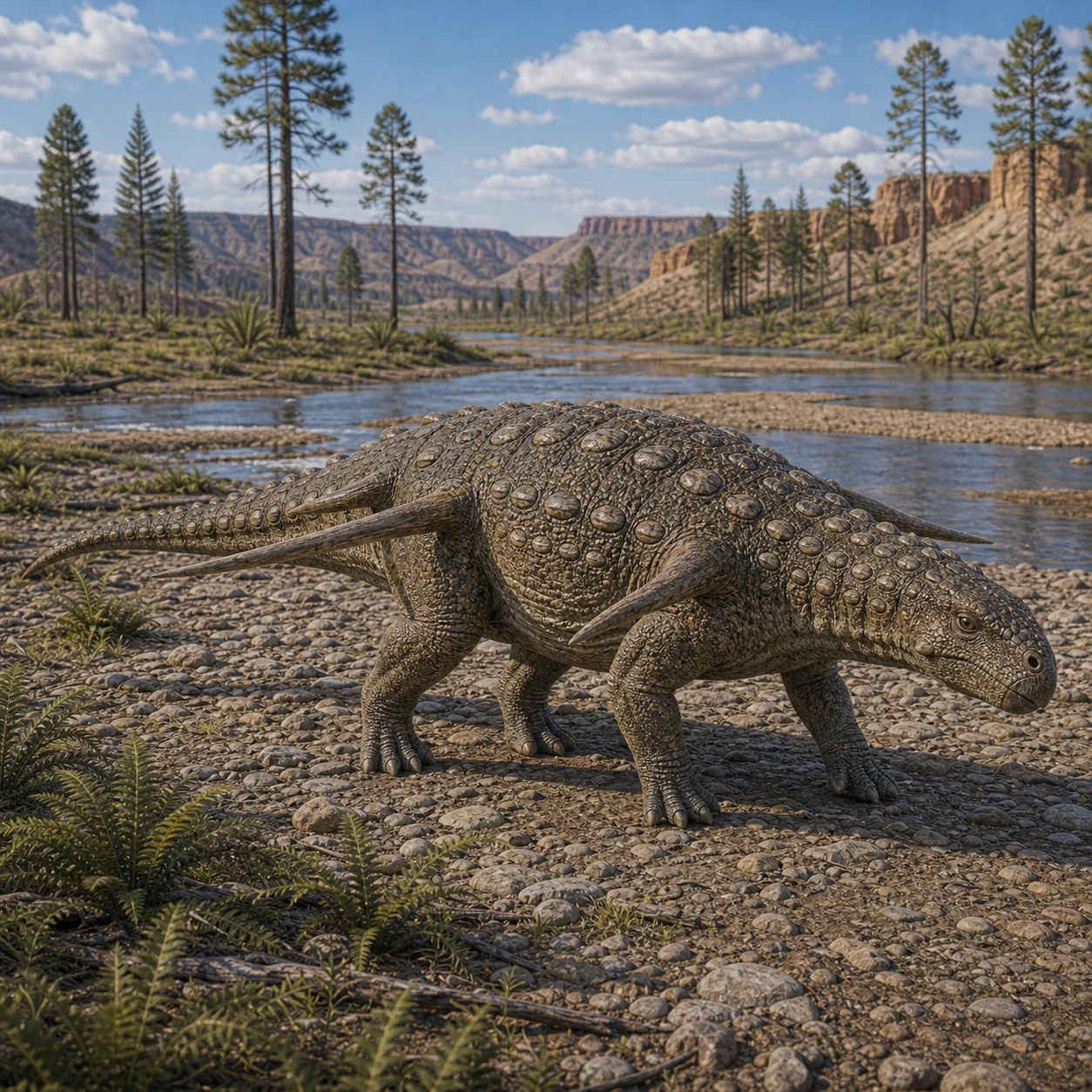
Sauropelta foi um anquilossauro herbívoro do Cretáceo, descrito por John Ostrom. Viveu há aproximadamente 110.0-105.0 milhões de anos, na região do que hoje é América do Norte (EUA). Medindo de 5.0-7.5 m, pesando 1.5-3.0 tons, era um representante característico da fauna mesozoica.
Sauropelta ( SOR-oh-PEL-tə; meaning 'lizard shield') is a genus of nodosaurid dinosaur that existed in the Early Cretaceous Period of North America. One species (S. edwardsorum) has been named. Anatomically, Sauropelta is one of the most well-understood nodosaurids, with fossilized remains recovered in the U.S. states of Wyoming, Montana, and possibly Utah. It is also the earliest known genus of nodosaurine; most of its remains are found in a section of the Cloverly Formation dated to 108.5 million years ago.
Sauropelta is a medium-sized nodosaurid, measuring about 5.2–6 metres (17.1–19.7 ft) long. Sauropelta had a distinctively long tail which made up about half of its body length. Although its body was smaller than a modern black rhinoceros, Sauropelta was about the same mass, weighing up to about 1.5–2 metric tons (1.7–2.2 short tons). The extra weight was largely due to its extensive covering of bony armor, including the characteristically large spines projecting from its neck.
- Família
- Nodosauridae
- Ordem
- Ornithischia
- Período
- Cretaceous (110.0-105.0 MYA)
- Dieta
- Herbivore
- Comprimento
- 5.0-7.5 m
- Peso
- 1.5-3.0 tons
Fatos científicos
- Medindo 5.0-7.5 m, tinha porte médio para os padrões mesozoicos
- Herbívoro especializado do Cretáceo, provavelmente pastava em vegetação de América do Norte (EUA)
- Seus fósseis foram encontrados na região de América do Norte (EUA), contribuindo para o entendimento da fauna cretáceo local
- Foi descrito cientificamente por John Ostrom, contribuindo para o entendimento da diversidade dinossauriana