Rajasaurus
Rajasaurus narmadensis
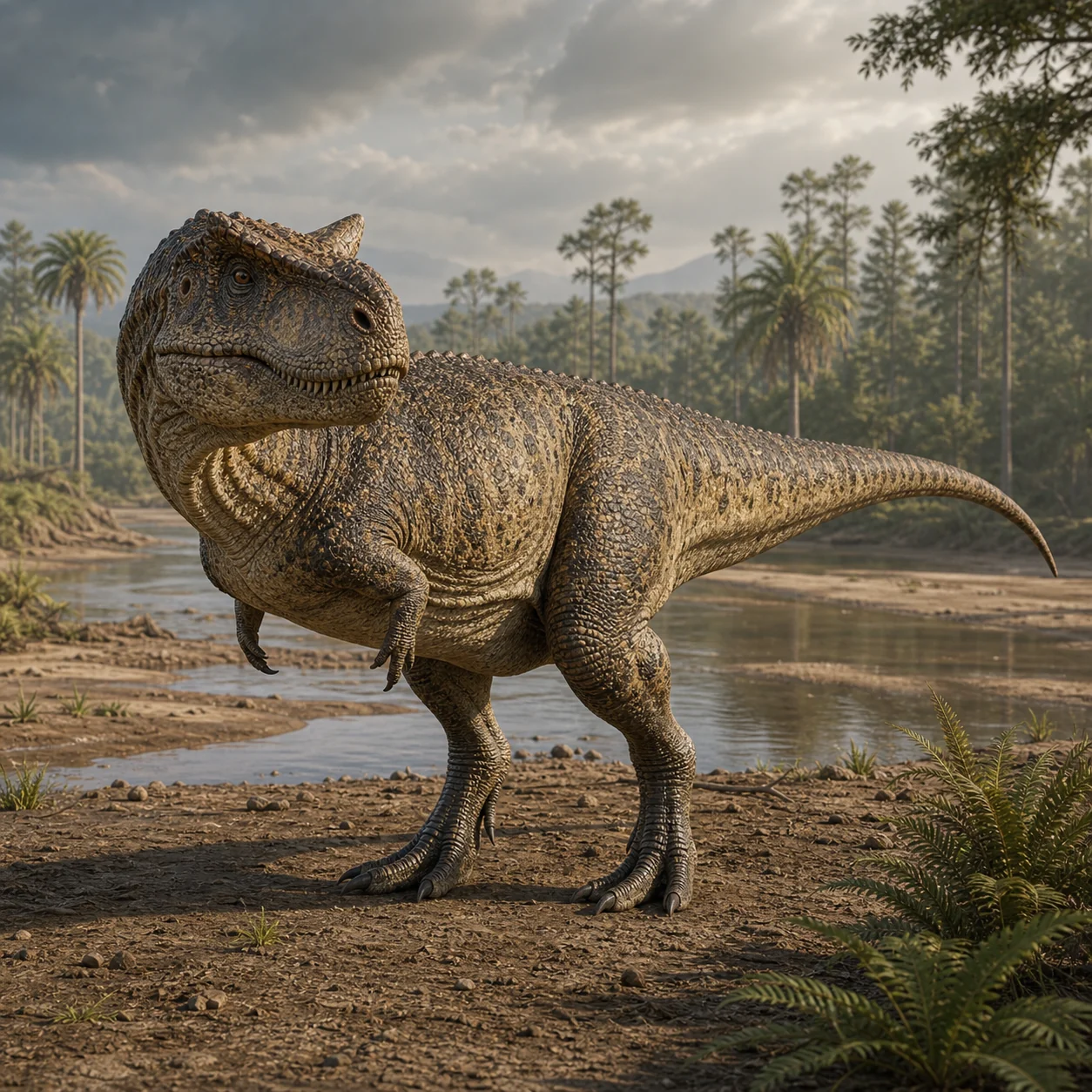
Rajasaurus foi um abelissaurídeo carnívoro do Cretáceo, descrito por Suresh Srivastava. Viveu há aproximadamente 70.0-66.0 milhões de anos, na região do que hoje é Índia. Medindo de 6.5-9.0 m, pesando 3.0-4.0 tons, era um representante característico da fauna mesozoica.
Rajasaurus (lit. 'King lizard') is a genus of carnivorous abelisaurid theropod dinosaur from the Late Cretaceous of India, containing one species: Rajasaurus narmadensis. The bones were excavated from the Lameta Formation in the Gujarat state of Western India, probably inhabiting what is now the Narmada River Valley. It was formally described by palaeontologist Jeffrey A. Wilson and colleagues in 2003 based on a partial skeleton comprising the braincase, spine, hip bone, legs, and tail–a first for an Indian theropod. The dinosaur likely measured 6.6 metres (22 ft), and had a single horn on the forehead which was probably used for display and head-butting. Like other abelisaurids, Rajasaurus was probably an ambush predator.
India at this time was an island, due to the break-up of the supercontinent Gondwana, though it is possible animals still were able to migrate to and from nearby continents. The creation of the subfamily Majungasaurinae, and its inclusion of abelisaurids from India, Madagascar, and Europe–including Rajasaurus–further reiterates this. The Lameta Formation has yielded several other dinosaur species, including abelisaurids and titanosaurian sauropods, similar to other Gondwanan landmasses. The area during the Cretaceous was probably forested, and served as nesting grounds for several creatures.
- Família
- Abelisauridae
- Ordem
- Saurischia
- Período
- Cretaceous (70.0-66.0 MYA)
- Dieta
- Carnivore
- Comprimento
- 6.5-9.0 m
- Peso
- 3.0-4.0 tons
Fatos científicos
- Medindo 6.5-9.0 m, tinha porte médio para os padrões mesozoicos
- Como carnívoro do Cretáceo, ocupava papel de predador ativo em seu ecossistema
- Seus fósseis foram encontrados na região de Índia, contribuindo para o entendimento da fauna cretáceo local
- Foi descrito cientificamente por Suresh Srivastava, contribuindo para o entendimento da diversidade dinossauriana