Puertasaurus
Puertasaurus reuili
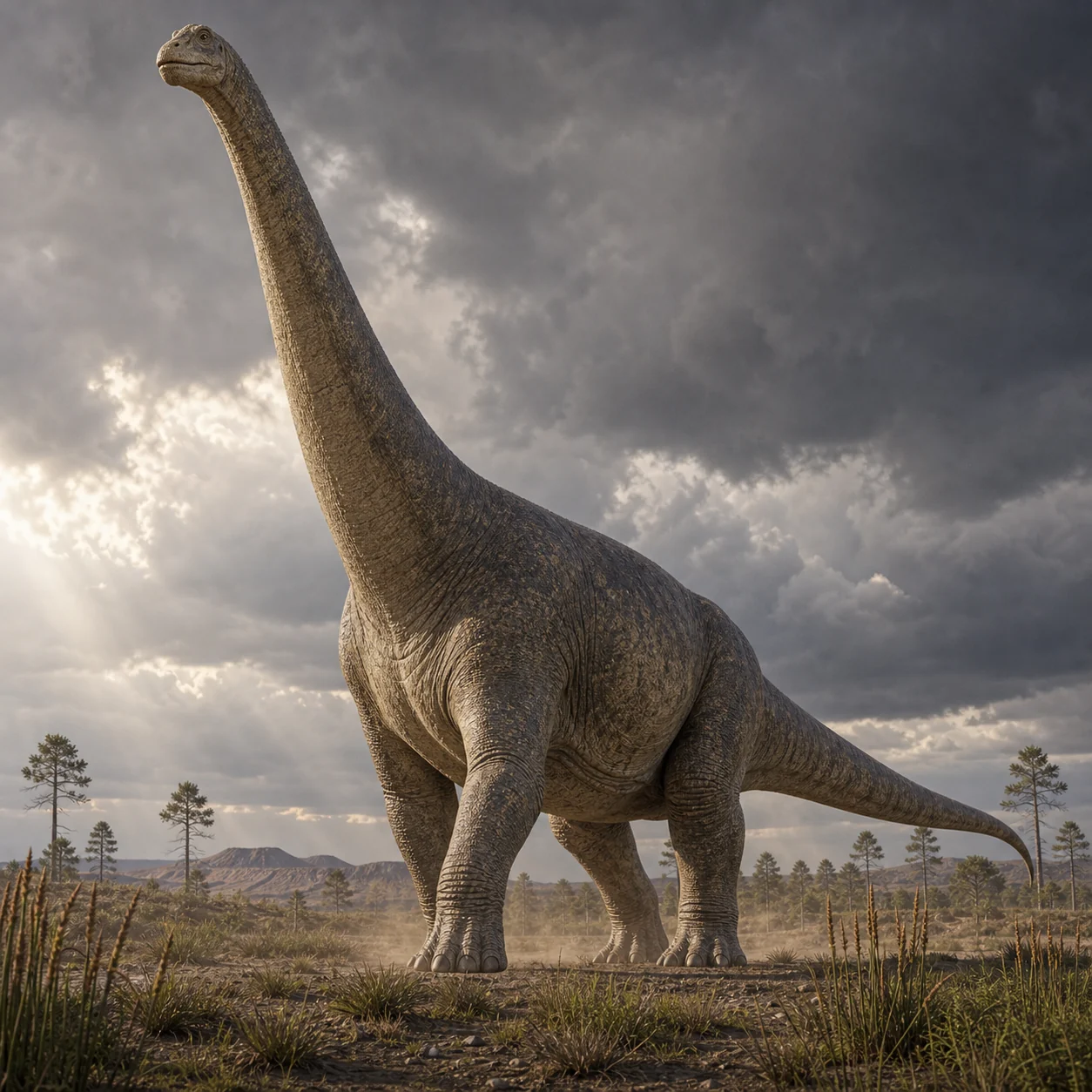
Puertasaurus foi um terópode herbívoro do Cretáceo, descrito por Novas et al.. Viveu há aproximadamente 69.9-66.0 milhões de anos, na região do que hoje é Argentina (Patagônia). Medindo de 28.0-40.0 m, pesando 75.0-100.0 tons, era um representante característico da fauna mesozoica.
Puertasaurus is a genus of sauropod dinosaur that lived in South America during the Late Cretaceous Period. It is known from a single specimen recovered from sedimentary rocks of the Cerro Fortaleza Formation in southwestern Patagonia, Argentina, which probably is Campanian or Maastrichtian in age. The only species is Puertasaurus reuili. Described by the paleontologist Fernando Novas and colleagues in 2005, it was named in honor of Pablo Puerta and Santiago Reuil, who discovered and prepared the specimen. It consists of four well-preserved vertebrae, including one cervical, one dorsal, and two caudal vertebrae. Puertasaurus is a member of Titanosauria, the dominant group of sauropods during the Cretaceous.
Puertasaurus was a very large animal. Its size is difficult to estimate due to the scarcity of its remains, but current estimates place it around 30 meters (98 feet) long and 50 metric tons (55 short tons) in mass. The largest of the four preserved bones is the dorsal vertebra, which at 1.68 meters (5 ft 6 in) wide is the broadest known vertebra of any sauropod. The Cerro Fortaleza Formation is of uncertain age, due to the inconsistency of stratigraphic nomenclature in Patagonia. When Puertasaurus was alive, the Cerro Fortaleza Formation would have been a humid, forested landscape. Puertasaurus would have shared its habitat with other dinosaurs, including another large sauropod, Dreadnoughtus, in addition to other reptiles and fish.
- Família
- Titanosauridae
- Ordem
- Saurischia
- Período
- Cretaceous (69.9-66.0 MYA)
- Dieta
- Herbivore
- Comprimento
- 28.0-40.0 m
- Peso
- 75.0-100.0 tons
Fatos científicos
- Com 28.0-40.0 m, estava entre os maiores animais terrestres já descobertos
- Herbívoro especializado do Cretáceo, provavelmente pastava em vegetação de Argentina (Patagônia)
- Seus fósseis foram encontrados na região de Argentina (Patagônia), contribuindo para o entendimento da fauna cretáceo local
- Existiu próximo à extinção K-Pg de 66 Ma, sendo uma das últimas linhagens de dinossauros não-aviários
- Foi descrito cientificamente por Novas et al., contribuindo para o entendimento da diversidade dinossauriana