Pentaceratops
Pentaceratops sternbergii
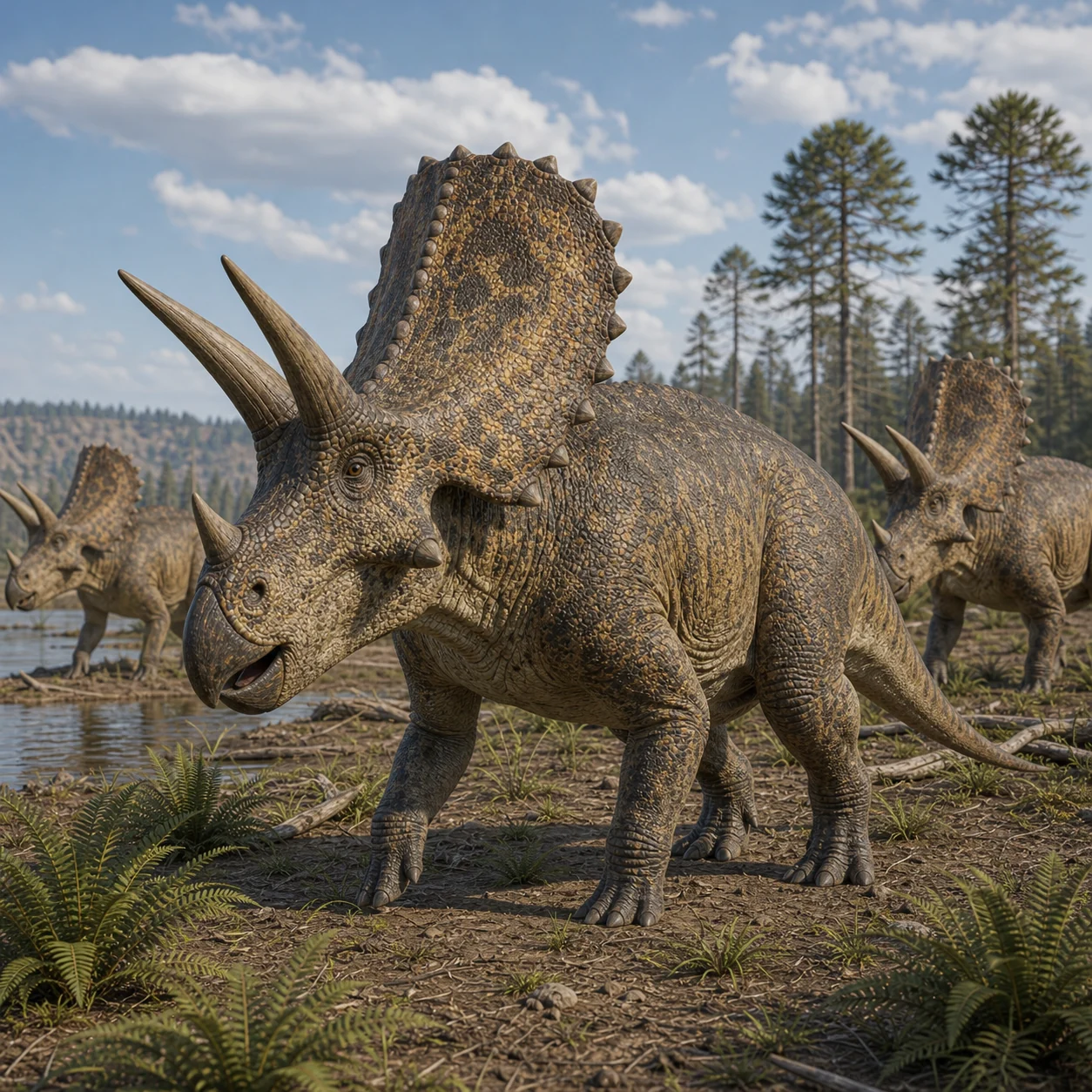
Pentaceratops foi um ceratópsio herbívoro do Cretáceo, descrito por Henry Fairfield Osborn. Viveu há aproximadamente 75.0-73.0 milhões de anos, na região do que hoje é América do Norte (EUA). Medindo de 6.0-8.0 m, pesando 5.0-8.0 tons, era um representante característico da fauna mesozoica.
Pentaceratops ("five-horned face") is a genus of herbivorous ceratopsid dinosaur from the late Cretaceous Period of what is now North America. Fossils of this animal were first discovered in 1921, but the genus was named in 1923 when its type species, Pentaceratops sternbergii, was described. Pentaceratops lived around 76–73 million years ago, its remains having been mostly found in the Kirtland Formation in the San Juan Basin in New Mexico. Another species, P. aquilonius, was named by Nick W. Longrich in 2014, but it is debated if it belongs to that genus or a separate taxon. About a dozen skulls and skeletons have been uncovered, so anatomical understanding of Pentaceratops is fairly complete. One exceptionally large specimen later became its own genus, Titanoceratops, due to its more derived morphology, similarities to Triceratops, and lack of unique characteristics shared with Pentaceratops.
Pentaceratops was about 5.5–6 meters (18–20 ft) long, and has been estimated to have weighed around 2.5 metric tons (2.8 short tons). It had a short nose horn, two long brow horns, and long horns on the jugal bones. Its skull had a very long frill with triangular hornlets on the edge.
- Família
- Ceratopsidae
- Ordem
- Ornithischia
- Período
- Cretaceous (75.0-73.0 MYA)
- Dieta
- Herbivore
- Comprimento
- 6.0-8.0 m
- Peso
- 5.0-8.0 tons
Fatos científicos
- Medindo 6.0-8.0 m, tinha porte médio para os padrões mesozoicos
- Bico córneo poderoso e dentes de corte permitiam processar vegetação dura como palmeiras e cicadáceas
- Seus fósseis foram encontrados na região de América do Norte (EUA), contribuindo para o entendimento da fauna cretáceo local
- Foi descrito cientificamente por Henry Fairfield Osborn, contribuindo para o entendimento da diversidade dinossauriana