Pachyrhinosaurus
Pachyrhinosaurus canadensis
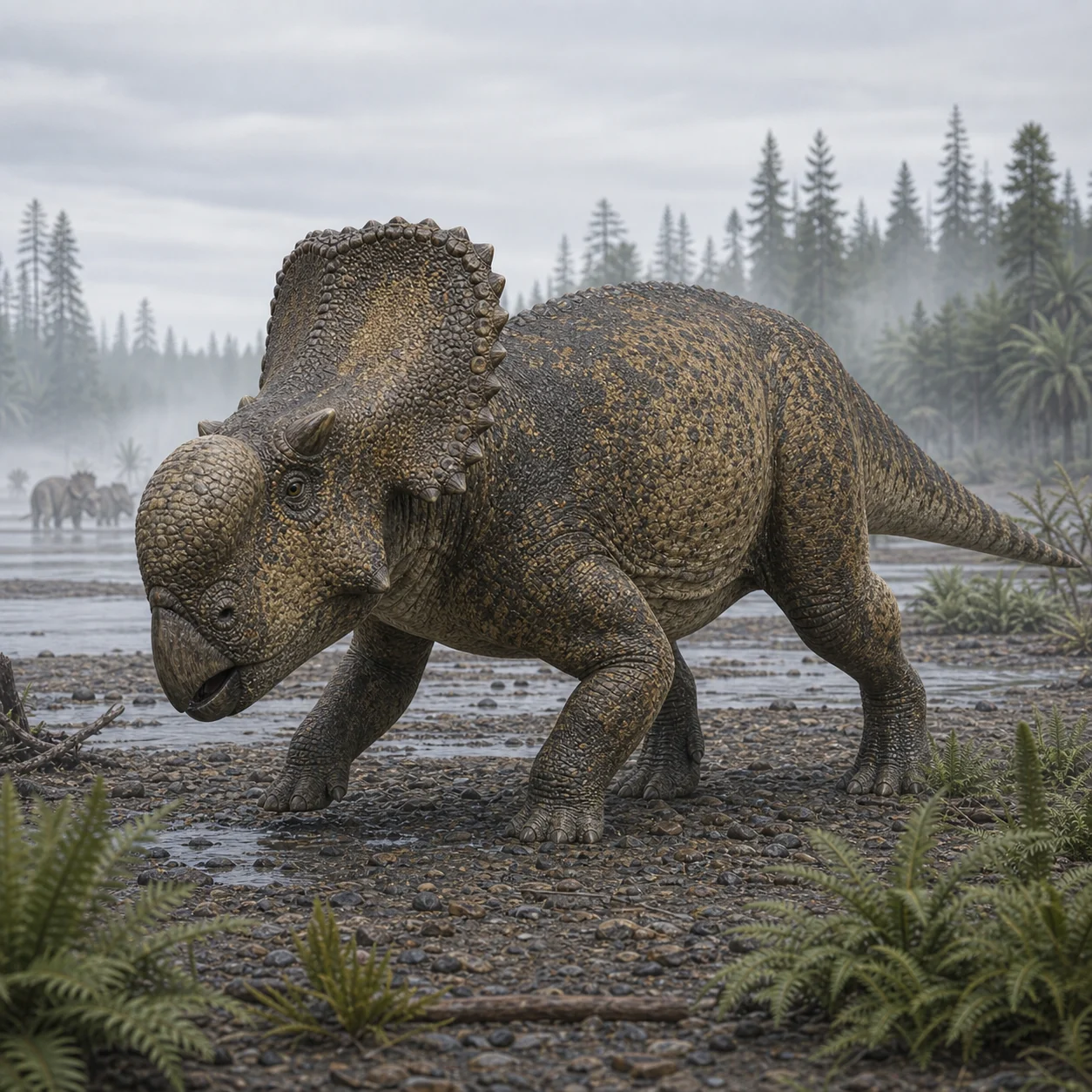
Pachyrhinosaurus foi um ceratópsio herbívoro do Cretáceo, descrito por Charles M. Sternberg. Viveu há aproximadamente 73.5 milhões de anos, na região do que hoje é Canadá. Medindo de 8.0 m, pesando 4 tons, era um representante característico da fauna mesozoica.
Pachyrhinosaurus (from Ancient Greek παχύς (pachys), thick; ῥίς (rhis), nose; and σαυρος (sauros), lizard) is a genus of centrosaurine ceratopsid dinosaur from the Late Cretaceous period of North America. The first examples were discovered by Charles M. Sternberg in Alberta, Canada, in 1946, and named in 1950. Over a dozen partial skulls and a large assortment of other fossils from various species have been found in Alberta and Alaska. A great number were not available for study until the 1980s, resulting in a relatively recent increase of interest in Pachyrhinosaurus.
Three species have been identified. P. lakustai, from the Wapiti Formation, the bonebed horizon of which is roughly equivalent in age to the upper Bearpaw and lower Horseshoe Canyon Formations, is known to have existed from about 73.5–72.5 million years ago. P. canadensis is younger, known from the lower Horseshoe Canyon Formation, about 73–71 Ma ago and the St. Mary River Formation. Fossils of the northernmost species, P. perotorum, have been recovered from the Prince Creek Formation of Alaska, and date to 73 Ma ago. The presence of three known species makes this genus the most speciose among the centrosaurines.
- Família
- Ceratopsidae
- Ordem
- Ornithischia
- Período
- Cretaceous (73.5 Ma)
- Dieta
- Herbivore
- Comprimento
- 8.0 m
- Peso
- 4 tons
Fatos científicos
- Medindo 8.0 m, tinha porte médio para os padrões mesozoicos
- Bico córneo poderoso e dentes de corte permitiam processar vegetação dura como palmeiras e cicadáceas
- Seus fósseis foram encontrados na região de Canadá, contribuindo para o entendimento da fauna cretáceo local
- Foi descrito cientificamente por Charles M. Sternberg, contribuindo para o entendimento da diversidade dinossauriana