Pachycephalosaurus
Pachycephalosaurus wyomingensis
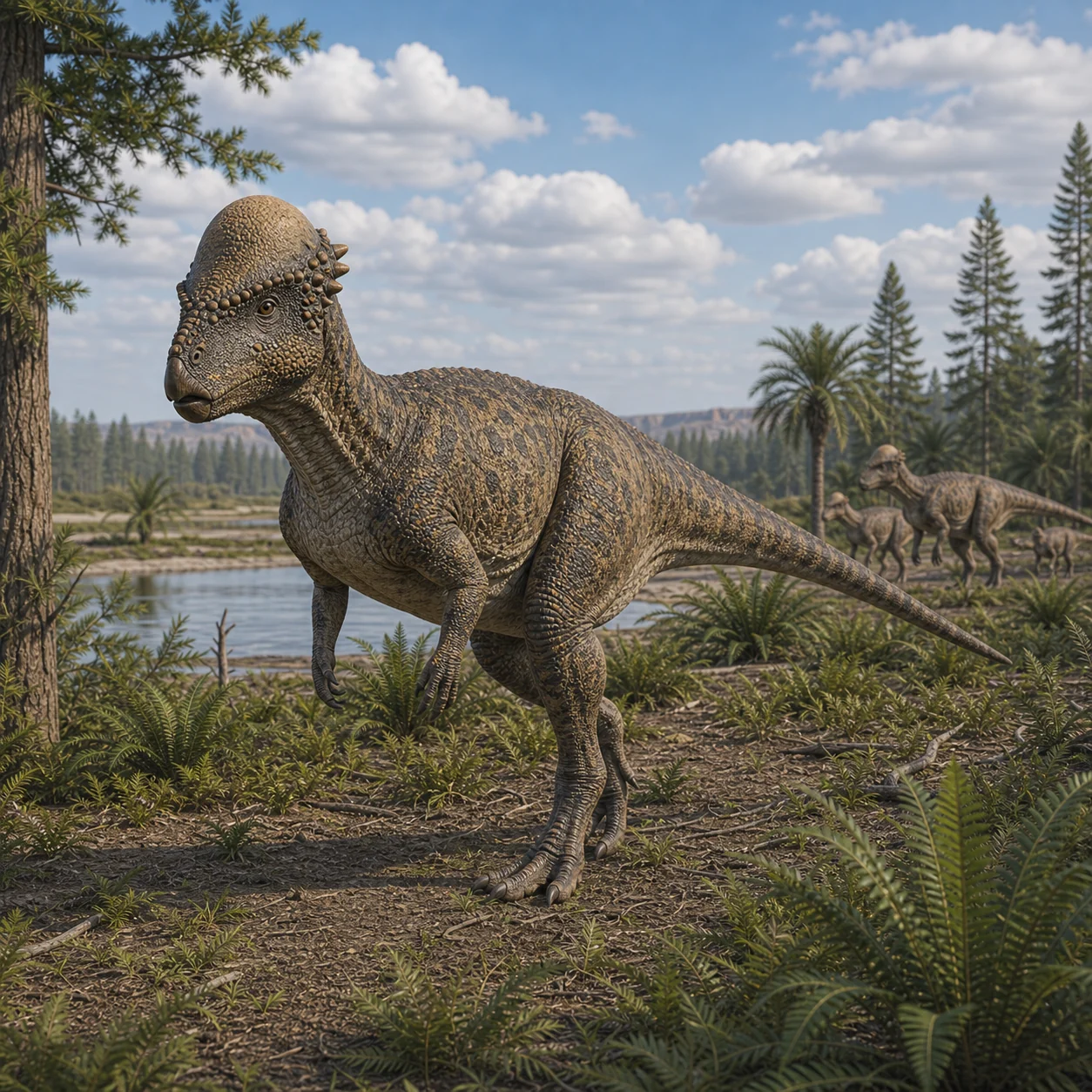
Pachycephalosaurus wyomingensis tinha crânio de 25cm de espessura, mas estudos recentes questionam uso para impactos frontais.
Pachycephalosaurus (; meaning "thick-headed lizard", from Greek pachys/παχύς "thickness", kephalon/κεφαλή "head" and sauros/σαῦρος "lizard") is a genus of pachycephalosaurid ornithischian dinosaur. The type species, P. wyomingensis, is the only known definitive species. The possibly synonymous taxon, Stygimoloch, might represent a distinct genus or a second species, P. spinifer. It lived during the Maastrichtian age of the Late Cretaceous period in what is now western North America. Remains have been excavated in Montana, South Dakota, Wyoming, and Alberta. Mainly known from a single skull and a few extremely thick skull roofs (at 22 cm (8.7 in) thick), Pachycephalosaurus is estimated to have reached 4.5 m (15 ft) long and weighed 370–450 kg (820–990 lb). More complete fossils would come to be found in the following years.
Like other pachycephalosaurids, Pachycephalosaurus was a bipedal herbivore, possessing long, strong legs and somewhat small arms with five-fingered hands. Pachycephalosaurus is the largest-known pachycephalosaur, known for having an extremely thick, slightly domed skull roof; visually, the structure of the skull suggests a "battering ram" function in life, evolved for use as a defensive mechanism or intra-species combat, similar to what is seen with today's bighorn sheep or muskoxen (with male animals routinely charging and head-butting each other for dominance). This hypothesis has been disputed in recent years.
Pachycephalosaurus was among the last species of non-avian dinosaurs on Earth before the Cretaceous–Paleogene extinction event. The genus Tylosteus has been synonymized with Pachycephalosaurus, as have the genera Stygimoloch and Dracorex, in recent studies.
- Família
- Pachycephalosauridae
- Ordem
- Ornithischia
- Período
- Cretaceous (70.6-66.0 MYA)
- Dieta
- Herbivore
- Comprimento
- 4.5-5.0 m
- Peso
- 200-450 kg
Fatos científicos
- Domo craniano de osso sólido de até 25cm de espessura
- Pequenos nódulos ósseos ao redor do domo
- Dentes indicam dieta onívora oportunista
- Vértebras reforçadas mas não para impactos axiais
- Dimorfismo sexual possivelmente no tamanho do domo
- Stygimoloch e Dracorex podem ser juvenis desta espécie