Mussaurus
Mussaurus patagonicus
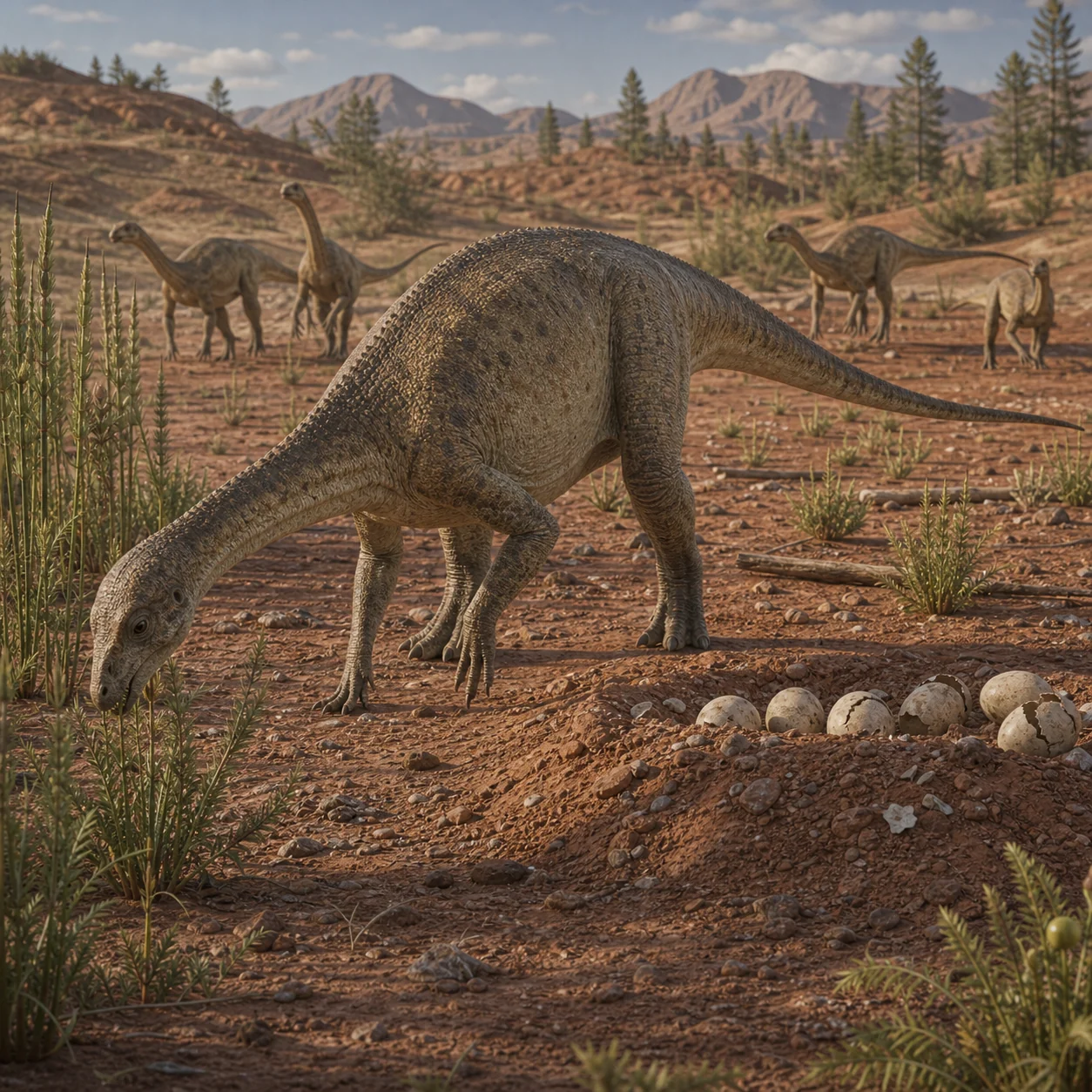
Mussaurus foi um terópode herbívoro do Triássico, descrito por José Bonaparte. Viveu há aproximadamente 215 milhões de anos, na região do que hoje é Argentina (Patagônia). Medindo de 3.0 m, pesando 70 kg, era um representante característico da fauna mesozoica.
Mussaurus (meaning "mouse lizard") is a genus of herbivorous sauropodomorph dinosaur that lived in southern Argentina during the Sinemurian stage of the Early Jurassic. It receives its name from the small size of the skeletons of juvenile and infant individuals, which were once the only known specimens of the genus. However, since Mussaurus is now known from adult specimens, the name is something of a misnomer.
In its early stages of life, Mussaurus was a small quadrupedal herbivore, walking on all four legs. As it grew up, the changes in body proportions may have led its centre of mass to move backwards towards its pelvis. Adults would have been medium-sized bipedal herbivores, measuring up to 8 metres (26 ft) long and weighing up to 1.2–1.6 metric tons (1.3–1.8 short tons).
Numerous specimens of varying age found in a single locality suggest that Mussaurus is one of the earliest dinosaurs to have lived in a gregarious lifestyle. With its possible origin from the Triassic, this complex social behaviour may have given rise to the sauropods' early success as the largest herbivores on land. Mussaurus also possessed anatomical features that suggest a close, possibly transitional evolutionary relationship with true sauropods.
- Família
- Massospondylidae
- Ordem
- Saurischia
- Período
- Triassic (215 Ma)
- Dieta
- Herbivore
- Comprimento
- 3.0 m
- Peso
- 70 kg
Fatos científicos
- Medindo 3.0 m, tinha porte médio para os padrões mesozoicos
- Herbívoro especializado do Triássico, provavelmente pastava em vegetação de Argentina (Patagônia)
- Seus fósseis foram encontrados na região de Argentina (Patagônia), contribuindo para o entendimento da fauna triássico local
- Vivendo há 215Ma, é um dos dinossauros mais antigos catalogados
- Foi descrito cientificamente por José Bonaparte, contribuindo para o entendimento da diversidade dinossauriana