Falcarius
Falcarius utahensis
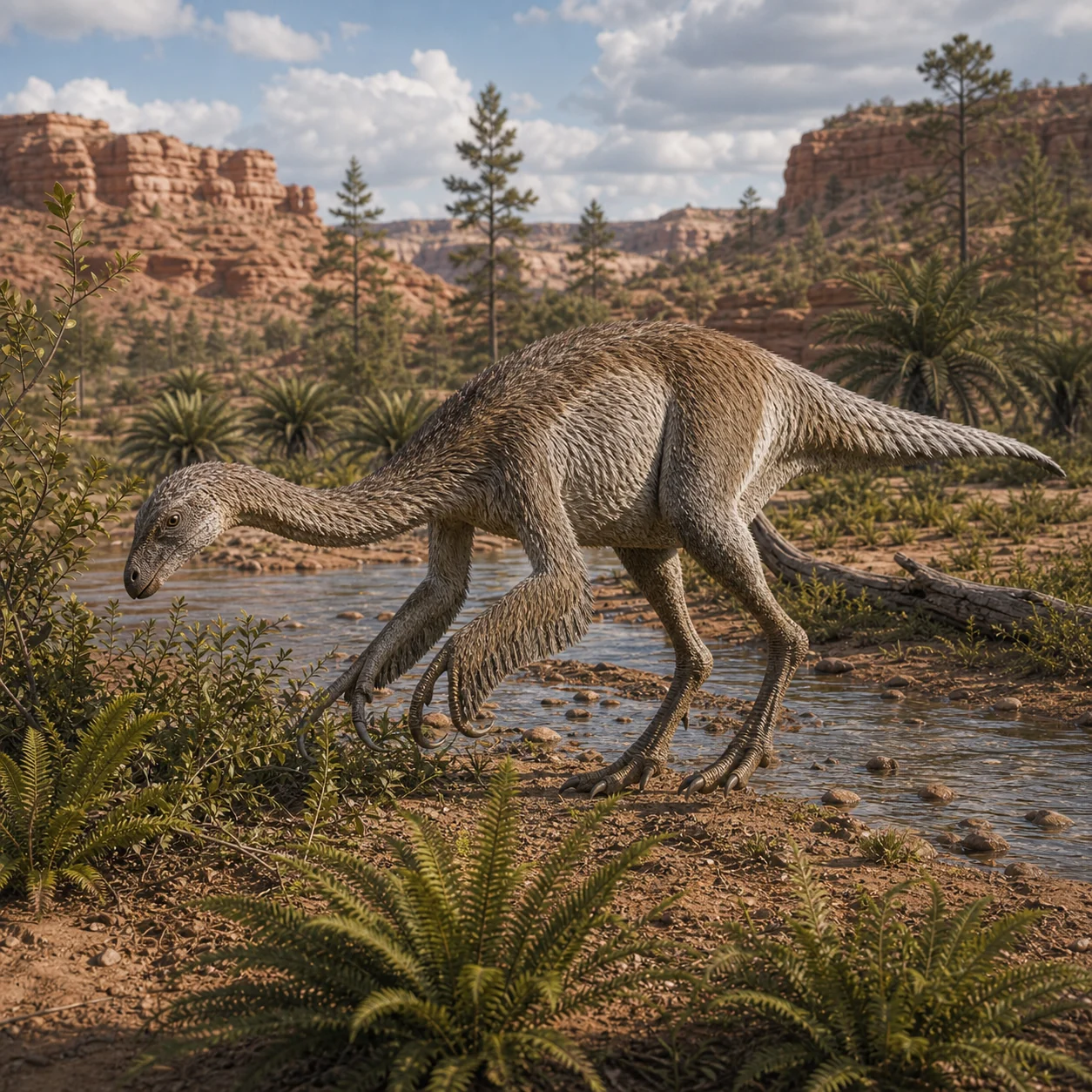
Falcarius foi um terópode herbívoro do Cretáceo, descrito por Kirkland et al.. Viveu há aproximadamente 130.0-124.0 milhões de anos, na região do que hoje é América do Norte (EUA). Medindo de 4.0-5.0 m, pesando 70-100 kg, era um representante característico da fauna mesozoica.
Falcarius (meaning "sickle cutter") is a genus of primitive therizinosaur dinosaur that lived during the Early Cretaceous period in what is now North America. Its remains were first collected in the Cedar Mountain Formation in 1999, with subsequent findings made during the 2000s. The genus is known from multiple specimens ranging from immature to fully-grown individuals.
Falcarius was a 4 m (13 ft) long bipedal herbivore with a small head and an elongated neck and tail. Unlike advanced therizinosaurs, Falcarius had a propubic pelvis and three-toed feet with a reduced hallux (first digit).
Falcarius is the basal most known definitive therizinosaurian genus, and has been considered a transitional form connecting the typical theropod bodyplan to the unusual morphology of Therizinosauridae. Its description in 2005, following that of the basal therizinosauroid Beipiaosaurus from the Early Cretaceous of China in 1999, helped clarify the early evolution of the Therizinosauria and its relationships within the larger group of Theropoda.
- Família
- Therizinosauria
- Ordem
- Saurischia
- Período
- Cretaceous (130.0-124.0 MYA)
- Dieta
- Herbivore
- Comprimento
- 4.0-5.0 m
- Peso
- 70-100 kg
Fatos científicos
- Medindo 4.0-5.0 m, tinha porte médio para os padrões mesozoicos
- Herbívoro especializado do Cretáceo, provavelmente pastava em vegetação de América do Norte (EUA)
- Seus fósseis foram encontrados na região de América do Norte (EUA), contribuindo para o entendimento da fauna cretáceo local
- Foi descrito cientificamente por Kirkland et al., contribuindo para o entendimento da diversidade dinossauriana