Europelta
Europelta carbonensis
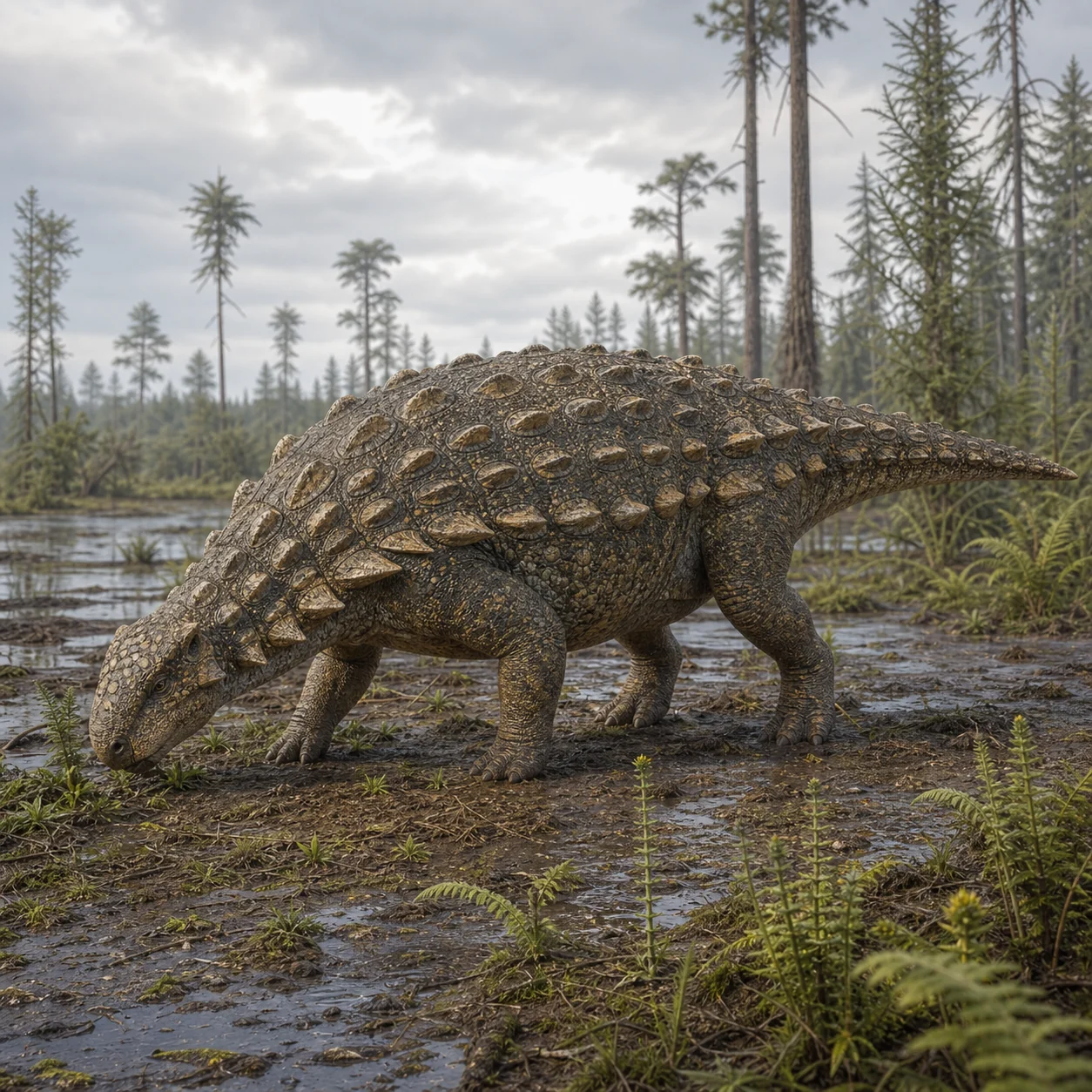
Europelta foi um anquilossauro herbívoro do Cretáceo, descrito por Kirkland et al.. Viveu há aproximadamente 113.0-100.5 milhões de anos, na região do que hoje é Europa. Medindo de 5.0 m, pesando 1.5-2.0 tons, era um representante característico da fauna mesozoica.
Europelta (meaning "Europe's shield") is a monospecific genus of nodosaurid dinosaur from Spain that lived during the Early Cretaceous (early Albian stage, ~113.0 Ma) in what is now the lower Escucha Formation of the Teruel Province. The type and only species, Europelta carbonensis, is known from two associated partial skeletons, and represents the most complete ankylosaur known from Europe. Europelta was named in 2013 by James I. Kirkland and colleagues. Europelta has an estimated length of 5 metres (16 feet) and weight of 1.3 tonnes (2,866 lbs), making it the largest member of the clade Struthiosaurini.
- Família
- Nodosauridae
- Ordem
- Ornithischia
- Período
- Cretaceous (113.0-100.5 MYA)
- Dieta
- Herbivore
- Comprimento
- 5.0 m
- Peso
- 1.5-2.0 tons
Fatos científicos
- Medindo 5.0 m, tinha porte médio para os padrões mesozoicos
- Herbívoro especializado do Cretáceo, provavelmente pastava em vegetação de Europa
- Seus fósseis foram encontrados na região de Europa, contribuindo para o entendimento da fauna cretáceo local
- Foi descrito cientificamente por Kirkland et al., contribuindo para o entendimento da diversidade dinossauriana