Erketu
Erketu ellisoni
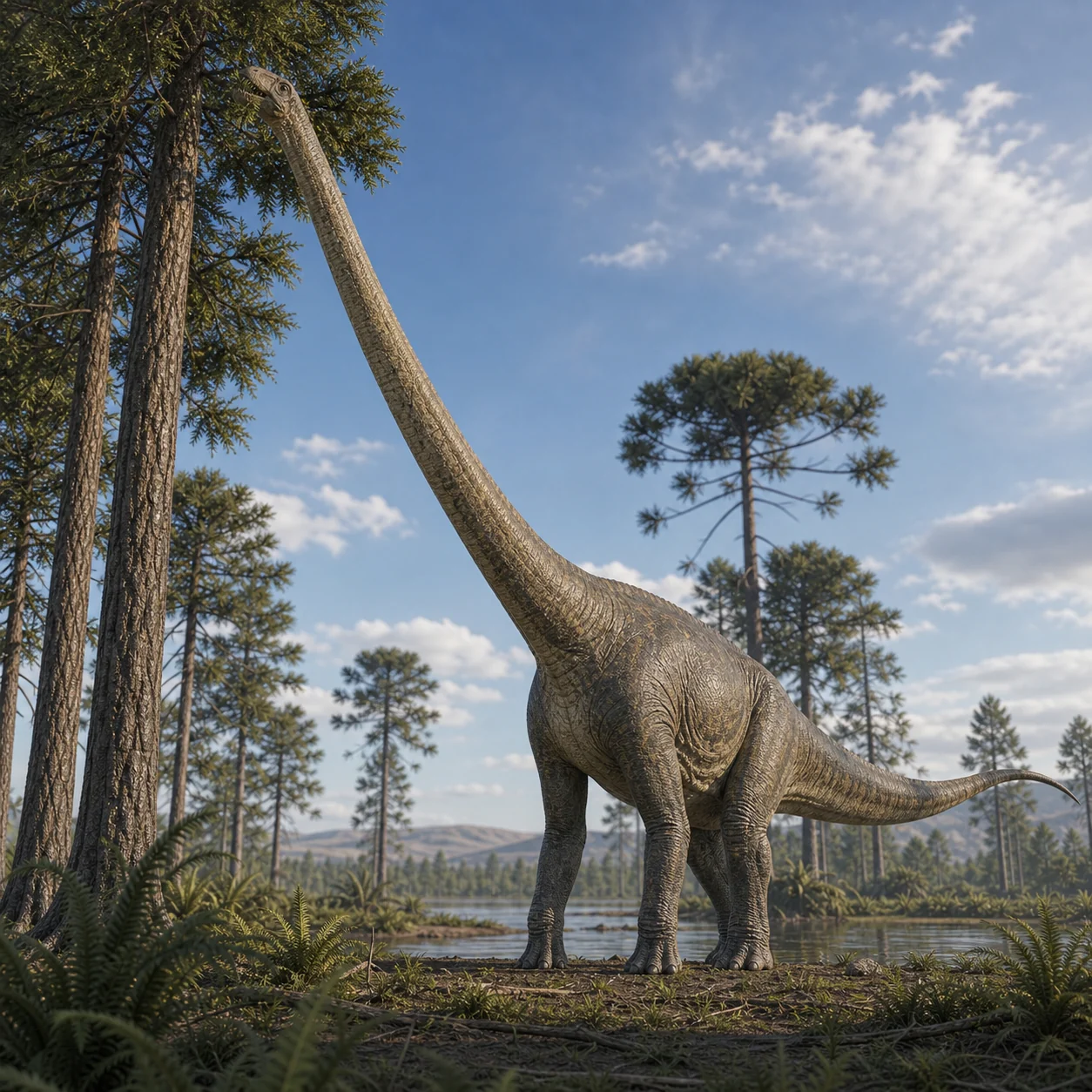
Erketu foi um terópode herbívoro do Cretáceo, descrito por Daniel Ksepka & Mark Norell. Viveu há aproximadamente 112.0-100.0 milhões de anos, na região do que hoje é Mongólia. Medindo de 15.0 m, pesando 10.0 tons, era um representante característico da fauna mesozoica.
Erketu (meaning "Erketü tengri") is a genus of somphospondylan dinosaur that lived in Asia during the Late Cretaceous, roughly between 96 million and 89 million years ago. It is known from the Bayanshiree Formation of Mongolia, and its fossils were found between 2002 and 2003 during field expeditions. Erketu was first described in 2006 and later on in 2010 due to some cervicals that were left behind in the expedition. This genus represents the first sauropod described from the Bayanshiree Formation. The elongated cervical vertebrae indicate that it probably had the longest neck relative to its body size of any sauropod.
- Família
- Euhelopodidae
- Ordem
- Saurischia
- Período
- Cretaceous (112.0-100.0 MYA)
- Dieta
- Herbivore
- Comprimento
- 15.0 m
- Peso
- 10.0 tons
Fatos científicos
- Seu comprimento de 15.0 m o tornava um dos maiores predadores/herbívoros da sua região
- Herbívoro especializado do Cretáceo, provavelmente pastava em vegetação de Mongólia
- Seus fósseis foram encontrados na região de Mongólia, contribuindo para o entendimento da fauna cretáceo local
- Foi descrito cientificamente por Daniel Ksepka & Mark Norell, contribuindo para o entendimento da diversidade dinossauriana