Chindesaurus
Chindesaurus bryansmalli
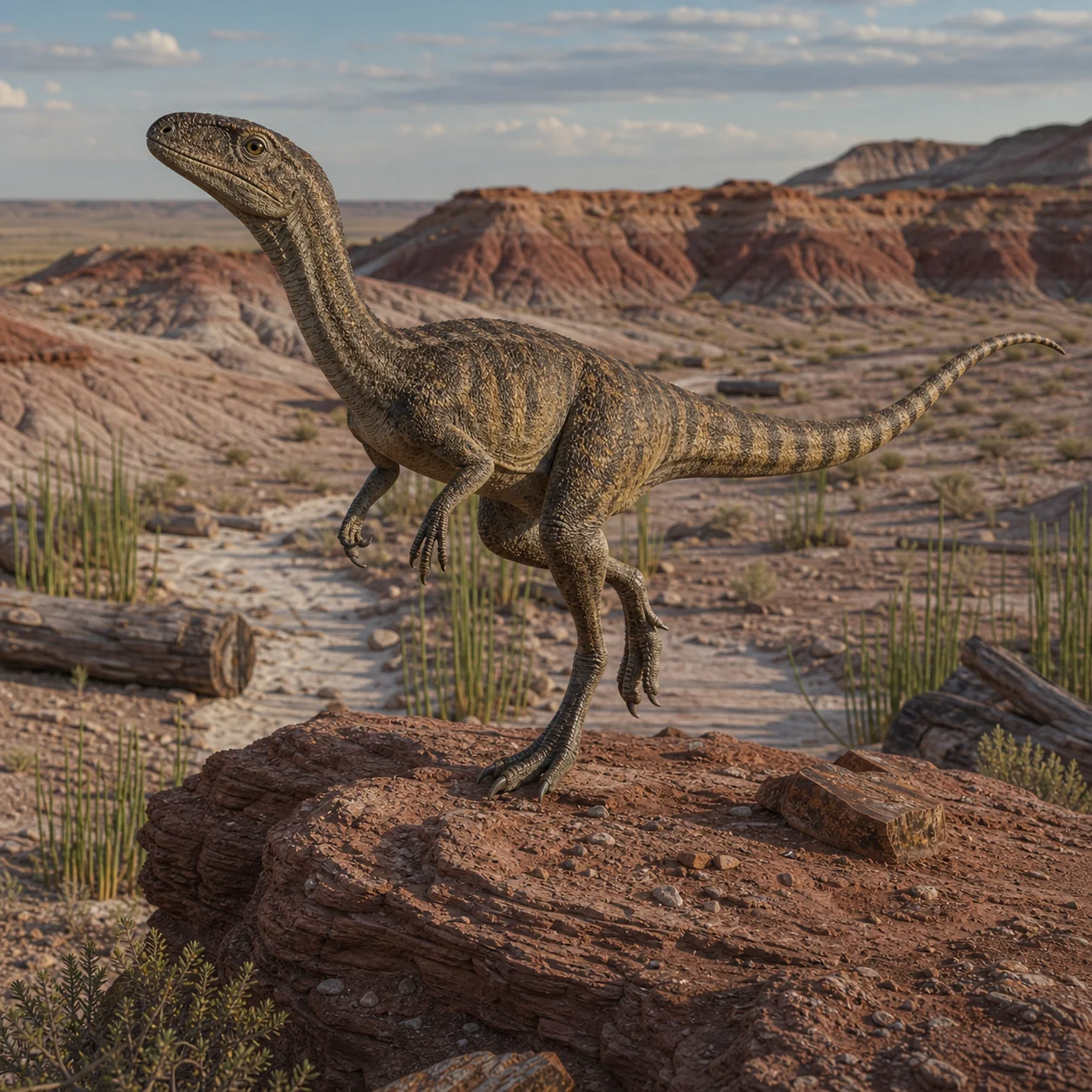
Chindesaurus foi um terópode carnívoro do Triássico, descrito por Long & Murry. Viveu há aproximadamente 225 milhões de anos, na região do que hoje é América do Norte (EUA). Medindo de 2.5 m, pesando 30 kg, era um representante característico da fauna mesozoica.
Chindesaurus ( CHIN-diss-OR-əs) is an extinct genus of basal saurischian dinosaur from the Late Triassic (213-210 million years ago) of the southwestern United States. It is known from a single species, C. bryansmalli, based on a partial skeleton recovered from Petrified Forest National Park in Arizona. The original specimen was nicknamed "Gertie", and generated much publicity for the park upon its discovery in 1984 and airlift out of the park in 1985. Other fragmentary referred specimens have been found in Late Triassic sediments throughout Arizona, New Mexico, and Texas, but these may not belong to the genus. Chindesaurus was a bipedal carnivore, approximately as large as a wolf.
Chindesaurus's classification is debated, and various papers have had different conclusions on its affinities. Its fossils were originally believed to belong to "prosauropods" (basal sauropodomorphs), but its original description and numerous subsequent papers argued that it was a herrerasaurid or herrerasaurian. A 2019 redescription of its holotype considered Chindesaurus to be a theropod closely related to Tawa, a slightly smaller dinosaur known from the Hayden Quarry of Ghost Ranch, New Mexico.
- Família
- Herrerasauridae
- Ordem
- Saurischia
- Período
- Triassic (225 Ma)
- Dieta
- Carnivore
- Comprimento
- 2.5 m
- Peso
- 30 kg
Fatos científicos
- Medindo 2.5 m, tinha porte médio para os padrões mesozoicos
- Como carnívoro do Triássico, ocupava papel de predador ativo em seu ecossistema
- Seus fósseis foram encontrados na região de América do Norte (EUA), contribuindo para o entendimento da fauna triássico local
- Vivendo há 225Ma, é um dos dinossauros mais antigos catalogados
- Foi descrito cientificamente por Long & Murry, contribuindo para o entendimento da diversidade dinossauriana