Carnotaurus
Carnotaurus sastrei
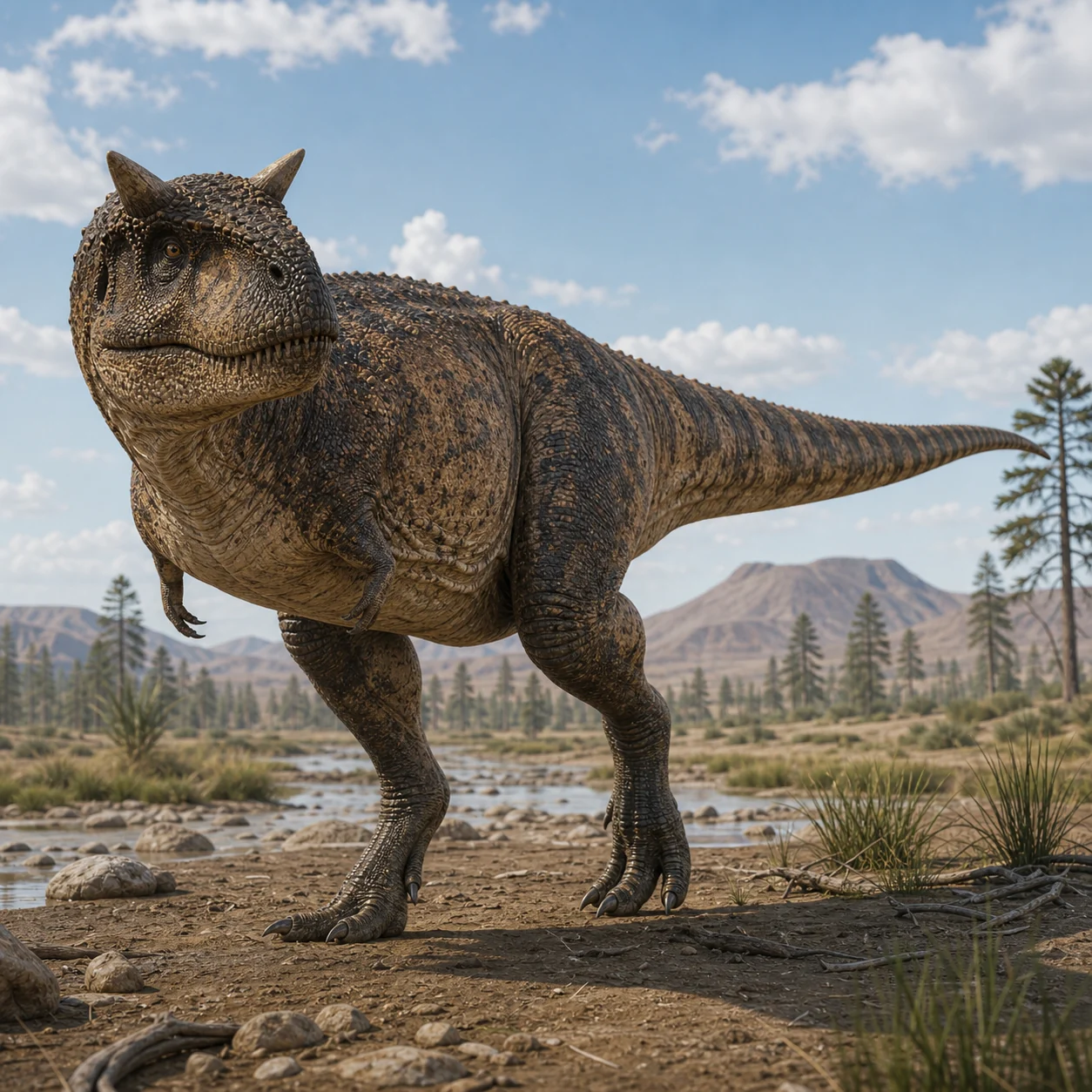
Carnotaurus sastrei foi o terópode mais rápido conhecido, com chifres sobre os olhos e braços vestigiais menores que os do T. rex.
Carnotaurus is a genus of theropod dinosaur that lived in South America during the Late Cretaceous period, between 69 and 66 million years ago. The only species is Carnotaurus sastrei. Known from a single well-preserved skeleton, it is one of the best-understood theropods from the Southern Hemisphere. The skeleton, found in 1984, was uncovered in the Chubut Province of Argentina from rocks of the La Colonia Formation. Carnotaurus is a derived member of the Abelisauridae, a group of large theropods that occupied the large predatorial niche in the southern landmasses of Gondwana during the late Cretaceous. Within the Abelisauridae, the genus is often considered a member of the Brachyrostra, a clade of short-snouted forms restricted to South America.
Carnotaurus was a lightly built, bipedal predator, measuring 7.5 to 8 m (24.6 to 26.2 ft) in length and weighing 1.3–2.1 metric tons (1.4–2.3 short tons; 1.3–2.1 long tons). As a theropod, Carnotaurus was highly specialized and distinctive. It had two thick horns above the eyes, a unique feature unseen in all other carnivorous dinosaurs, and a very deep skull sitting on a muscular neck. Carnotaurus was further characterized by small, vestigial forelimbs and long, slender hind limbs. The skeleton is preserved with extensive skin impressions, showing a mosaic of small, non-overlapping scales approximately 5 mm in diameter. The mosaic was interrupted by large bumps that lined the sides of the animal, and there are no hints of feathers.
The distinctive horns and the muscular neck may have been used in fighting others of its species.…
- Família
- Abelisauridae
- Ordem
- Saurischia
- Período
- Cretaceous (72.1-69.9 MYA)
- Dieta
- Carnivore
- Comprimento
- 7.5-9.0 m
- Peso
- 1.35-2.1 tons
Fatos científicos
- Velocidade estimada de 56 km/h, o terópode mais rápido
- Únicos chifres verdadeiros em terópode carnívoro
- Braços mais reduzidos que T. rex proporcionalmente
- Pele com fileiras de osteodermos como crocodilos
- Cauda longa e rígida para equilíbrio em alta velocidade
- Mandíbula fraca compensada por velocidade de ataque