Beipiaosaurus
Beipiaosaurus inexpectus
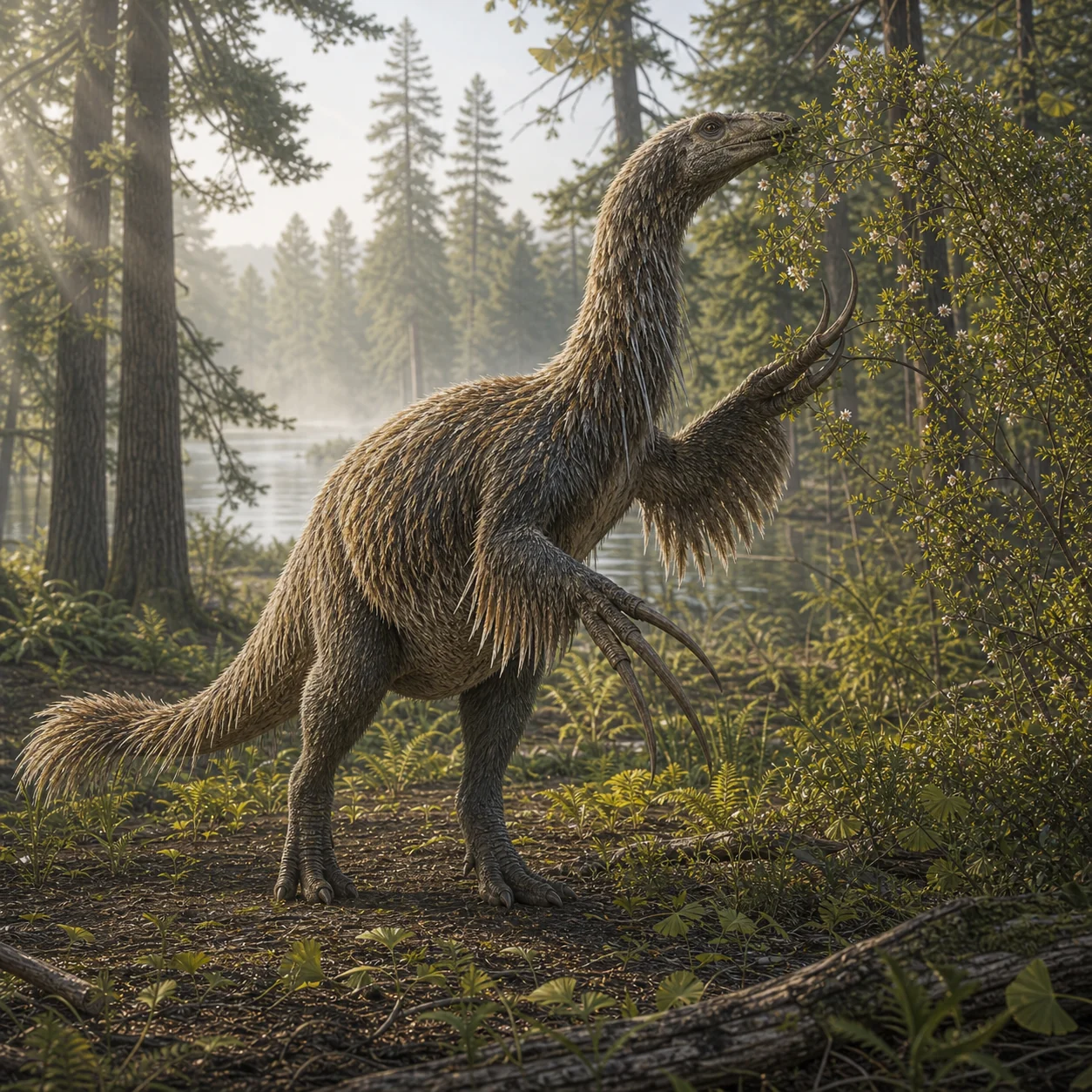
Beipiaosaurus foi um terópode herbívoro do Cretáceo, descrito por Xu Xing. Viveu há aproximadamente 125 milhões de anos, na região do que hoje é China. Medindo de 2.2 m, pesando 85 kg, era um representante característico da fauna mesozoica.
Beipiaosaurus is a genus of therizinosauroid theropod dinosaurs that lived in China during the Early Cretaceous in the Yixian Formation. The first remains were found in 1996 and formally described in 1999. Before the discovery of Yutyrannus, Beipiaosaurus were among the heaviest dinosaurs known from direct evidence to be feathered. Beipiaosaurus is known from three reported specimens. Numerous impressions of feather structures were preserved that allowed researchers to determine the feathering color which turned out to be brownish.
They were relatively small-sized therizinosaurs, measuring 2.2 m (7.2 ft) long and weighing about 27 kg (60 lb) in contrast to the advanced and giant Segnosaurus or Therizinosaurus. The necks of Beipiaosaurus were shorter than in most therizinosaurs, whose are characterized by elongated necks adapted for high-browsing. Also, their feet configuration differs from therizinosaurids, having a generic three-toed pes instead of four as seen in other members.
The exact classification of therizinosaurs had in the past been hotly debated, since their prosauropod-like teeth and body structure indicate that they were generally herbivorous, unlike typical theropods. Beipiaosaurus, being considered to be a primitive therizinosauroid, has features which suggest that all therizinosauroids, including the more derived Therizinosauridae, to be coelurosaurian theropods, not sauropodomorph or ornithischian relatives as once believed.
- Família
- Therizinosauria
- Ordem
- Saurischia
- Período
- Cretaceous (125 Ma)
- Dieta
- Herbivore
- Comprimento
- 2.2 m
- Peso
- 85 kg
Fatos científicos
- Medindo 2.2 m, tinha porte médio para os padrões mesozoicos
- Herbívoro especializado do Cretáceo, provavelmente pastava em vegetação de China
- Seus fósseis foram encontrados na região de China, contribuindo para o entendimento da fauna cretáceo local
- Foi descrito cientificamente por Xu Xing, contribuindo para o entendimento da diversidade dinossauriana