Amazonsaurus
Amazonsaurus maranhensis
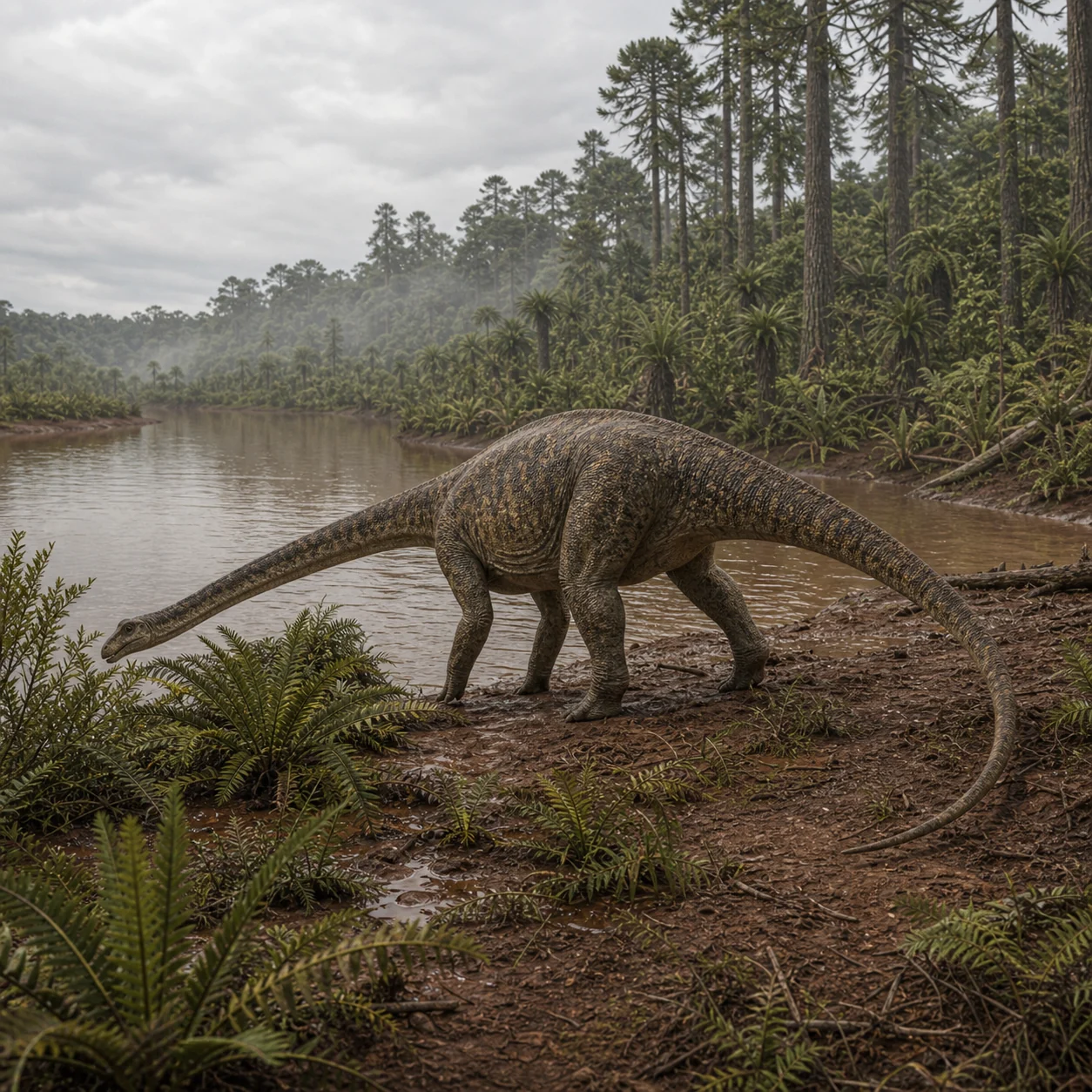
Amazonsaurus foi um terópode herbívoro do Cretáceo, descrito por Carvalho et al.. Viveu há aproximadamente 125.0-112.0 milhões de anos, na região do que hoje é Brasil. Medindo de 12.0 m, pesando 5.0-7.0 tons, era um representante característico da fauna mesozoica.
Amazonsaurus ( AM-ə-zən-SOR-əs, 'Amazon lizard') is a genus of diplodocoid sauropod dinosaur from the Early Cretaceous Period of what is now South America. It would have been a large-bodied quadrupedal herbivore with a long neck and whiplash tail. Although more derived diplodocoids were some of the longest animals ever to exist, Amazonsaurus was probably not more than 12 meters (40 ft) long. Gregory S. Paul estimated in 2010 its weight at 5000 kg.
Fossils of Amazonsaurus, including some back and tail vertebrae, ribs, and fragments of the pelvis, are the only dinosaur remains identifiable at the generic level from the Itapecuru Formation of Maranhão. This geologic formation dates back to the Aptian through Albian epochs of the Early Cretaceous, or about 125 to 100 million years ago. Amazonsaurus was recovered in sediments which are interpreted by geologists as floodplain deposits near a river delta.
- Família
- Diplodocoidea indet.
- Ordem
- Saurischia
- Período
- Cretaceous (125.0-112.0 MYA)
- Dieta
- Herbivore
- Comprimento
- 12.0 m
- Peso
- 5.0-7.0 tons
Fatos científicos
- Seu comprimento de 12.0 m o tornava um dos maiores predadores/herbívoros da sua região
- Herbívoro especializado do Cretáceo, provavelmente pastava em vegetação de Brasil
- Seus fósseis foram encontrados na região de Brasil, contribuindo para o entendimento da fauna cretáceo local
- Foi descrito cientificamente por Carvalho et al., contribuindo para o entendimento da diversidade dinossauriana