Alxasaurus
Alxasaurus elesitaiensis
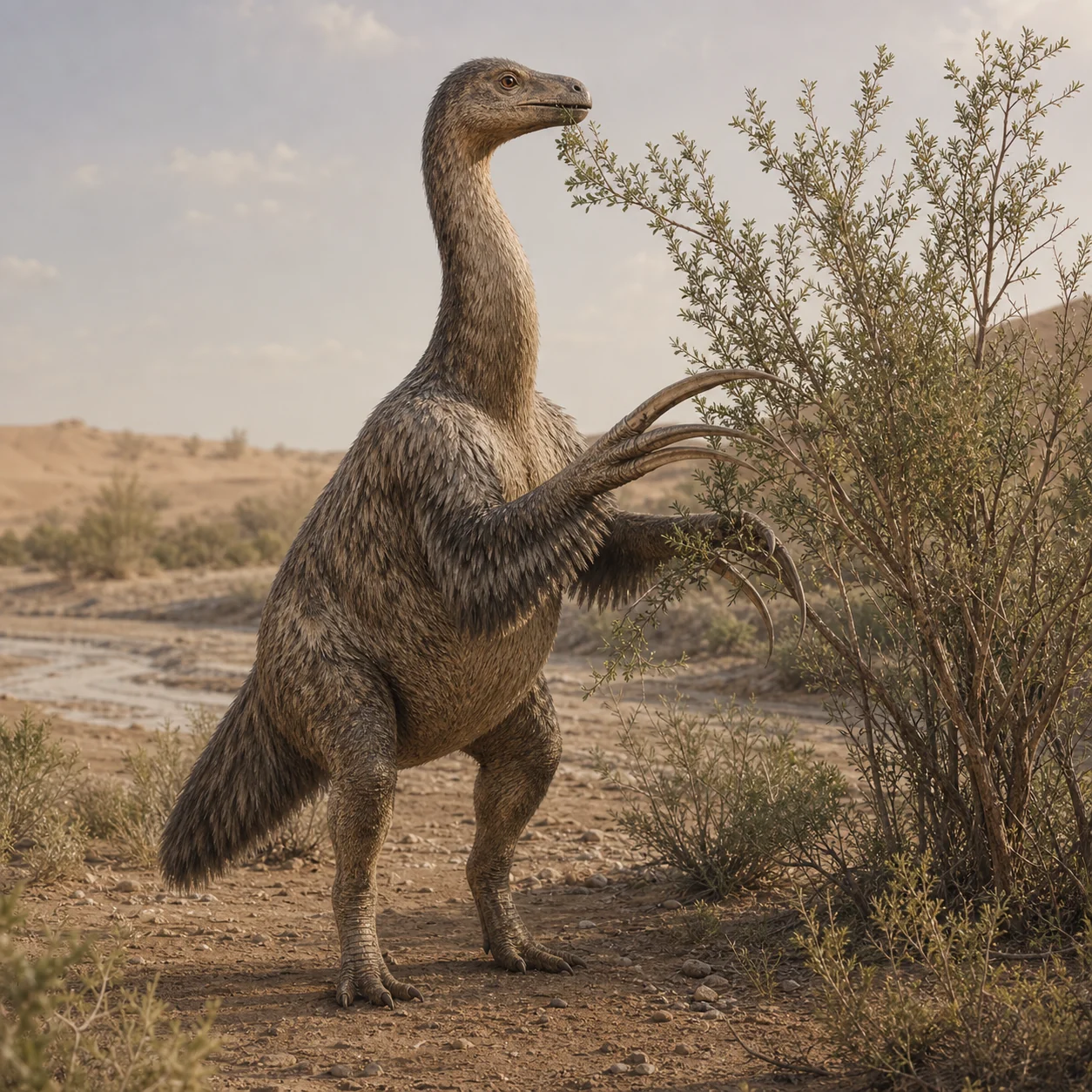
Alxasaurus foi um terópode herbívoro do Cretáceo, descrito por Dale Russell & Dong Zhiming. Viveu há aproximadamente 112 milhões de anos, na região do que hoje é China. Medindo de 4.0 m, pesando 380 kg, era um representante característico da fauna mesozoica.
Alxasaurus (; meaning "Alxa lizard") is a genus of therizinosauroid theropod dinosaurs from the Early Cretaceous (Albian age) Bayin-Gobi Formation of Inner Mongolia. It is known from five specimens, recovered from the Bayin-Gobi in 1988, as part of the China-Canada Dinosaur Project. During their preparation, palaeontologists Dong Zhiming and Dale Russell noted strong similarities to Segnosaurus. In 1993, they described Alxasaurus and named its type species, A. elesitaiensis. While therizinosaurs had previously been tentatively seen as late-surviving basal sauropodomorphs, the description of Alxasaurus lent credence to the idea that they were instead highly derived coelurosaurs.
While outside of Therizinosauridae itself, Alxasaurus had many of the traits characteristic of derived therizinosaurs, such as an abbreviated tail, shortened metatarsals and broad feet convergent with those of basal sauropodomorphs, and fairly long, recurved hand claws. Like related genera, it likely would have had a beak and a large gut, both adaptations for a herbivorous diet.
- Família
- Alxasauridae
- Ordem
- Saurischia
- Período
- Cretaceous (112 Ma)
- Dieta
- Herbivore
- Comprimento
- 4.0 m
- Peso
- 380 kg
Fatos científicos
- Medindo 4.0 m, tinha porte médio para os padrões mesozoicos
- Herbívoro especializado do Cretáceo, provavelmente pastava em vegetação de China
- Seus fósseis foram encontrados na região de China, contribuindo para o entendimento da fauna cretáceo local
- Foi descrito cientificamente por Dale Russell & Dong Zhiming, contribuindo para o entendimento da diversidade dinossauriana