Acrotholus
Acrotholus audeti
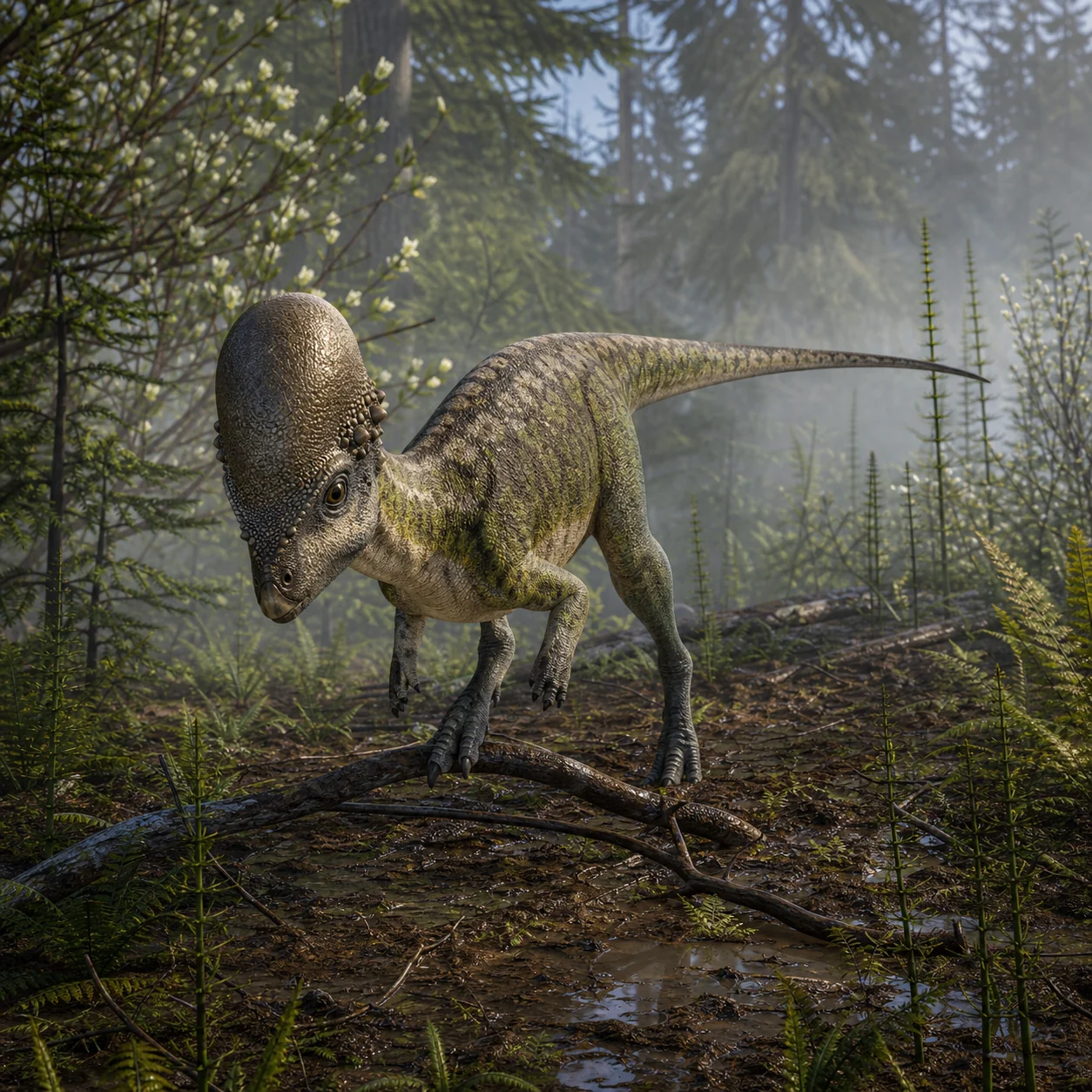
Acrotholus foi um paquicefalossauro herbívoro do Cretáceo, descrito por Evans et al.. Viveu há aproximadamente 82.7-79.5 milhões de anos, na região do que hoje é Canadá. Medindo de 1.8 m, pesando 40 kg, era um representante característico da fauna mesozoica.
Acrotholus (Greek for "highest dome"- akros meaning highest and tholos meaning dome) is an extinct genus of pachycephalosaurian dinosaur that lived during the Santonian of the late Cretaceous, in the Milk River Formation of Canada. The type species, A. audeti, was named after Roy Audet allowing access to his ranch leading to the discovery of the species. The discovery of this specimen lead to several new revelations in the fossil records questioning the preservation of small-bodied organisms along with the evolution of early pachycephalosaurs. The iconic cranial dome found on Acrotholus makes it one of the earliest indisputable known members of the pachycephalosaur family. Like others of its clade, Acrotholus was a bipedal herbivore characterized by a dome-shaped head. The dome had often been associated with intra-species combat, although the exact methods of contact have been debated.
- Família
- Pachycephalosauridae
- Ordem
- Ornithischia
- Período
- Cretaceous (82.7-79.5 MYA)
- Dieta
- Herbivore
- Comprimento
- 1.8 m
- Peso
- 40 kg
Fatos científicos
- Com apenas 1.8 m, era considerado um dinossauro de pequeno porte
- Herbívoro especializado do Cretáceo, provavelmente pastava em vegetação de Canadá
- Seus fósseis foram encontrados na região de Canadá, contribuindo para o entendimento da fauna cretáceo local
- Foi descrito cientificamente por Evans et al., contribuindo para o entendimento da diversidade dinossauriana